After 5 weeks in Zagreb, it’s time to hitchhike from the south of the city to Split! The hitchhiking guide: to find the “right” spot for hitchhiking, there are several ways to proceed.
The first is to ask the locals. They are used (or not) to seeing hitchhikers, they know the roads and usually have good advice.
The second is to go in the desired direction and look for a place wide enough for a car to stop. You have to have good visibility, be on the right track, not look dirty, smile and pray for someone to stop.
The third is a bit simpler, just use the site/app: Hitchmap. It is a cooperative map that lists all the best spots in the world. Anyone can leave a mark with a note, waiting time and a few tips. Be careful of the date on which the mark was put but overall it is a great interactive map.
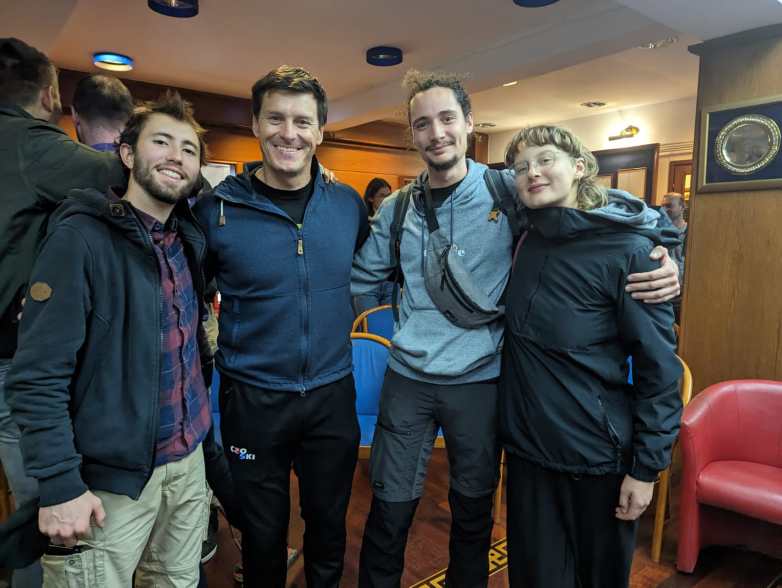
Thanks to Hitchmap we found a petrol station on a 4 lane road accessible by bus. Once there, we set to work: go and ask all the drivers if by chance they are heading towards Split. And after half an hour, luck smiles on us and we are off to the south! We chatted with our driver and learned that he was in fact a former Olympic champion! Ivica Kostelić, won 4 medals at the Olympic Games as a ski world champion. It also happens that he has done a transatlantic (crossing the Atlantic Ocean by boat) and that he is going to Split for a screening of his film about his adventure! He also invited us to the performance that evening! We got to Split pretty quickly (he was driving pretty fast anyway) and after dropping off our stuff at the hostel where we will spend the night, we set off for the film! We didn’t understand everything because it was in Croatian, but at least it looked cool!
The next morning we took the ferry to Vis, our destination, where we spent the next 3 weeks. We found a workaway (volunteer network) where we have to feed 20 cats. It’s funny to put it like that, but to be more precise, it’s about living in the heights of the island in a tiny house (a stone building and 2 beds) in camping mode: no shower, outdoor toilet, kitchen outside, rainwater recovery to do everything (drinking, cleaning, kitchen. . . ). And feed cats morning and night in a field next door. This volunteer opportunity helps an association created by an islander to help care for and give a
new life to the stray cats of the island. If you want to help the association, you can make a donation, order a calendar or just take a look at the website or social networks! https://streetcatsofvis.com/, Instagram.
The stay on the island goes very well, it is also an opportunity to relax in the middle of nature, do nothing, play with the cats, make music (Ukulele, guitar, harmonica, piano), prepare for the rest of the trip and go hiking. . . Speaking of hiking, the other day I spotted a small cove that looked like a nice one. So I left with the objective of going to see this cove with my own eyes and after about 2 hours of walking, I discovered this small bay with its paradisiacal allure. Except for one detail: the beach was littered with plastic and other waste.
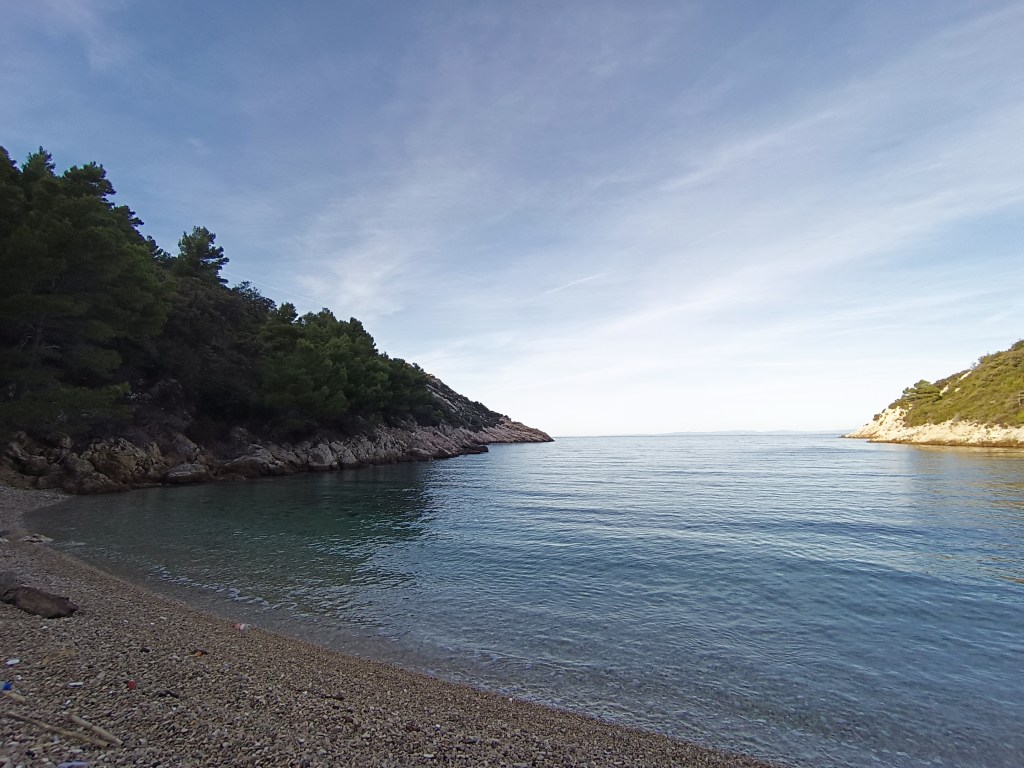
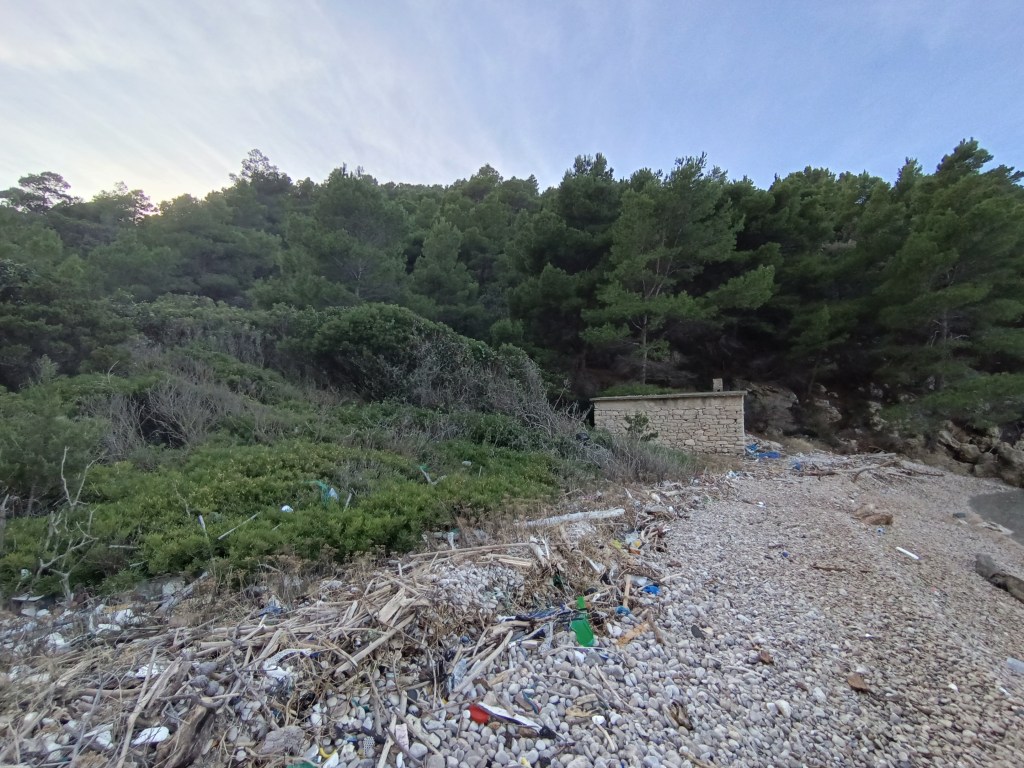
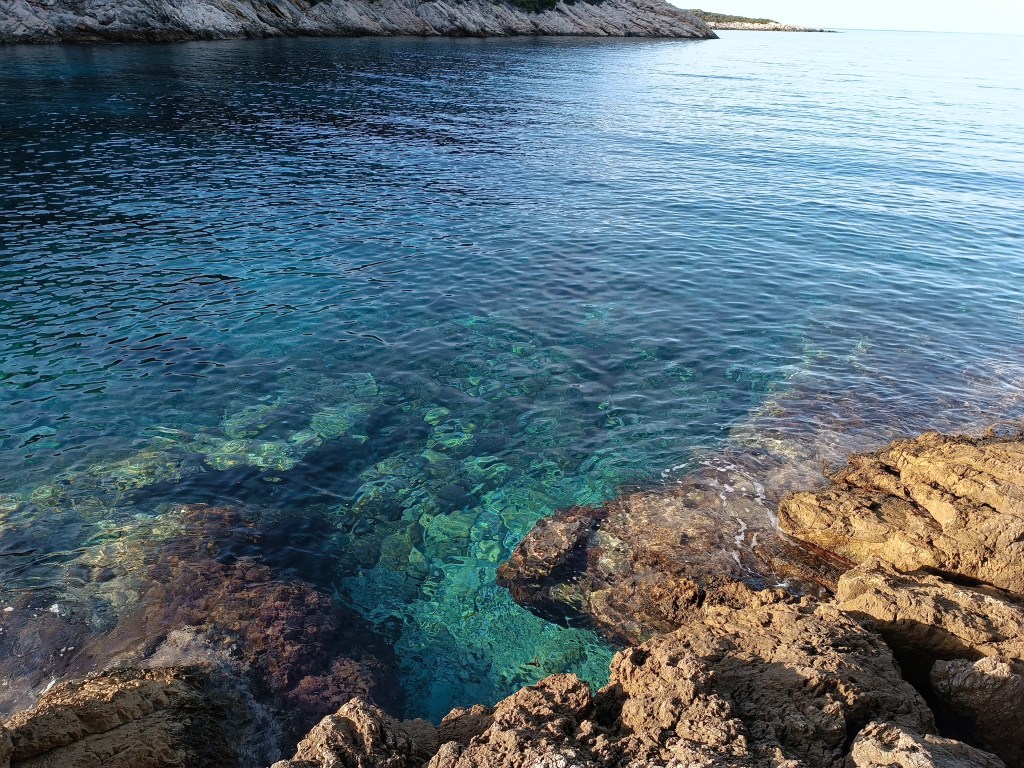

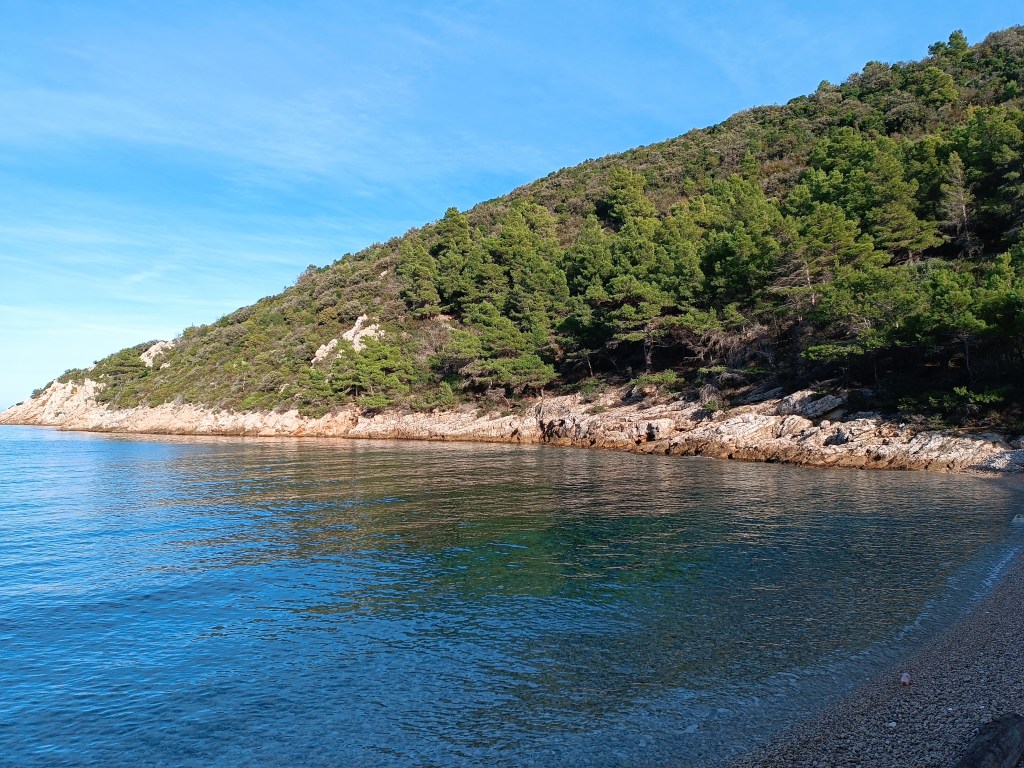
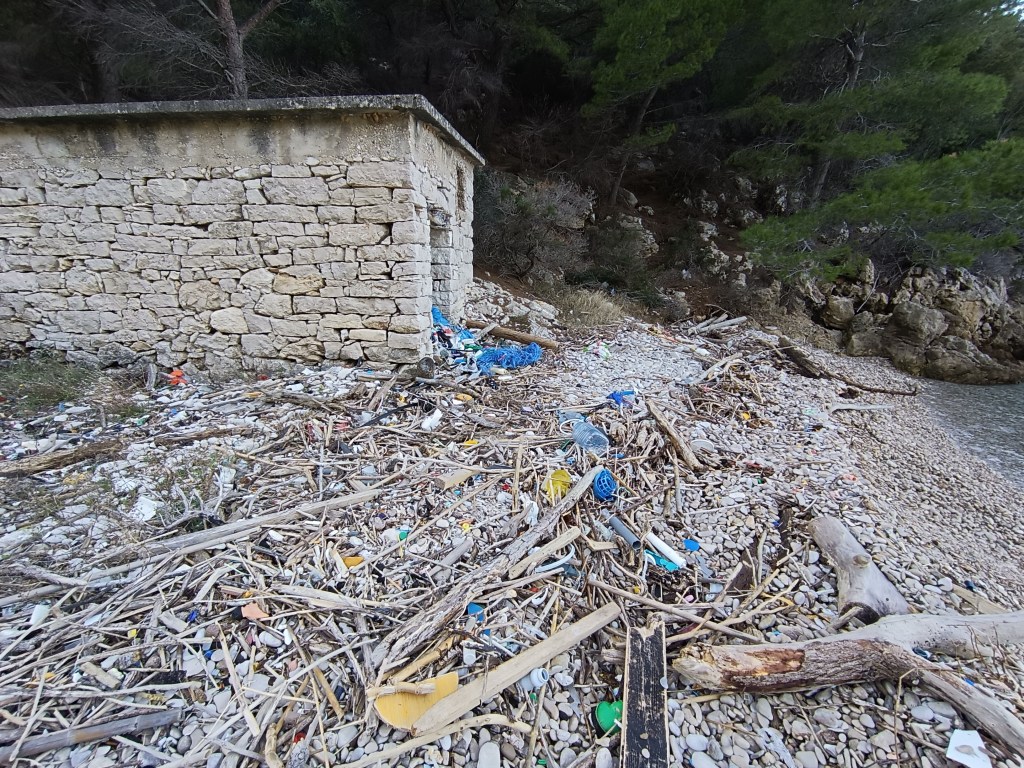
At first glance, one might think that these are natural deposits, but given the path taken to access the beach, this is impossible. So there is only one explanation: waste comes from the sea. The Mediterranean Sea is one of the most polluted seas in the world and 95% of waste at sea or on beaches is plastic. It makes you think about how we use plastic, doesn’t it? I invite you to read the WWF report on plastic in the Mediterranean, it takes 10 minutes and it’s very interesting: Mediterranean plastic report
More generally, living without the comforts to which one is accustomed is very rewarding. For “normal” people, you turn on the tap to get water, press a button to get hot or cold. Here we have to get wood every 2 days or so to make a fire in order to keep warm, we have to fill cans with water from the tank in order to drink and to cook. When you have to go and get the raw materials yourself, it’s a different story. We become aware of our daily consumption and pay more attention to it.
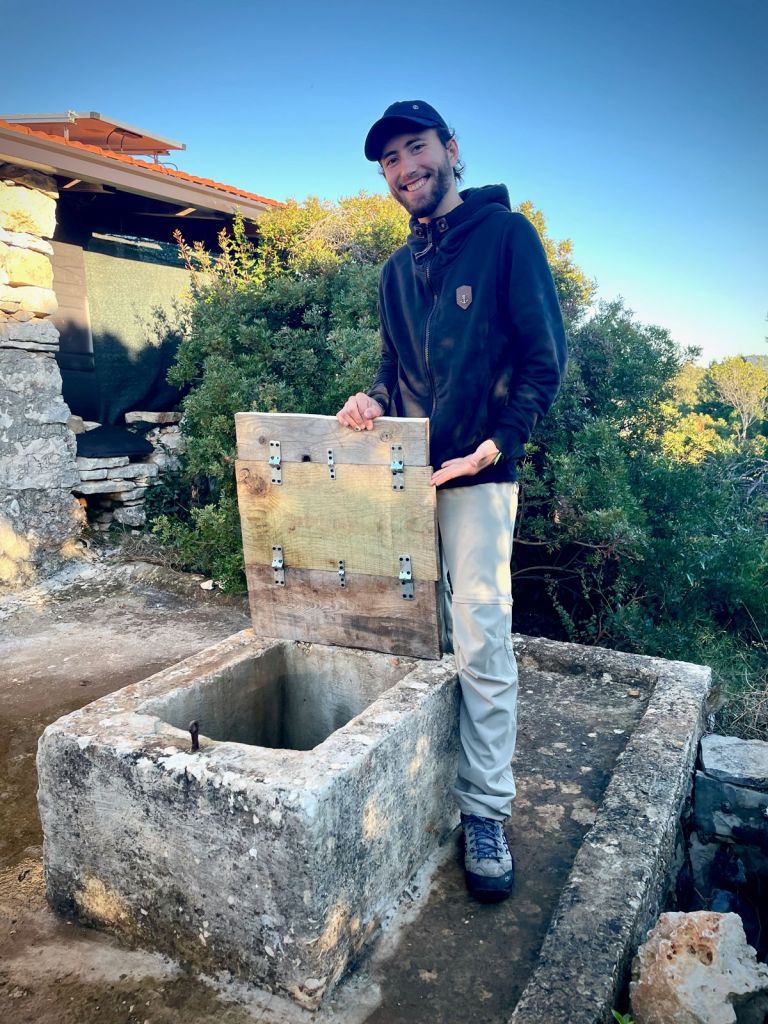
The stay on the island continues, we take advantage of the low season to go to the beach of Stivana (the most
famous beach of the island), without any tourists (except us). Small swims, snorkeling, an attack by an octopus for Nicolas and hitchhiking back to the village! We also went to the cinema to see the film Wonka (English version), followed by a small concert in the village square to end the evening in beauty!
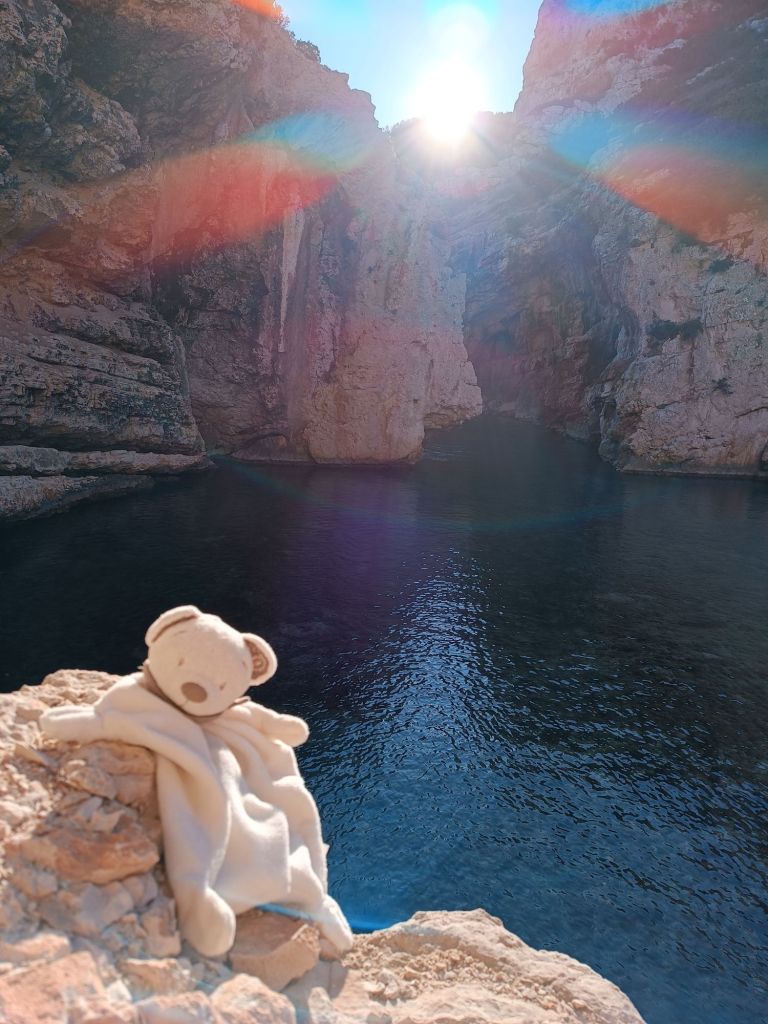
The days are getting shorter and despite the weather for the month of December, it is still mild, which allows us to enjoy outside with our companions; the cats.
The island of Vis is beautiful from the point of view of its coves, its landscapes, its mountains (more hills than mountains but good). But it is also and above all an island known for its history ! Sit by the fire, make yourself a hot chocolate and let’s continue our story.
The island of Vis saw its first inhabitants arrive around the 4th century before the baby Jesus. They were the Greeks, who at that time were doing quite well. The island is at a strategic point in the Adriatic Sea as it allows control between all ships passing between it and Italy. A small leap in time and here we are in the 1400s (after the baby
Jesus). The Venetians (from Venice) occupied the island for about 4 centuries until 1797. Then bam, it’s war. The English against the Franco-Italians in 1811, then another in 1866 that pitted the Italians against the Austrians. In short, battles. Let’s move on. Then comes the Second World War. The island was to be used as a refuge for Tito (the
leader of the communist resistance in Yugoslavia, and subsequently led Yugoslavia until his death in 1980). The island remained a naval base until 1989, then three years later in 1992 the Yugoslav army left the island permanently. The island has only been open to the public and to tourism for about thirty years. On the island there are many
vestiges of the Yugoslav occupation (barbed wire, tunnels, forts. . . ) but also many vestiges of the Greek period (stone walls, amphorae. . . )
That’s history for the moment. Now it’s time to get back on the road and stop for Greece! I will let my 2 friends go to Zadar to sail on the Adriatic Sea and I will go south, crossing Montenegro, Albania and finally Greece (if all goes well). But that’s in the next chapter 😉
PS: I put all the photos in the “Photo Gallery” tab if you want more scenery and adventure!
PS 2: Merry Christmas and Happy New Year! 🎇
En savoir plus sur Les aventures de Cécé
Abonnez-vous pour recevoir les derniers articles par e-mail.

 Les aventures de Cécé