Greece, land of mythology, land of democracy, but also a country with approximately 6000 islands! Speaking of islands, let me tell you how I ended up on the island of Kefalonia (I always end up on islands, I don’t know why). After spending 3 nights in Greece, I slowly headed south, as usual. A van stopped and I hopped in with the driver. The peculiarity? There were 300 chickens in the van (in cages, of course, not loose). My new driver told me he owns a chicken farm and makes a living from selling eggs. At the same time, he mentioned having had several volunteers through WWOOFing who help with his garden (he also has a garden) and the chickens. Having a few days off, I asked him if he needed help, and shortly after, there I was on the ferry to the village of Sami, on the island of Kefalonia! Currently, there’s Jaron, a volunteer who has been working with him for about 4-5 years (quite a long time for volunteering). After traveling quite a bit, he wanted to settle on the island where his grandparents live to be close to them and also for the peaceful island lifestyle. He mainly takes care of the garden, so I spend my mornings with him working in the garden and chilling in the sun, then we all (Jaron, Samith, and I) head over to the chickens. With around 1,300 hens, there’s quite a bit of work to do – cleaning the eggs and packaging them for distribution to supermarkets and other clients. All this accompanied by good music and in the company of escaped dogs, cats, and chickens! Back home for a hearty meal, then rest, reading, ukulele, sunset. In short, the island life!
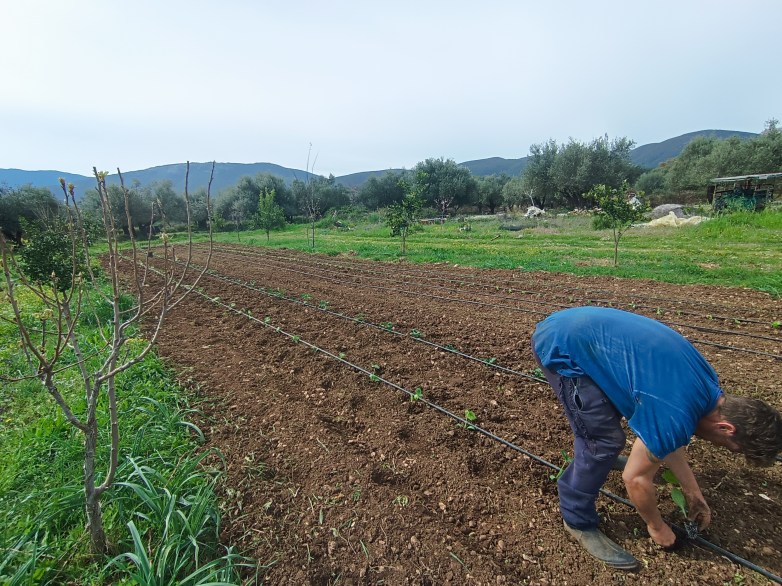
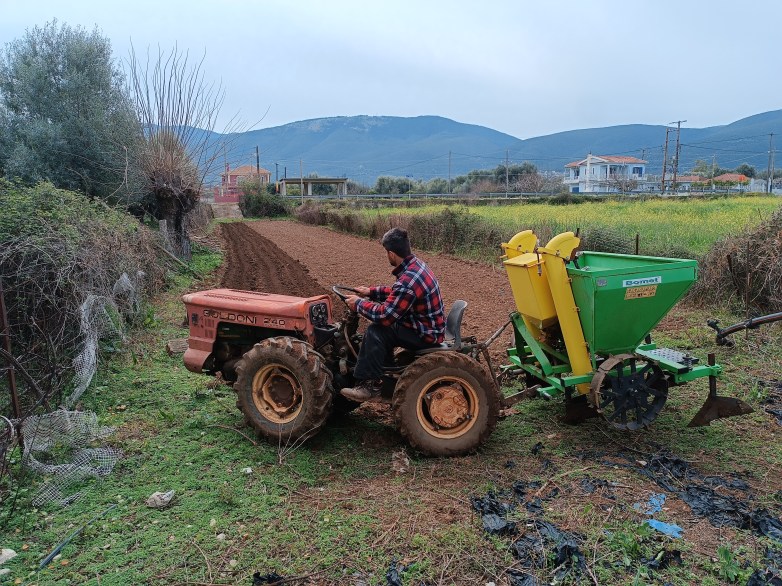
In total, I will stay for just under 2 weeks on the island, while waiting for responses to potentially sail the Greek waters. During these 2 weeks, I will have the opportunity to see a village festival with Greek dances, tour the island, learn the basics of agriculture, and learn to catch chickens with my hands 🐥.
Then one day, I receive a response from Aliénor, a girl I have been in contact with since December through a Facebook group (a goldmine for finding boats), telling me that she is going to work on her sailboat in Kalamata with the other members of the crew. The expected time for the work is one to two weeks, but it’s also interesting to see how to repair a boat and how everything works. So, I pack my things, and a few days later, I’m back on a ferry heading to the mainland!
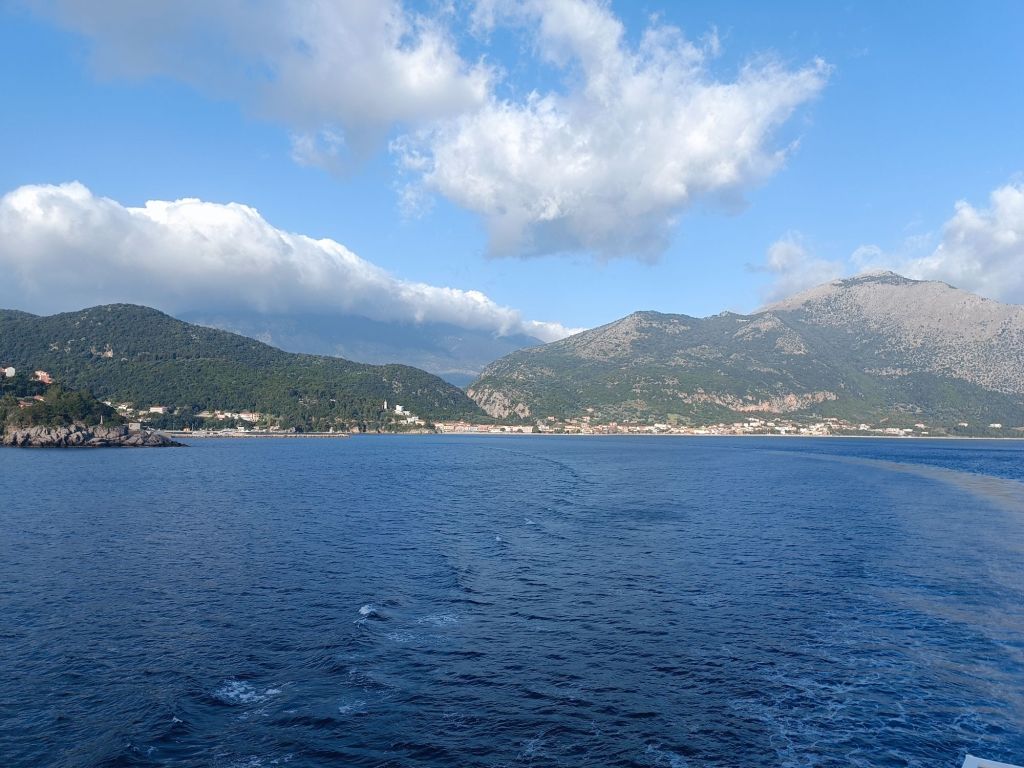
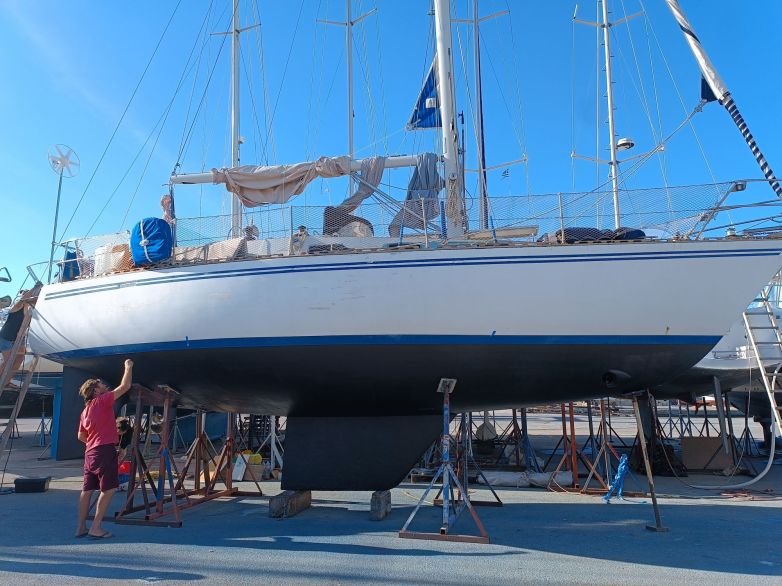
Upon disembarking the ferry, I quickly chat with a Dutch mom and a few minutes later, she, her partner, and their daughter will drive me towards Kalamata. Hitchhiking, I head south. The GPS indicates about a 2.5-hour drive to Kalamata, which should be fairly easy. But well, we’re starting to know the drill now. I move slowly, walk through villages, wait a lot, but ultimately manage to get a ride to Kalamata! It took me about 8 hours to make the journey, just like that. Fun fact: during the crossing of Pyrgos, I was able to witness a military parade in the streets because it was Greece’s Independence Day (25th of March). From what I’ve been told, it’s the day when the Greeks sent the Turks home in the 19th century. Anyway, I walk the streets of Kalamata to reach the marina and find the crew of « Lumière, » Aliénor’s sailboat. I meet another Cédric, Aliénor, and Cléo, who joined the team last. The boat has been taken out of the water because it has osmosis (a « disease » of boats, a chemical reaction of seawater with the hull’s resin. Basically, it’s not great, it needs treatment). On the agenda: sanding, putty, painting, cooking, and games!
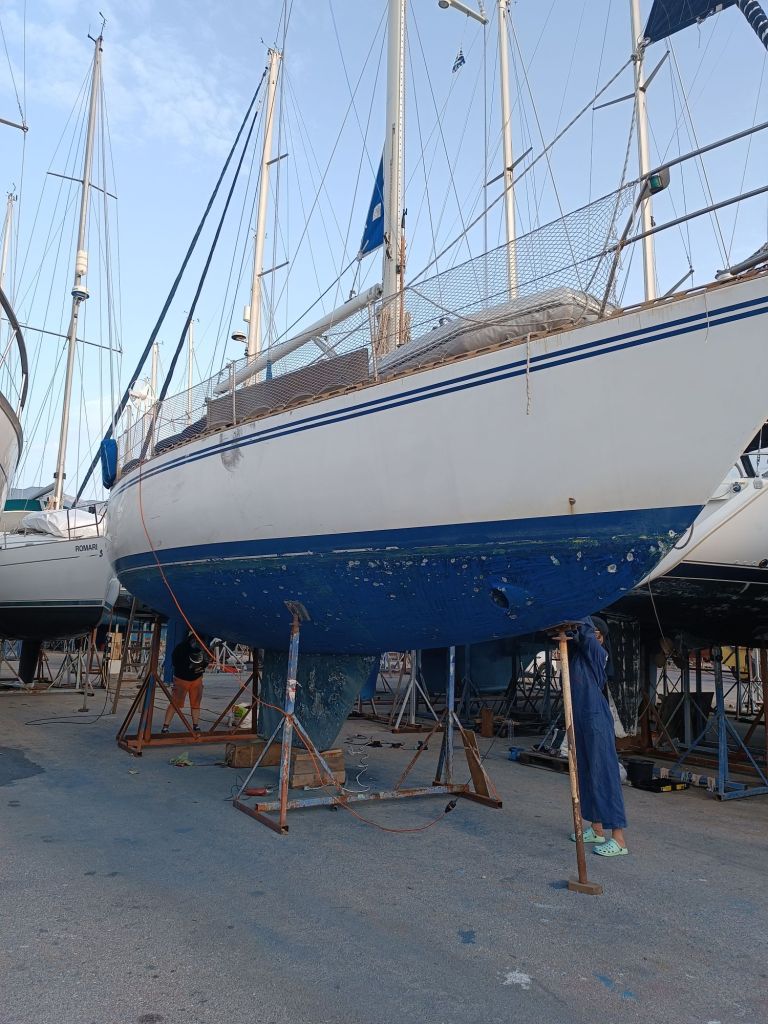
Lumière, it’s not a famous three-master like a bird, but rather an Italian sailboat from 1979, 36 feet long (about 11 meters). There is quite a bit of work to be done on the boat (osmosis, engine, painting, DIY, purchases…), but Cédric (not me, the other one) and Aliénor assign us tasks within our reach and help us if needed. The days go by and the work is progressing well, but due to delivery delays and other odds and ends, the departure date is pushed back by a few days. Finally, after 2 weeks in the harbor, it’s time to put the boat in the water! Lumière looks beautiful, completely refurbished!
Everything goes smoothly until we start the engine. And then, it’s a disaster: it doesn’t work. We get towed back to the dock and after checking, it turns out that the starter (which allows the engine to start) isn’t working. Huge disappointment for everyone because we were already picturing ourselves on the water. We’ll have to stay at the port for a few more days, waiting for the port electrician to find the replacement part. In the meantime, we’ll rest, read, and chill. We bond with our dock neighbors and I even end up helping an Englishman, a former sailing instructor, to set up sails on his sailboat, and he’ll teach me a thing or two. An aperitif with other people and a barbecue on the pontoon will also be on the agenda!
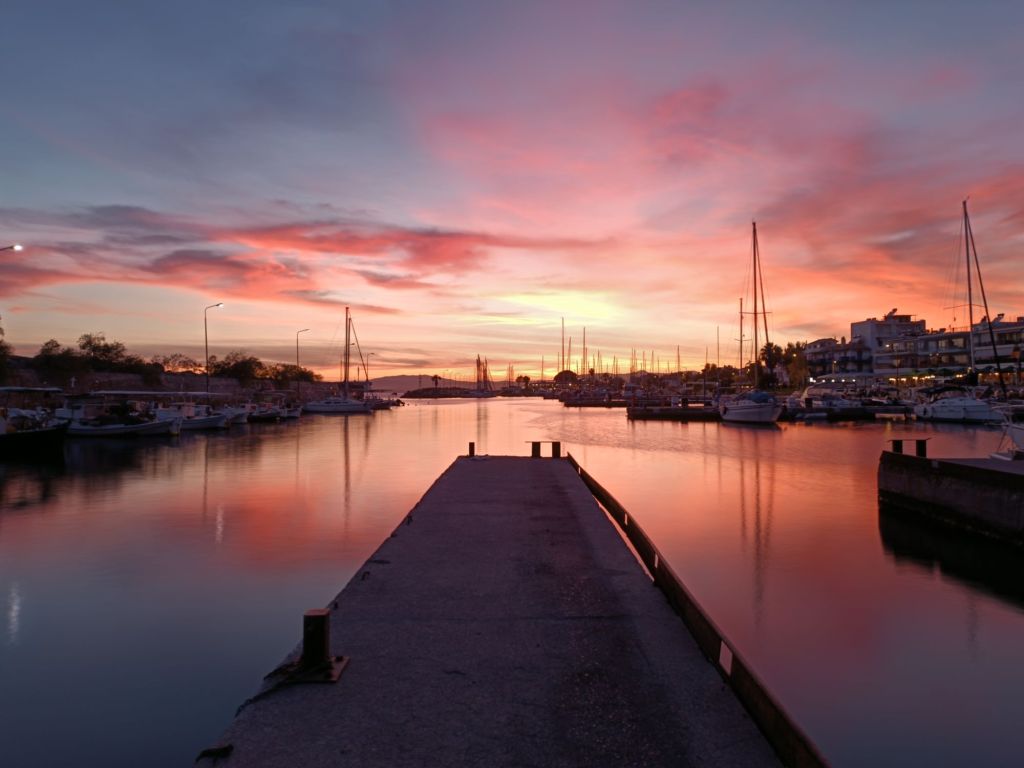
Three days later, the part arrives, the electrician tinkers with a few things, and everything is ready! A quick beer to celebrate, then off we go in the early evening!
Lumière set sail on the waves this Friday evening towards the Diros Caves. We navigate at night under the stars with only the fish jumping out of the water as our company. The wind is not very present, so the bulk of the journey is done by engine, but we will still arrive at our destination in the early morning, around 4:30.
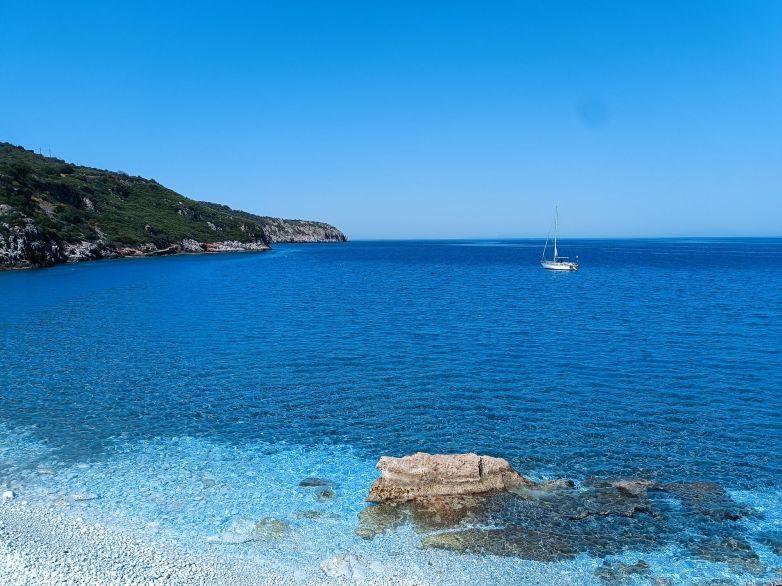
It’s only upon waking up in the early morning that we discover the little piece of paradise where we anchored. The clear water and the mountains in the background are just magnificent. We lower the dinghy into the water to go ashore, and I take the opportunity to stroll on the beaches and in nature. It’s a little paradise in nature, and after buying some local products from a nearby farmer, we head back to the boat to continue our journey.
When navigating over medium/long distances, time is often divided into « watches ». Watches are the moments when a person is at the helm (steering the boat) and must take care of adjusting the sails, monitoring the weather, the wind… This means that if we have a crossing of approximately 12 hours with 3 people, each person will have a 4-hour watch. Let’s make an example: a departure around 11 am and an expected arrival around 11 pm will result in: person 1, watch from 11 am to 3 pm, person 2, watch from 3 pm to 7 pm, and person 3 from 7 pm to 11 pm. However, it is generally difficult to predict an arrival time because the boat is dependent on the wind and the weather. No wind, no speed. No speed, no progress.
In our case, since Cleo and I are beginners at sailing, we will align with Cédric and Aliénor’s watch schedule and we will do watches in pairs. But generally, we sail during the day so there are usually 2 or 3 people on deck (outside in maritime terms).
We therefore move at the whim of the wind, and little by little we head towards the famous Cyclades. This is an archipelago located in the Aegean Sea, consisting of approximately 250 islands (24 of which are inhabited).
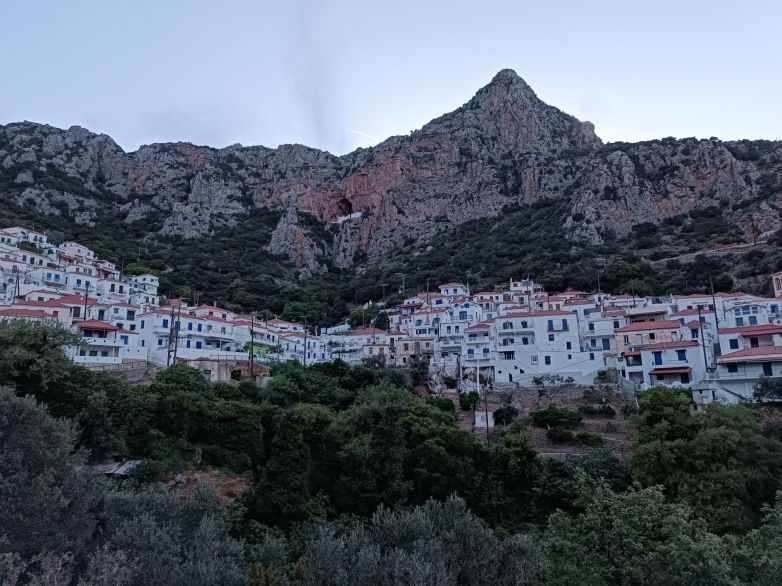
We continue our journey towards the south of the Peloponnese. The weather is good, the sky is blue, the wind is rather rare, but when it honors us with its presence, we manage to hoist the sails and Lumière glides gently on the water. We anchor for the night in remote spots, mostly only accessible by sea. During the day, we take turns at the helm, but we often find ourselves all on deck listening to music, singing, or simply taking a nap or reading a book! From the sea, we can admire the land from a different perspective and I must say the view is splendid! We reach the end of the Peloponnese, in the small village of Velanidia. A small Greek village perched in the mountains with its white houses like foam and its narrow streets forming a labyrinth.
It’s now time for the great crossing: leaving the Peloponnese to reach Milos, the first island of the Cyclades. It’s going to be the biggest crossing for us, about 18 hours of sailing. The weather is good, it should be fine! We leave in the early evening, under a cloudy but safe sky. I take my shift from 9 pm to midnight and then I’ll rest before waking up for my other shift from 3 am to 8 am. The night is calm, with a few stars in the sky when suddenly I hear a sound like a blow, an unusual noise coming from the water. Quickly! I aim the headlamp towards the sound and I see a dolphin coming to greet us. It won’t stay, but this quick encounter has woken us up! The wind has picked up, Lumière is advancing very well, and the GPS even indicates an arrival in the morning! We trim the sail a bit around 5:30 am, but the boat jibes (changing the sails from one side to the other with a wind coming from behind). And in a fraction of a second, the mainsail and the genoa (small sail at the front of the boat) abruptly change sides, breaking at the same time the piece that holds the mainsail sheet (the rope that adjusts a sail). A big stress and bad news, we will have to do without the mainsail for the end of the crossing. And it’s the beginning of the hardships.
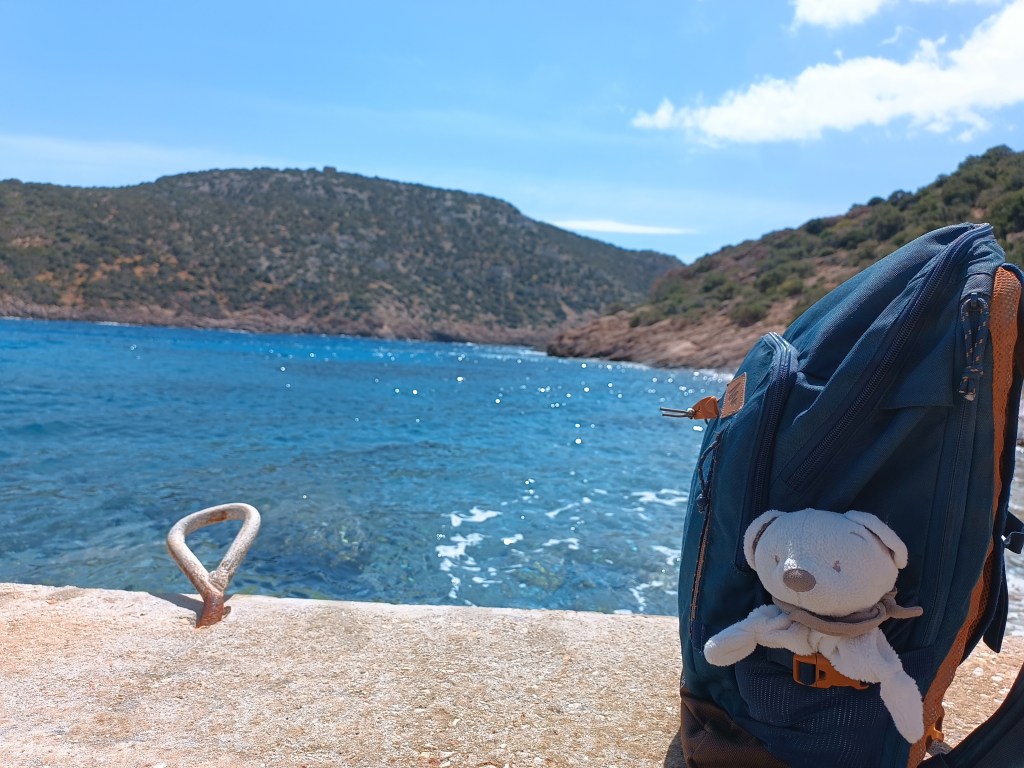
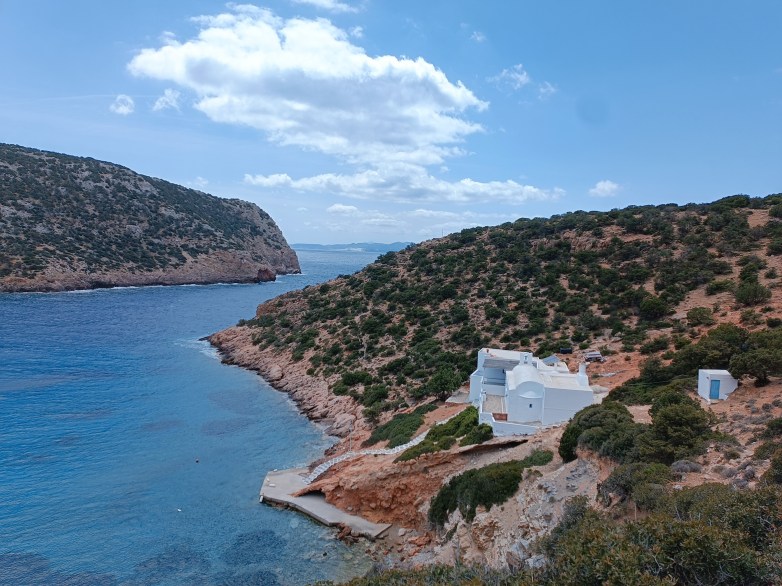
We continue our journey, more slowly, and the wind becomes stronger and stronger. The boat pitches in the heavy swell (it moves a lot, in short), and when the speed is low, it’s just terrible. The boat doesn’t make much progress, so we have to use the engine. We find ourselves on a rollercoaster for several hours. Then comes our second setback of the crossing: while we were all on deck (impossible to sleep with the swell), we see smoke coming out of the engine. I’m not a mechanic, but generally, when there’s smoke coming out of the engine, it’s never a good sign. We’ll have to do without it as well. The wind has picked up, a little too much actually. We have winds up to 50 knots (approximately 92 km/h) and it’s starting to get a bit dangerous. We’re getting sprayed in the cockpit by the waves, and I’m starting to feel seasick because the sea is very rough. The journey is long and turbulent. We’re all a bit fed up and can’t wait to arrive. In the end, we sailed for 24 hours non-stop to reach an anchorage in the bay of Milos. We’ll finally be able to sleep and rest! We tidy up the boat, but we need to change islands quickly because there’s no way to repair the broken things here. So, we set off towards the island of Sifnos. A smooth crossing, we enjoy the sun, the wind, we look at the sea and its waves, always hoping to see little dolphins jumping. Not this time, oh well. The island of Sifnos is renowned for its religious side. With its 360 churches on the island, it makes it the champion of the Cyclades! We arrive in a small port with… A shower! It’s really nice to take a shower after a few days at sea, believe me. I’m going to take advantage of this stay on the island (3 nights) to go for a little hike in nature. A short walk in the heights of the village, on dirt and rocky paths, with only the company of goats, birds, and the sound of the sea. I decide to walk barefoot (I’m not really used to shoes anymore) to enjoy the warmth of the ground and to feel the earth with every step. I arrive at a small beach littered with garbage (it’s starting to become common in the Mediterranean), I decide to continue my way to a church by the sea, only accessible by boat or by the path. A little lunch break (2 oranges), then I slowly make my way back on another route.
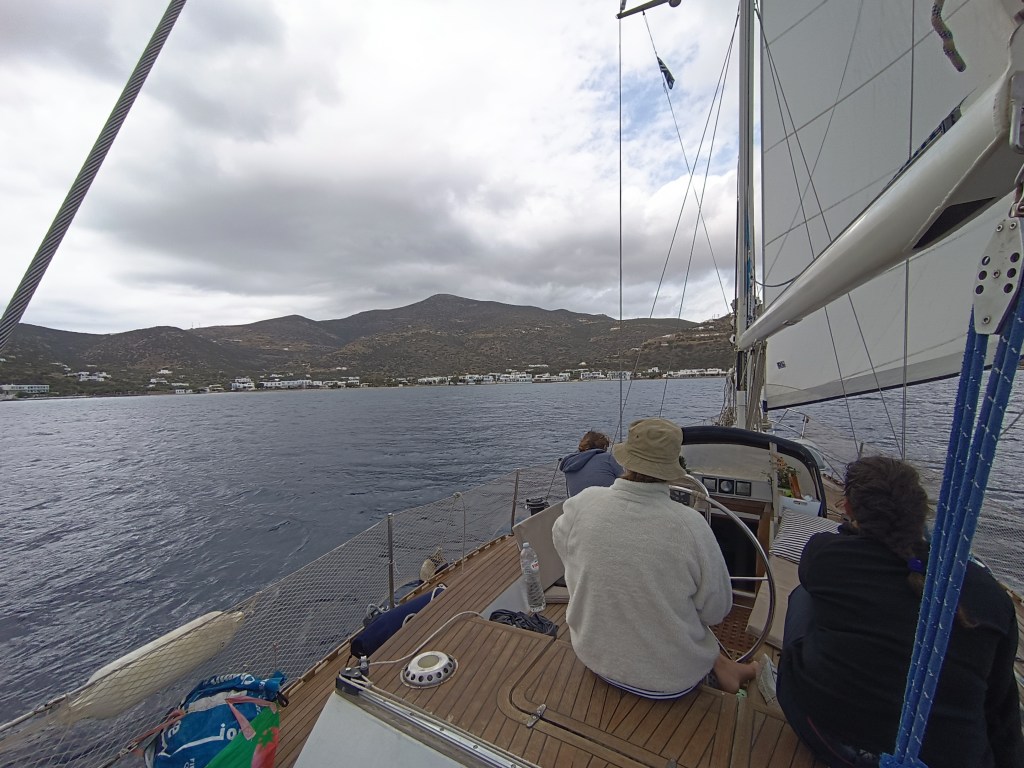
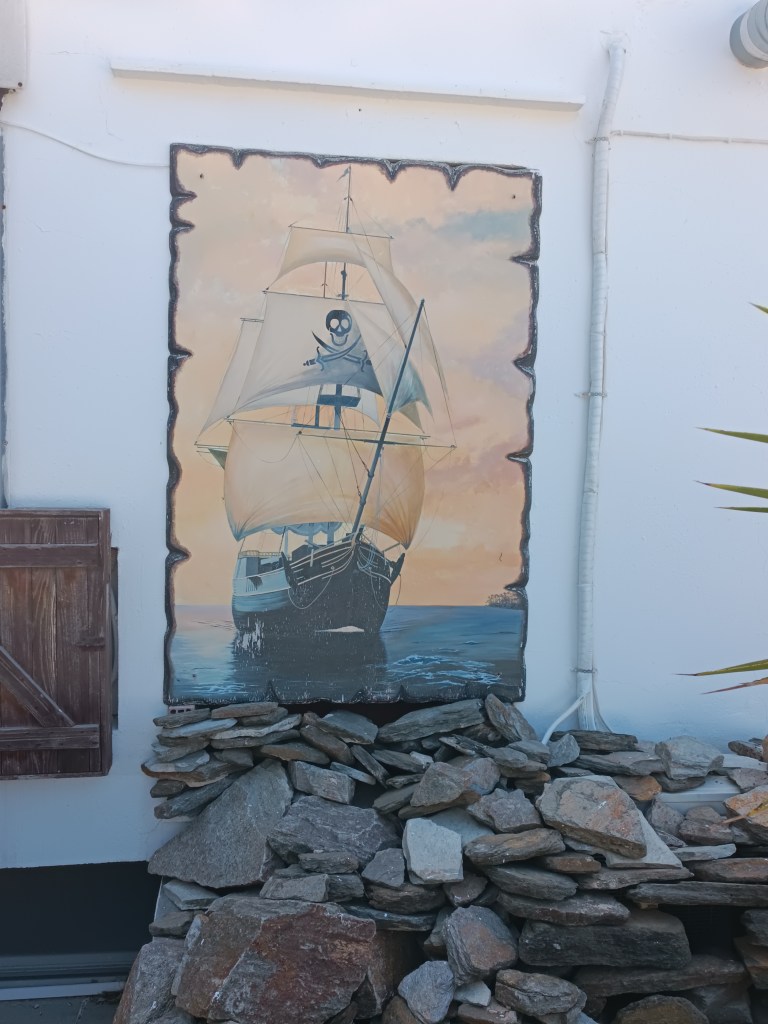
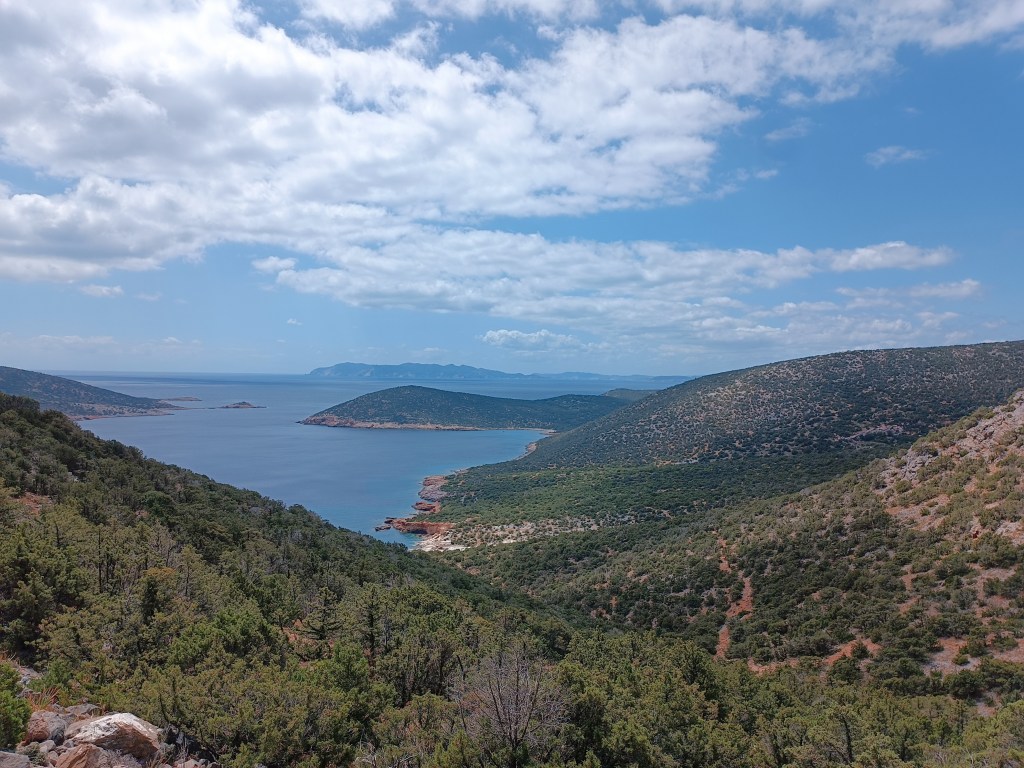
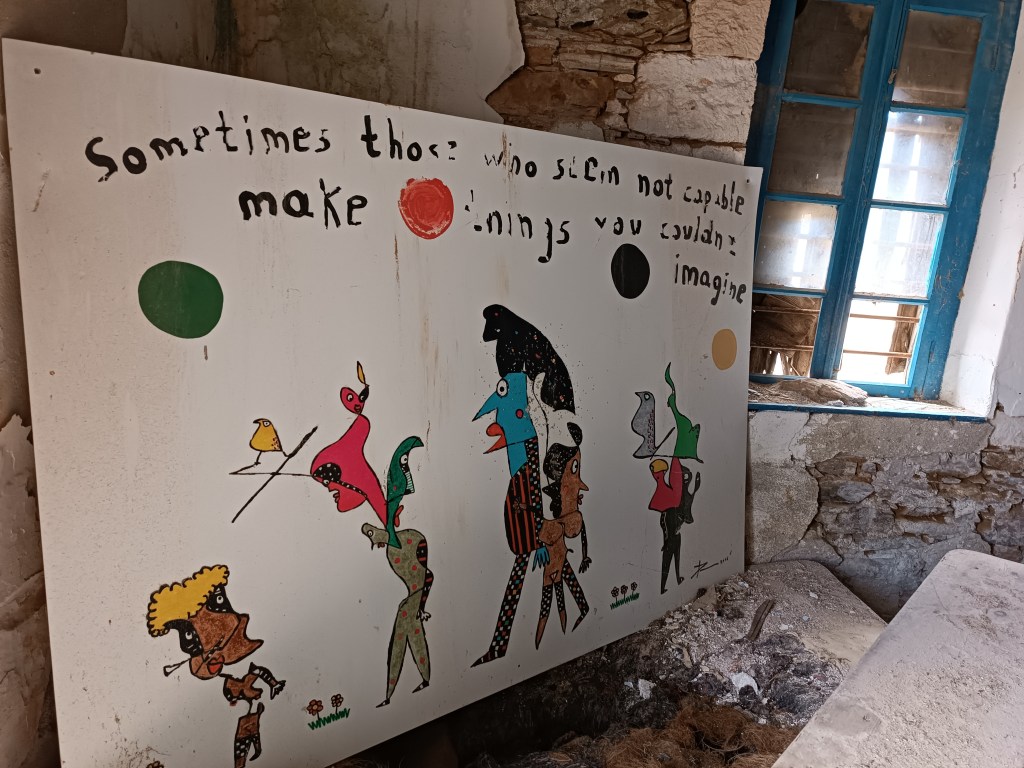
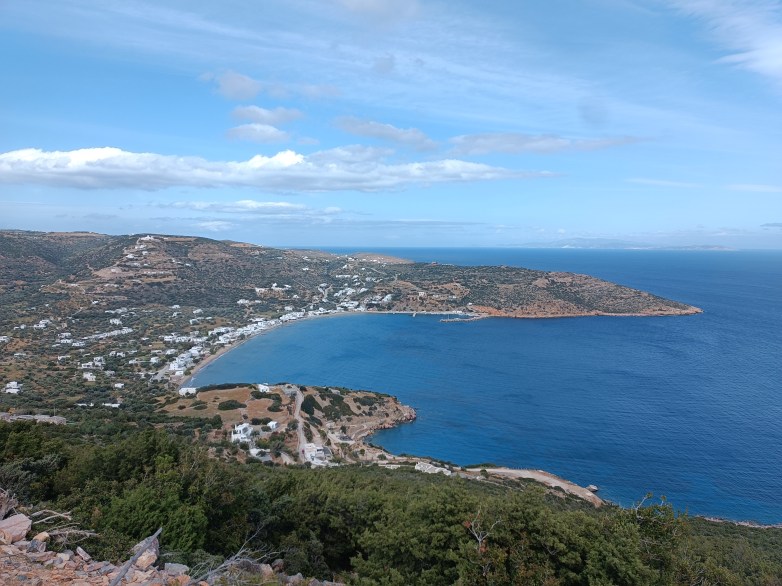
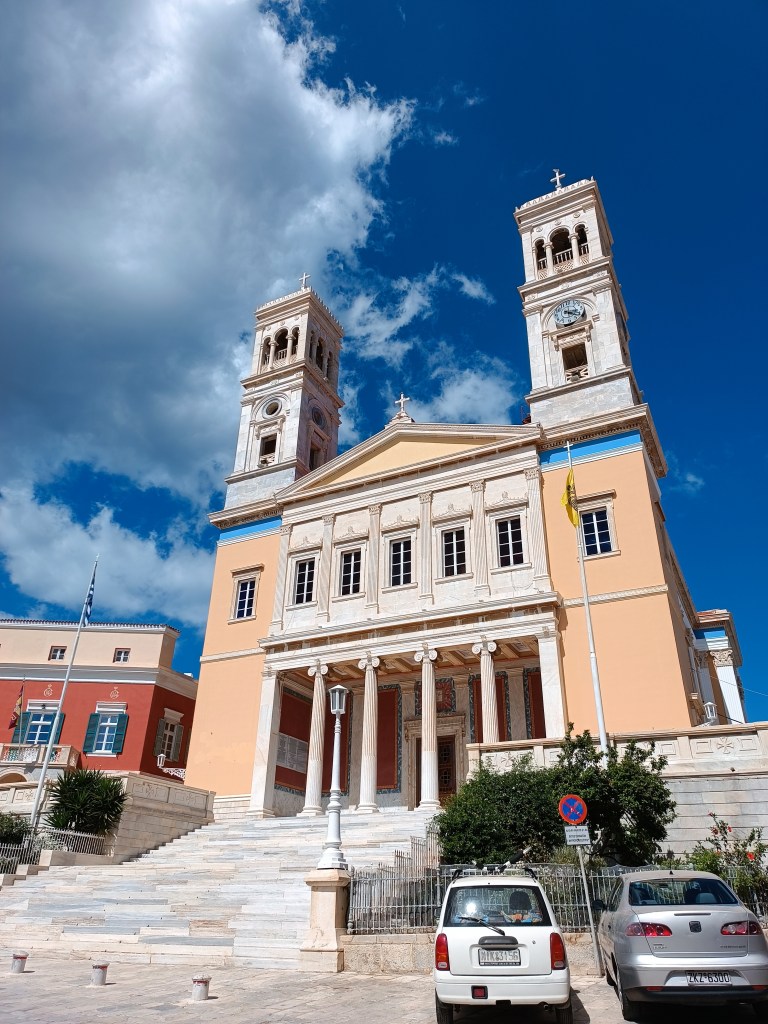
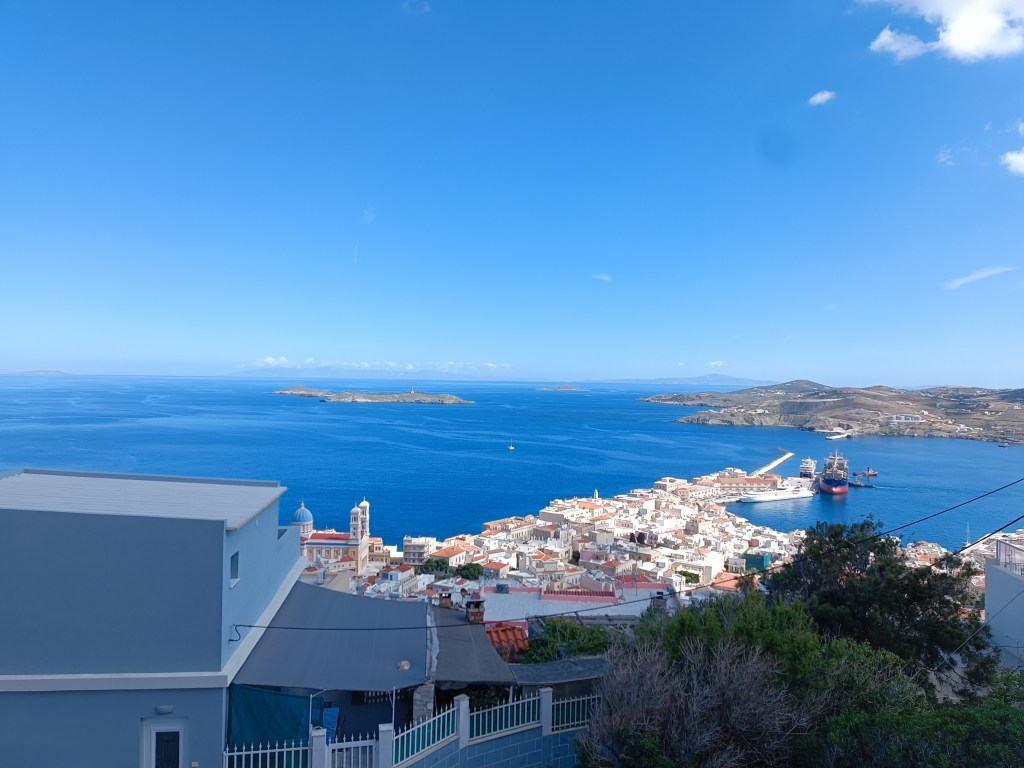
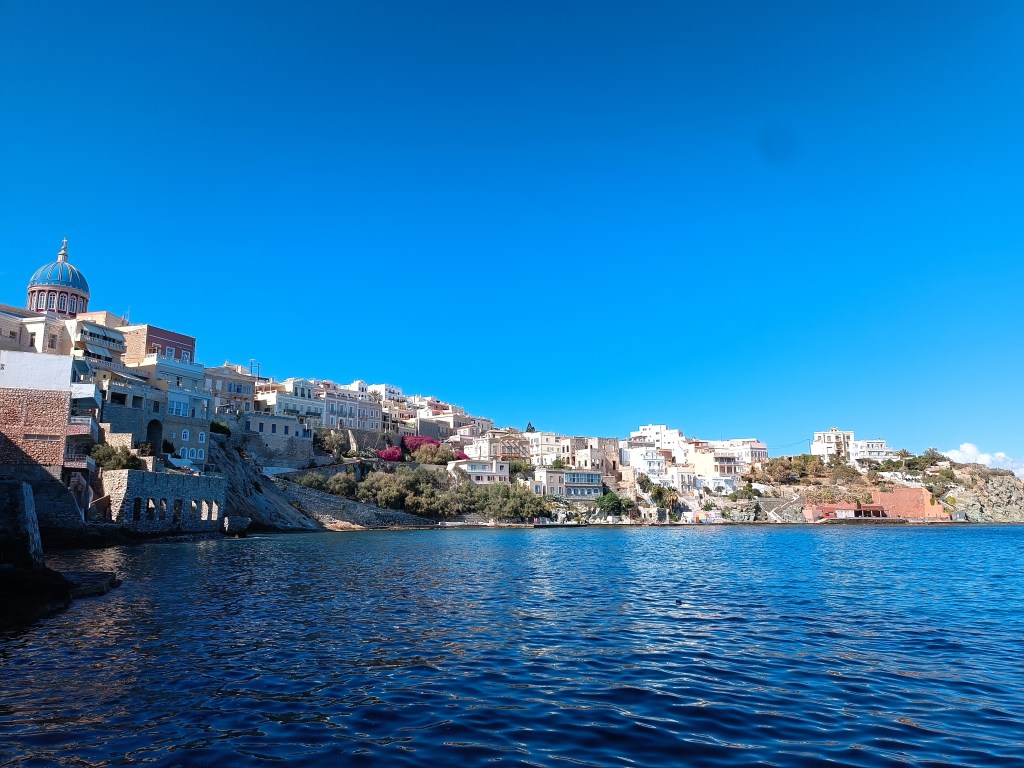
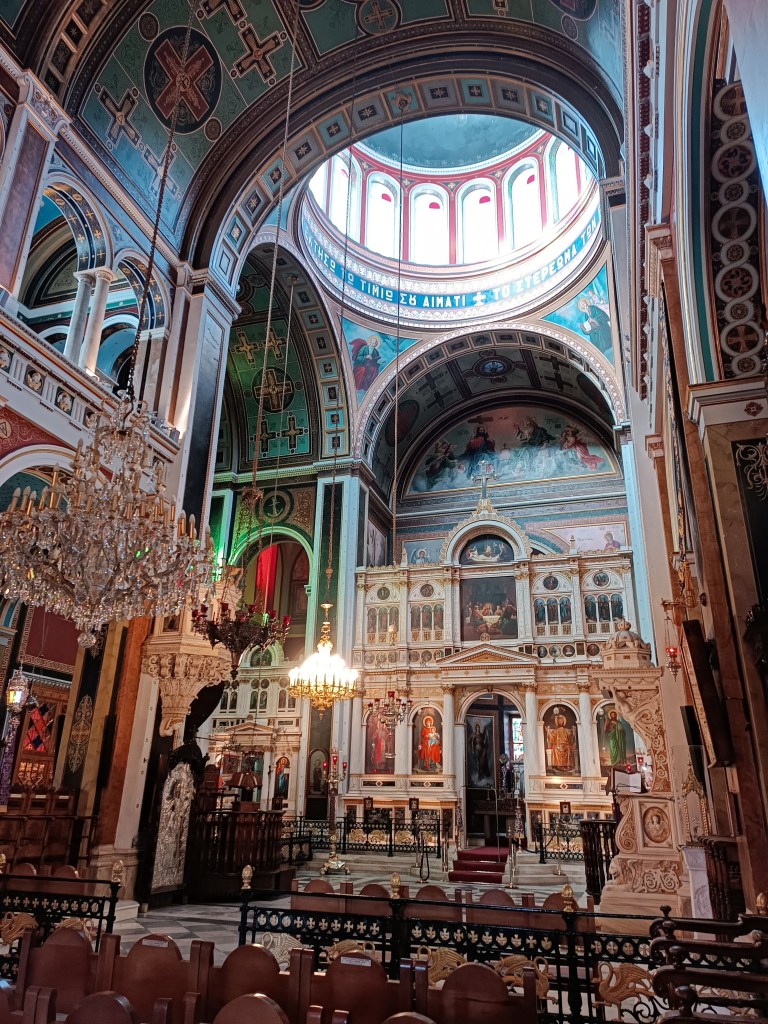
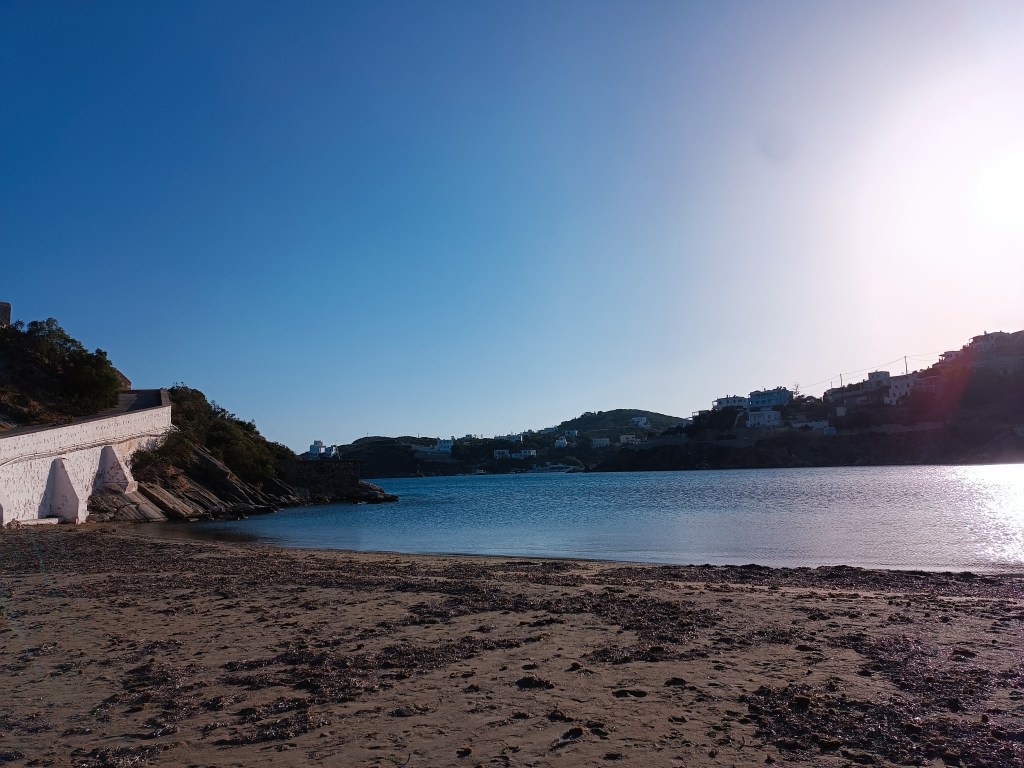
We leave Sifnos early in the morning (3 am to be precise) to arrive ahead of the storm (a storm hits the Cyclades about every 3 days) on the island of Paros. And we were so glad to have arrived before the storm! It was like a scene from an American movie! When we arrive, the wind starts to pick up, and barely an hour later, I am woken from my nap by Cédric because a hill is on fire. A boat has come loose from its mooring and is drifting in the bay (imagine a sailboat adrift in a bay with lots of other boats and ferries, it’s very dangerous). We keep an eye on Lumière but there’s no trouble for us. We’re in for a rough night because of the swell and the wind, and the next day, it’s the same story! The wind is blowing up to 100 km/h, so we stay on the boat playing cards or reading. Since the port authority isn’t very friendly, we decide to leave for Syros, about 24 nautical miles from Paros, where the port is larger and has more facilities to repair any damage. A calm overnight crossing brings us to the port where the repairs will take place. We visit the charming town of Ermoupoli and rent a scooter for 24 hours to explore the entire island. Syros will be the most beautiful island for me! Fewer tourists, incredible beaches, and a fantastic town! It’s time to continue by land, so I leave the cheerful company of Lumière to head to Athens where a friend I met at Christmas will host me for a while.
Syros island
Taking a short break in Athens to assess visas, borders, and the next steps!
PS: There is quite a bit of specific navigation vocabulary and also plenty of island names, I tried to put links for them all on the lexicon: just click on them!
En savoir plus sur Les aventures de Cécé
Abonnez-vous pour recevoir les derniers articles par e-mail.

 Les aventures de Cécé