After giving my resignation, I had about ten days before heading to the youth hostel in Sainte Luce. I took the opportunity to explore the island « Roots » style. Moving with my backpack, hiking, hitchhiking, sleeping on the beach. In short, the good life. So I leave « Julie, » the boat I was renting at the marina, and I rush to meet Colyne, a lovely girl I met through… Couchsurfing! Freshly arrived in Martinique after sailing from the old world, she had been on four different boats before reaching the Caribbean. Colyne had a few days free before starting a volunteer position in Sainte Anne, so we (organizing is a strong word) set up a little trip along the west coast of Martinique. We then stick out our thumbs and off we go for our first rides toward Diamant. Diamant isn’t the precious stone you all know; it’s a town famous for its big rock: the Diamond Rock (not the most original name).
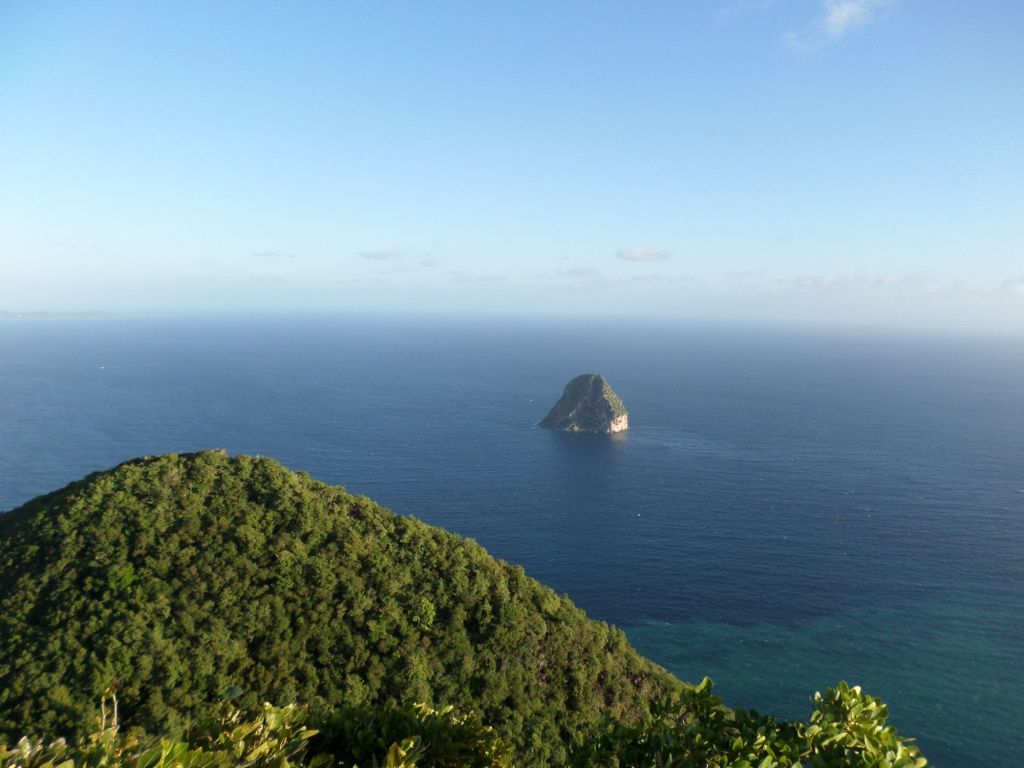
For the record, England settled on the rock in 1804 and established a military camp with cannons there. They remained on the rock for 17 months, during which they took advantage of this position to control the Saint Lucia Channel (the island to the south) and disrupt the French fleet.
Upon arriving at the village of Diamant, we stock up on supplies and then set off to climb Morne Larcher (a small peak at 477m high) from where we will have a stunning view of Diamond Bay.
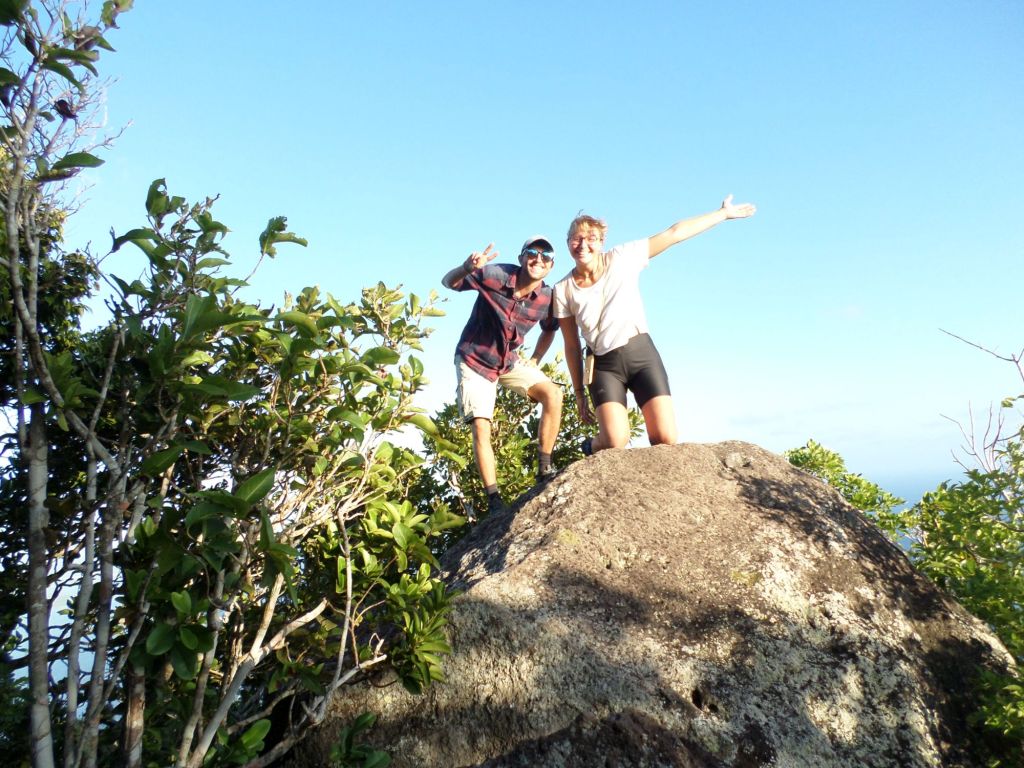
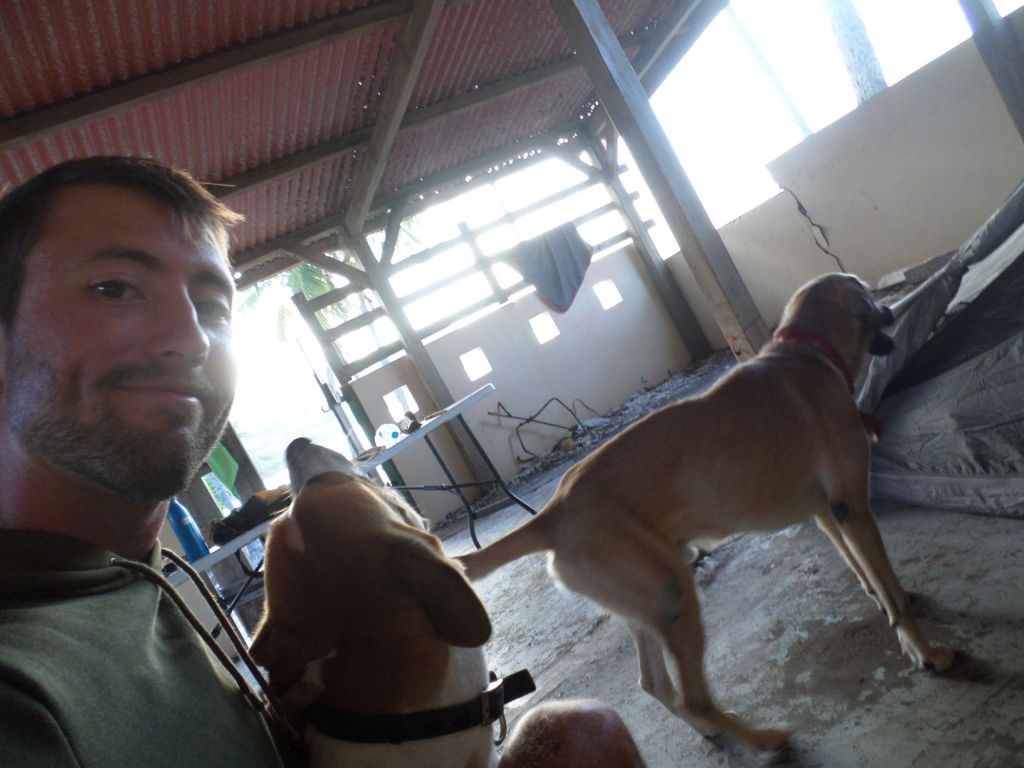
The descent hurts the knees, each of us has a heavy backpack of over 10kg. We arrive at Petite Anse, a fishing village where we will spend the night. We settle down in an old abandoned snack shack on the beach, and once the campsite is set up, we head to the only snack bar in the village that is still open. We will have dinner there and then return to our improvised campsite for a good night’s sleep. First night of wild camping for Colyne!
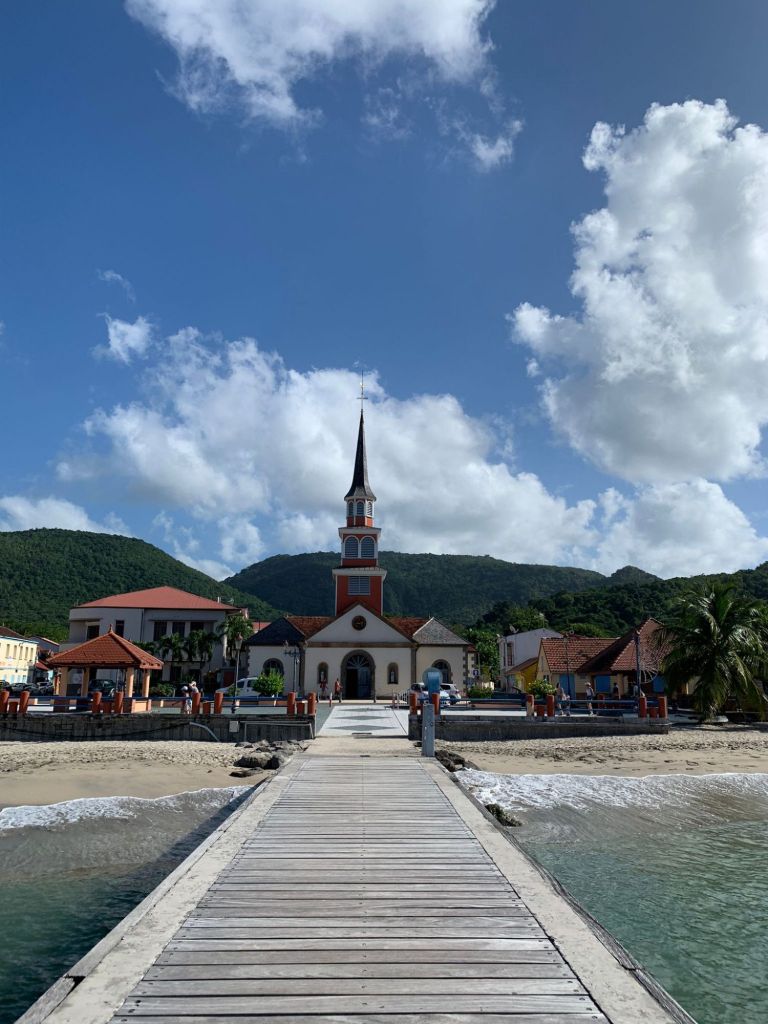
After a nice morning swim, we set off towards the Anses d’Arlet, a small village a little further north. We settle on the beach, and while Colyne goes to visit the church, I put on my mask and snorkel to explore the underwater world. There are quite a few fish and corals, and as I venture a bit further away, I come face to face with two turtles peacefully feeding. They act as if I’m not there, and I keep my distance not to disturb them. The Anses d’Arlet is famous for its jetty that leads up to the church in the village.
We eat a bite and continue north to reach Grande Anse, but this time on foot. A small hike of an hour, but in the full sun and with our heavy backpacks, we suffer a bit. After a swimming break, we continue towards our goal for the day: to arrive at L’Anse Noire to spend the night. We hitchhike and quickly arrive at our final destination. We strike up a friendship with the owner of a tiny snack bar by the parking lot and buy our dinner and supplies for breakfast the next day. Once everyone has left the beach, we set up our tent and hammock and have dinner under the starry sky. I spend a somewhat restless night because of the Yens Yens, the sand flies of Martinique. They are tiny, but their bites itch for days, which is very unpleasant.
The next day, we headed to the Slave Savannah, near the Trois Ilets. It is a memorial site where the owner has reconstructed slave huts. Here, one learns all about the history of slaves in Martinique, how they lived, cared for themselves, and ate. It is a beautiful and very informative place! In fact, the first workforce on the island consisted of Bretons and Normans. Plantation owners promised them a piece of land and resources after five years of work. In reality, many of them died before receiving their reward. Then, the slave trade began, and tens of thousands of Africans were forcibly taken to the Caribbean, including Martinique.
It’s time to part ways with Colyne; she is heading south for her volunteer work while I’m going to Pointe du Bout (north of Trois Ilets) to meet Nolween and Christophe, my bosses from last summer at the world-renowned brewery: Grain de Celte in Le Croisic. We spend the evening together, and in the early morning, I take the shuttle to Fort de France and leave the city to start hitchhiking towards the former capital, Saint Pierre. Along the way, a gendarme tells me the tragic history of this city. In 1902, Mount Pelée (the island’s volcano) erupted. A glowing cloud surged down the volcano’s slope and headed straight for the town of Saint Pierre. Within 2 minutes, nearly all the inhabitants perished. History remembers the name of Cyparis, a prisoner who killed a man; he was locked up in the town’s prison. The walls of his cell protected him from the scorching blast, and despite serious burns, Cyparis survived. He became known for surviving the Saint Pierre disaster and went to the United States with a circus troupe, where he recounted his story and the tragedy. In reality, others survived as well, but their stories attracted less attention. The number of victims is around 28,000 people. Saint Pierre was a prosperous, modern city and a major port known throughout the Antilles—a bustling transit point. There were also elections coming up, which attracted even more people at that time. There were signs of an impending disaster, but the city officials chose to reassure the population to maintain the elections. Let’s recap: a city brimming with people, signs of an imminent eruption, an election that had to go on despite the danger. Add a volcano erupting, and bam—it’s the deadliest volcanic eruption of the century.
I arrive in this town, which was erased from the map 120 years ago. You can see the ruins in certain parts of the town and how the houses have been rebuilt on top of them. I take the opportunity to visit the Catastrophe Memorial, which recounts the eruption. They did an enormous amount of research to find the people who died during the blast. After a visit to the old theater, I continue my journey north. A fisherman will drop me off at Prêcheur, the last village to the northwest of the island. I will spend the night there, still camping on the beach, and the next day I set off towards Anse couleuvre! Three students give me a ride, and we all head out together for a 7-hour hike through the jungle to reach Grand Rivière.
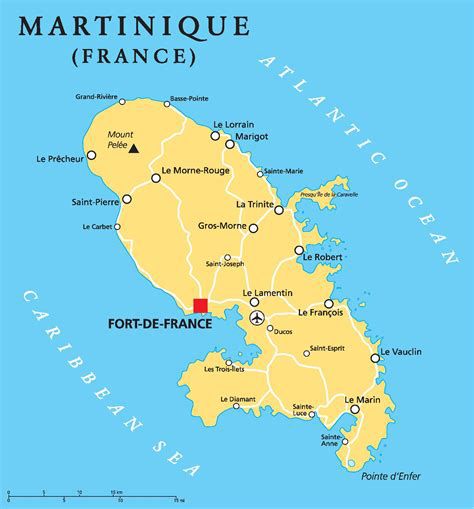
The hike is going well; we stop at a river to swim, sweating profusely, but it’s worth it! We can observe gigantic trees, cross rivers, and unfortunately, we didn’t see a Matoutou, the Martinique tarantula. My hiking companions head back to their car via a fisherman’s boat, while I decide to spend the night on the Sinaï beach.
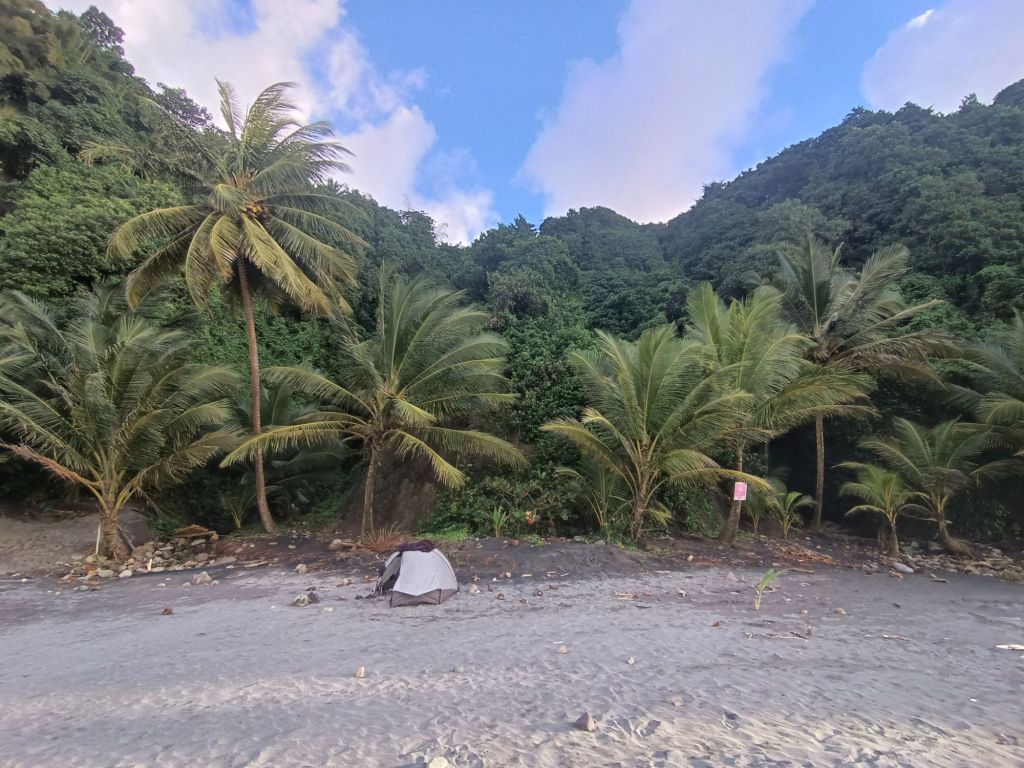
Another beautiful night at the beach under the stars. I leave by boat with a fisherman at dawn, then it’s time for a swim at Anse Couleuvre. Nolween and Christophe arrive, and we set off for a short 45-minute walk in the jungle to see a waterfall. A magnificent waterfall, we slip underneath the waterfall for a natural massage! We return to the beach to relax, then it’s already time to head back. They drop me off at the junction to go towards Tartane (you are starting to know it now).
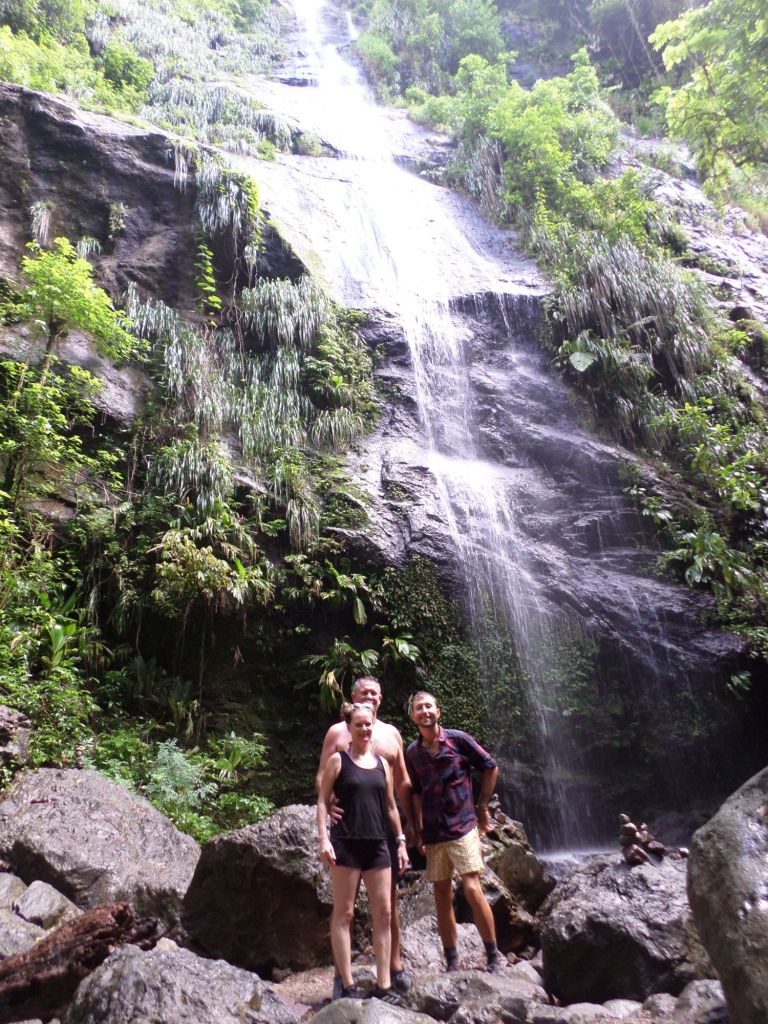
Tartane, a surfers’ village on the Caravelle peninsula where I often go. After enjoying a good pizza with the locals, I walk to my favorite camping spot and set up my tent to spend the night. The sound of the waves lulls me to sleep, and I wake up at the same time as the sun. I pack my things, and I take the opportunity to rent a surfboard to practice. There are a few waves, but it’s still difficult to tell if the wave is good for surfing or not. I try anyway, paddling and attempting to stand up, most of the time without success. I give it several more tries, and by the end of the session, I’ve managed to stand up a few times—cool! With my arms on fire, I go to see my friend Toto (Thomas from Couchsurfing). We chat casually, and then I decide to stay one more night at the beach and leave the next day. I head south, passing through the East coast. I get a ride from a pharmacist, a gardener, a Cape Verdean… just a variety of people! I stop near Vauclin at a kite surfing spot, but there’s no great vibe, so I hit the road again towards Sainte Anne. I’ll spend the night there, tenting on the beach for a change. However, in Sainte Anne, there are Yens Yens, the infamous sand flies that bite. I get bitten all over, so much that I have to put on my sweater and pants for protection. I go get a pizza and have dinner on the beach under the stars. That was my last night camping wild. Now I’m heading towards Sainte Luce, to the Martinique Hostel, where I’ll start volunteering until January!
En savoir plus sur Les aventures de Cécé
Abonnez-vous pour recevoir les derniers articles par e-mail.

 Les aventures de Cécé