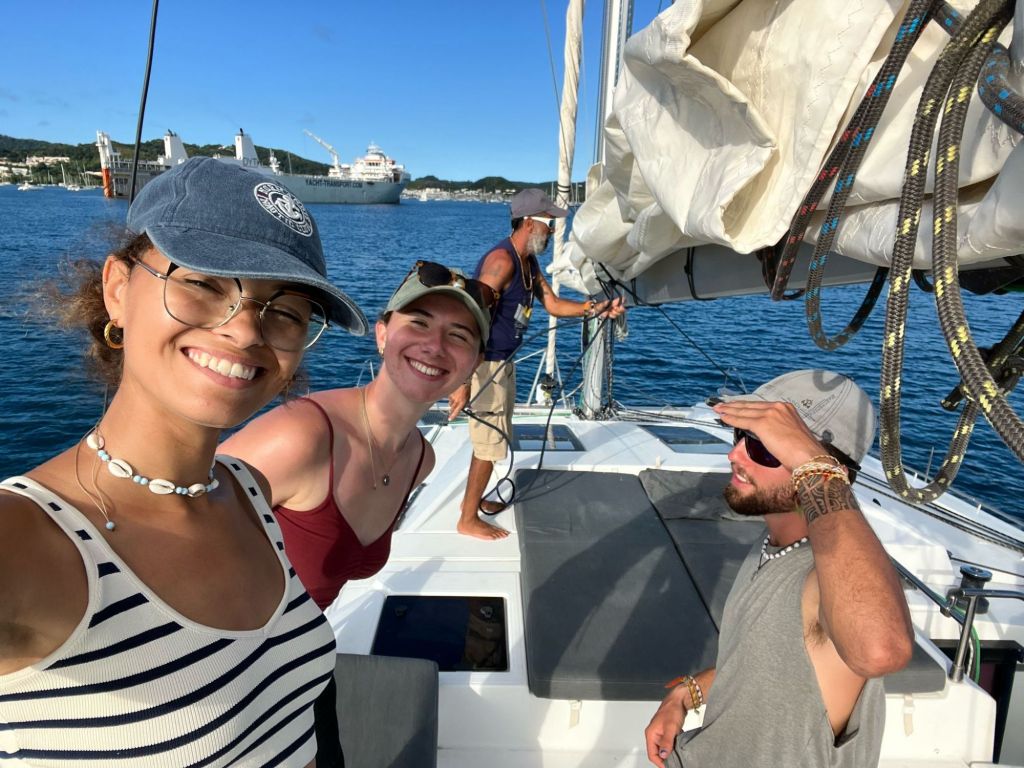
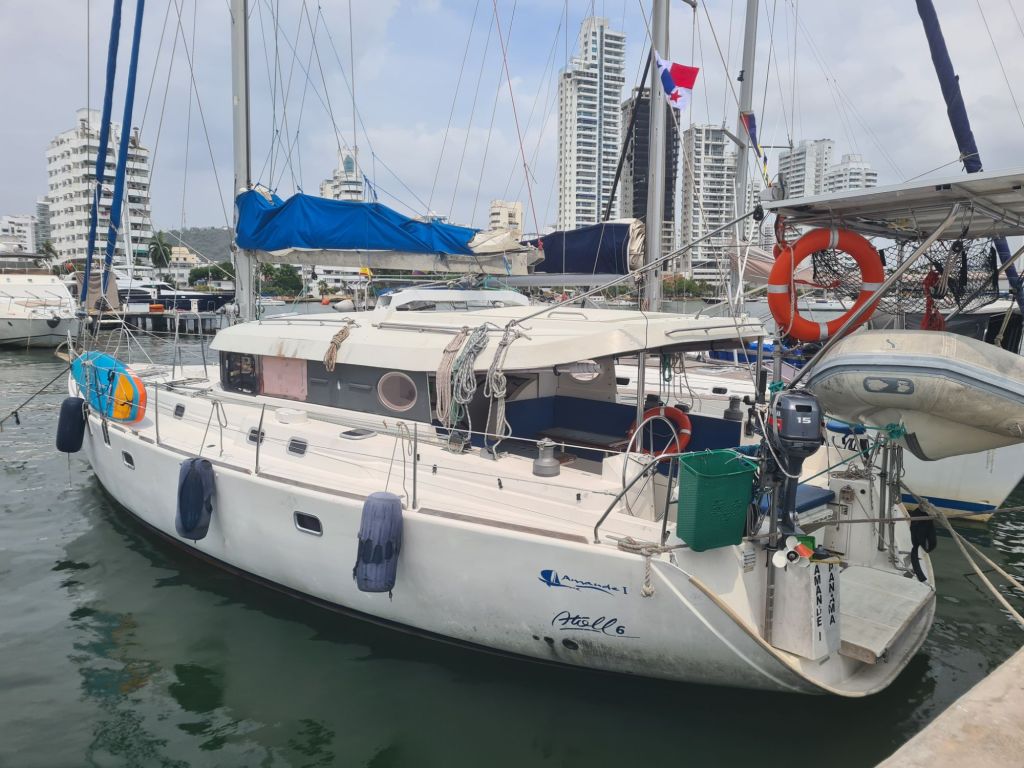
We arrive in St. Lucia on Tuesday late afternoon. After passing through customs and completing all the formalities, we exit the port free! We start looking for a bus to go to the marina at Rodney Bay, in the northwest of the island. At first glance, there are a lot more people than in Dominica. And many more infrastructures. It’s a mix between Martinique and Dominica. Anyway, we arrive at the yard in the early evening. We are supposed to leave tomorrow as a reminder. The boat is still not in the water; there are many things to repair before departure. I have the impression we’re going to stay a few more days. It should be noted that the boat was supposed to leave before Christmas to head to the San Blas, an archipelago in Panama in the Caribbean Sea. The skipper arrived at the end of January on the boat, and he was supposed to leave shortly after. Now, we are at the beginning of March for your information. The owner came to speed things up. So, we are with Koke, the skipper, who explains the situation to us. We’re now aiming for a departure on Saturday or Sunday. No worries, that gives us time to organize, buy provisions, and gather other things that are missing on the boat. The boat goes in the water on Thursday, and Koke and the owner are working well on it. We help with cleaning, organizing, and other small fixes; we don’t know much about mechanics or heavy work. In St. Lucia, there’s an appointment not to miss: it’s Friday Night! It’s renowned in the Caribbean as « The place to be on Friday night. » The streets are blocked, and big speakers are set up in the streets of Gros Ilet, next to the marina. Since we’re here, why not party, right? Especially since our captain seems to be someone very festive. So we’re off to celebrate appropriately in the streets of St. Lucia. The next day, after a good shower, we are all invited to a meeting with the owner. There’s news. And not minor: Koke, the skipper, is going home to Turkey. It’s the owner and his girlfriend who will do the sailing. We don’t know them, and the owner doesn’t seem fun. Second piece of info: we’re leaving for Martinique to buy an autopilot. And we’re leaving in one hour. Wow, that’s a lot to wake up to! We discuss it with NJ and Emma, and we all agree to stay on the boat, provided that the trip to Martinique goes well. Koke doesn’t like the owner, and he warns us that he wouldn’t go sailing with him. The crossing to Martinique goes well; we talked little with the owner (Jeff), but that’s okay. Upon arriving in Martinique, we anchor and launch the dinghy. There are quite a few errands to run, both for the owner and for us if we want to eat. So we spend the late afternoon and Sunday morning making back-and-forth trips in the dinghy to fetch boat parts, food, water, and anything else that might be lacking. NJ and I take the opportunity to stop by the hostel to say hi to Dani, then we go have a drink at the marina with her and her friends. Sunday noon, we’re all set. We fill up on water and diesel, then we’re off! Everything was done at the last minute, it’s not ideal at all. We’re supposed to sail for 7 days, 10 maximum, to arrive in San Blas.
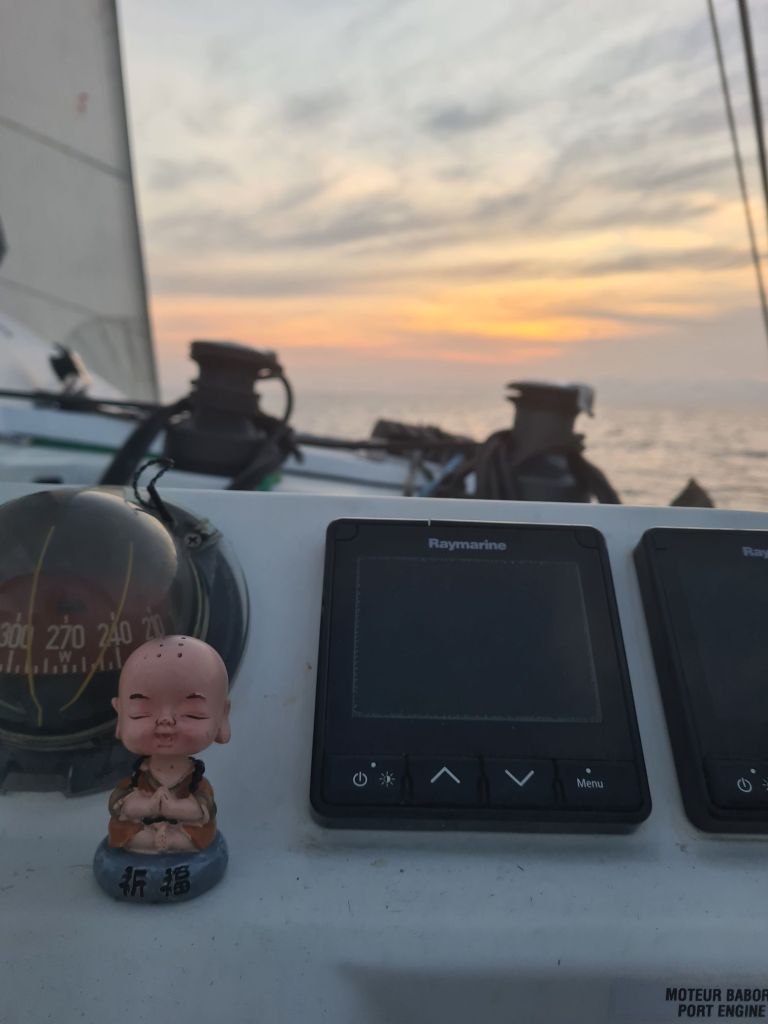
The journey is divided into two parts. The first is the navigation from Martinique to Bird Island in the Las Aves archipelago. Don’t know where that is? That’s normal; it’s totally remote. It’s located north of Venezuela, west of the Los Roques archipelago. During this crossing, we relied heavily on the engine. There wasn’t much wind, so the solution was the engine. The problem with this destination is that Jeff never mentioned it to us. We thought we were going straight to San Blas, but he decided otherwise. To be fair, he’s not the best communicator, far from it. We stop several times along the way to fish because Jeff is a big fishing enthusiast, joy! He dives into the sea with his spear gun and brings back fish. One or two fish is okay, but when the freezer is packed with fish, you start thinking he should stop there. But no! He keeps fishing and fishing and fishing some more! The guy always wants more. Even his girlfriend is getting a bit tired of fishing at this rate. From the first few days, it’s clear that this won’t be a fun crossing. There’s also an American on board; he’s nice but a bit simple-minded (no offense). A simpleton and a big macho who doesn’t speak, this is going to be a long crossing. Thankfully, Jeff’s girlfriend is cool, and I’m with NJ and Emma, which balances things out. Anyway, you get the picture. For now, we have little wind, low swell, and sunshine.
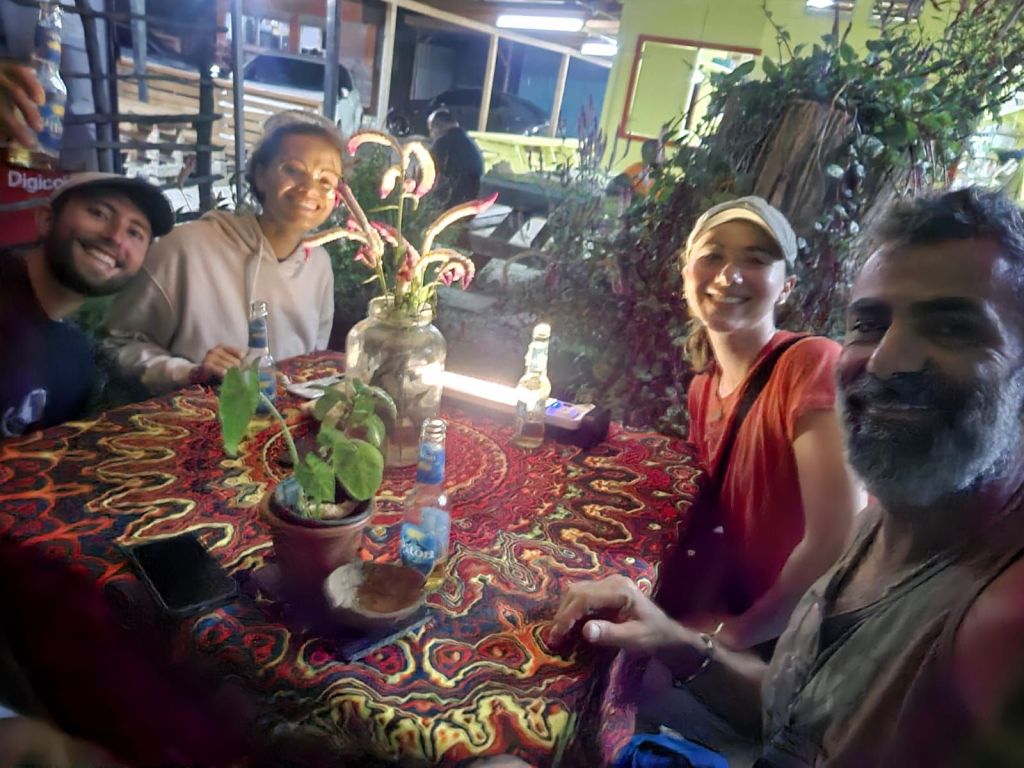
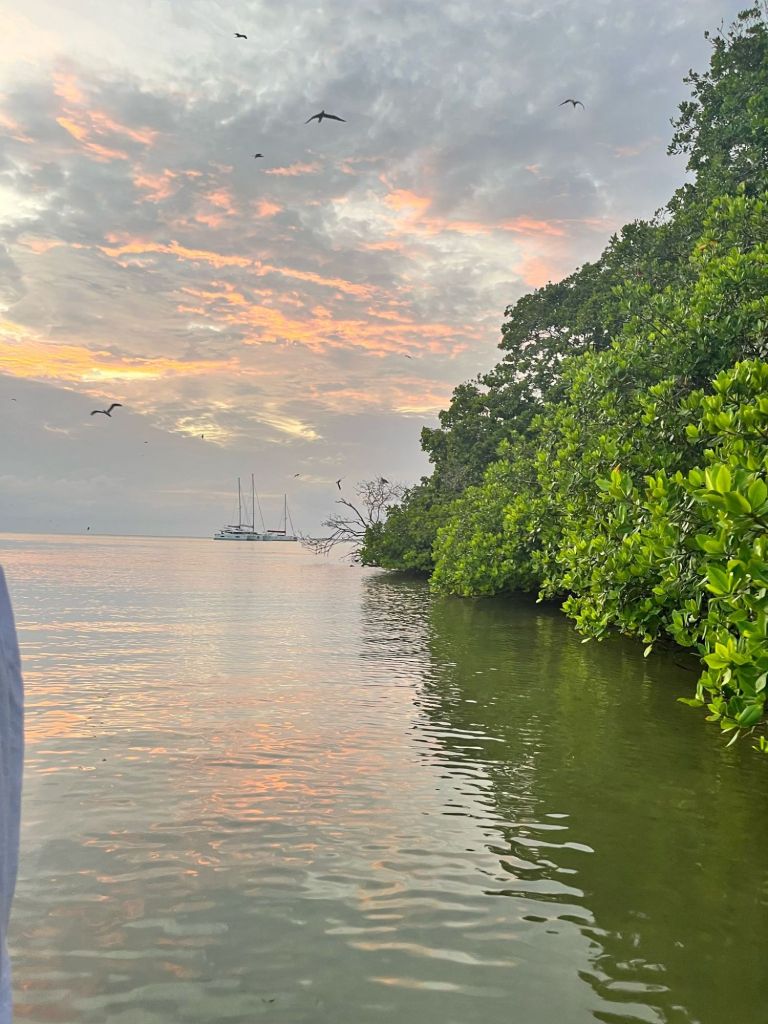
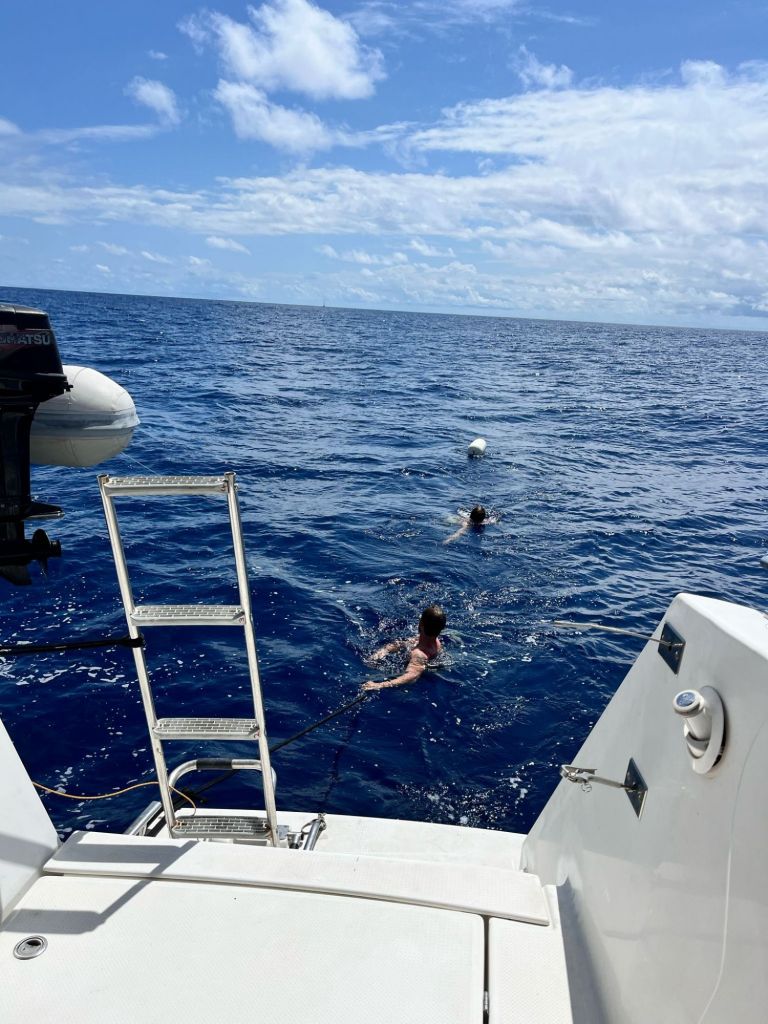
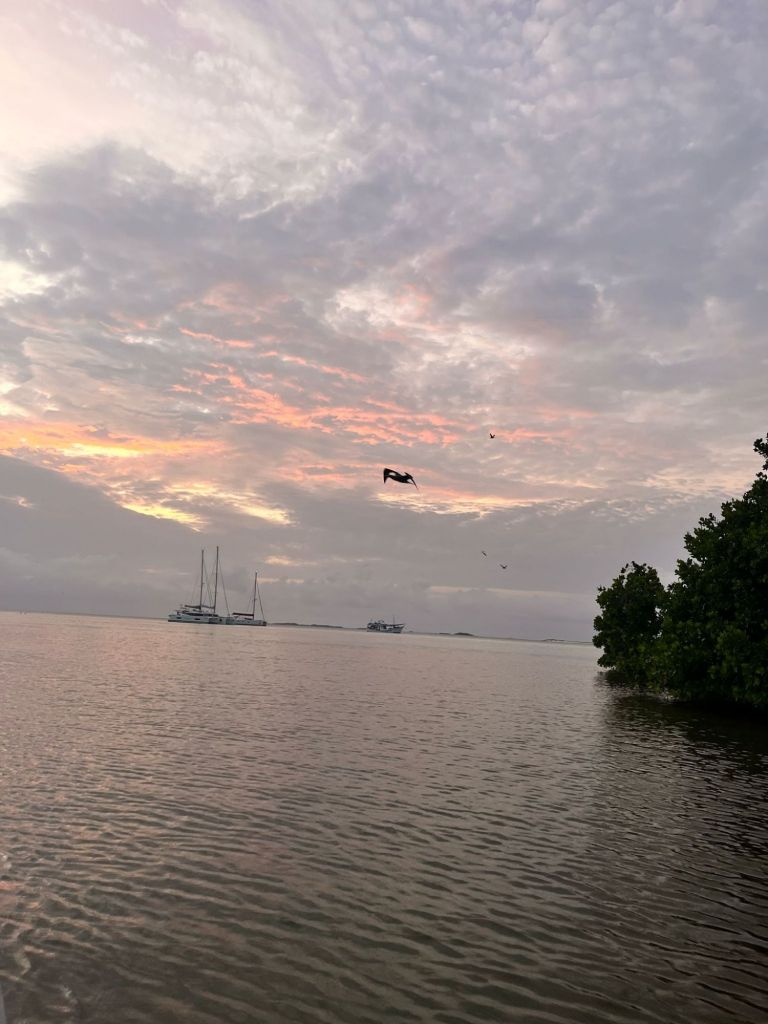
We arrive in sight of the Bird Island on Wednesday around midday. The anchor is dropped, and we settle in for a night? We don’t know, Jeff isn’t communicating… Anyway, we put on our masks and dive into the water! We go to greet our neighbors at anchor (some French) and chat over coffee on their boat. A sweet couple of retirees who sail in the Caribbean for six months a year, leisurely. We also take the opportunity to go snorkeling, but apart from some tiny jellyfish, the sea is quite empty. I must say there are hundreds (even thousands) of birds just next door! Jeff’s father’s boat, which is traveling with us, arrives and moors alongside ours. On Jeff’s father’s boat, there is Jeff’s brother and a French woman, Lucie, who is a crewmember sailing with them. Their mainsail came off during sailing, so someone needs to climb the mast to fix the problem. Jeff takes care of it. The upside is that he knows how to repair boats. Once the repairs are done, the whole family takes the dinghy out to go… fishing! It’s been a while! NJ, Emma, and I stay on the boat to eat and rest. In the meantime, we have a visit from Venezuelan soldiers who tell us that we need to pay a tax as it’s a nature reserve here. I tell them the captain isn’t here and to come back later. In the end, we never found out if they were real soldiers or just guys looking for a tip. In the early evening, after their return from fishing, we all go in the dinghy to the mangroves to observe the birds. They come to the island to lay their eggs, and at this time of year, nearly all of them have hatched! We can see lots of little white baby birds still in their nests and also hundreds of birds flying in the sky, some for the very first time. It’s beautiful! We return to the boat for dinner, then head to bed. The next day, we wake up at 6 AM, as planned the day before, but no one is awake. Great… In the end, we leave an hour later and set our course for the San Blas! We will sail past the ABC Islands (Aruba, Bonaire, and Curaçao). With NJ, we ask the captain if we can stop in Bonaire (we’re passing right by, and it would be so much easier to get to South America). Jeff doesn’t want to because it would take us a day to do the paperwork to go there and leave. After the boat has spent over three months in St. Lucia, what’s one more day? But no, Mr. Jeff doesn’t want to. Too bad, we’ll have to wait for the San Blas.
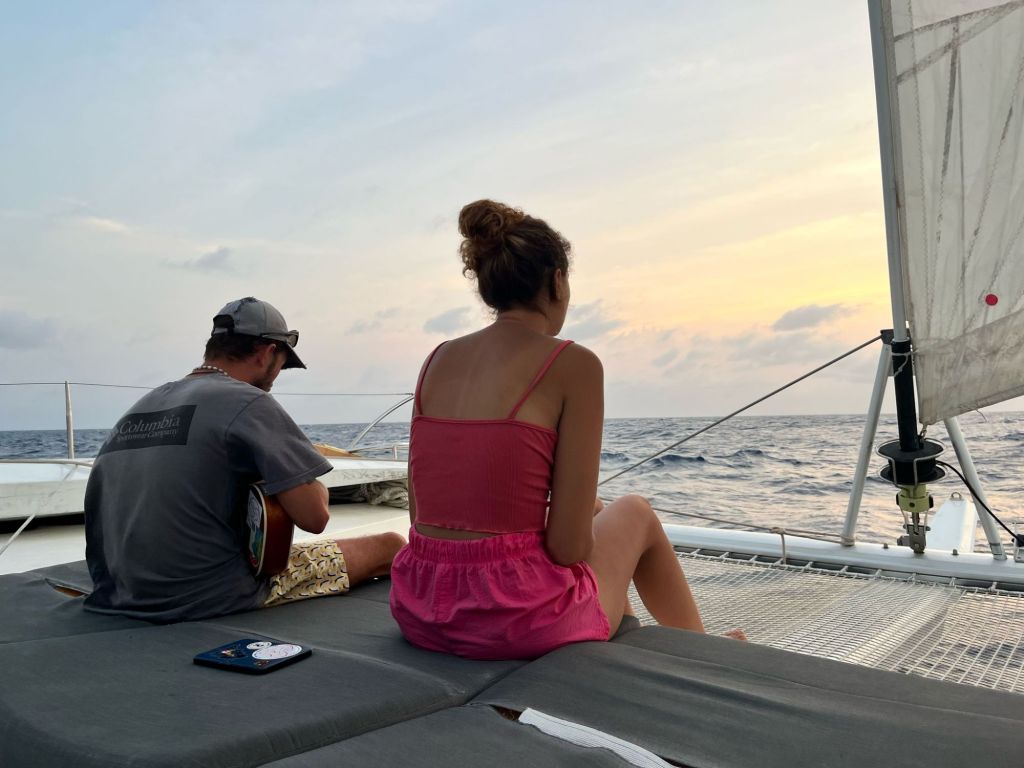
For this second part, we’re mostly sailing. It’s great! Once we passed the northern tip of South America (northern Colombia), the wind is strong (we’ve reached up to 45 knots) and there’s also a hefty swell. We’re making good speed, averaging about 8-9 knots, I’d say. The journey continues in the same spirit. I am completely fed up with Jeff and his ways, but at sea, we have no choice. We keep ourselves busy by reading a lot, cooking delicious meals, and practicing the ukulele. We finally arrive at San Blas, referred to as Guna Yala locally. We anchor for the night, Emma and Jeff meet up with a friend of theirs for the evening while we go to sleep. We’re not keen on hanging out with them, and on their part, we didn’t see any invitation either. We set off early in the morning for another island where we need to take care of immigration. After 4 hours of sailing, we arrive at the island in question. We handle the paperwork with Emma (Jeff’s girlfriend), and after a few minutes, we are officially in Panama! I chat with a local who tells me about the history of the archipelago and the story behind their flags.
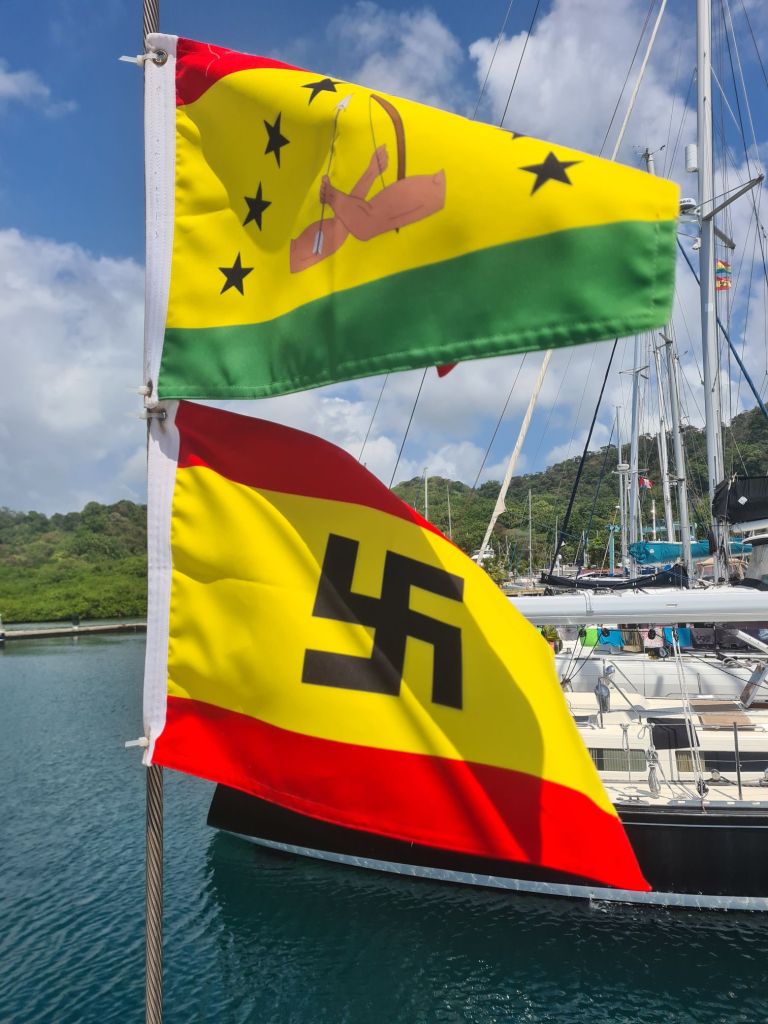
When we first saw this flag, we had a moment of pause. Did we stumble into Nazi territory? Not at all, it’s the independence flag of the Kunas. The four branches represent the four corners of the world from where the peoples emerged. The flag above represents the territory of the Kunas. For us Europeans, it comes as a shock the first time we see this flag. With NJ and the American, Everett, we decide to get off the boat here and head to the mainland with a water taxi. At the moment of departure, we settle the accounts with Emma and Jeff, and to our surprise! They ask us for 250 euros per person! They want to share the fuel costs, the fishing equipment, and some other nonsense. Considering the initial deal was that we pay for our food, our immigration fees, and help on board, which we have done. We take their bank details, telling them we’ll pay them when we have internet. It’s not fair on their part, so they’ll never see the money they’re asking for. We leave the boat, but Emma (Scottish) decides, against all odds, to stay for a few more days volunteering on the boat. She wants to take advantage of being in San Blas to visit a few islands. We try to dissuade her, but she is an adult and makes her own choices. The crew separates, and we (Everett and NJ) wait for the water taxi to take us to the mainland.
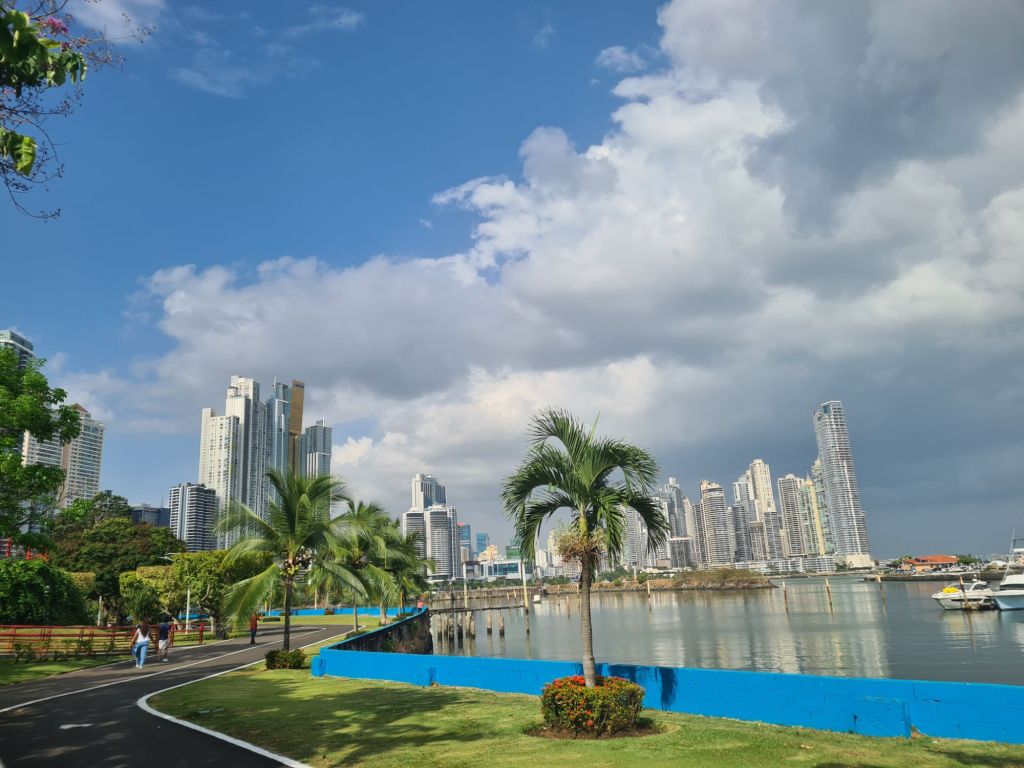
After about 2 hours and 30 minutes of travel, we arrive in the capital of Panama, namely Panama City! What an original name. We spend a few nights there, taking the time to stroll through Casco Viejo and the streets of the city. Casco Viejo is the old town of Panama. Designated a UNESCO World Heritage site a few years ago, all the buildings have been restored, and the neighborhood is home to many restaurants and souvenir shops. It’s a very pretty place, but the contrast with the rest of the city is enormous. To put it simply, Panama City is a huge open-air shopping mall. There are shops absolutely everywhere. Bazaars, phone stores, clothes, snacks, more clothes, trinkets—it’s a shopping city. To the east of the city, there are the « skyscrapers. » Massive towers that house international companies whose names we don’t know, but they are very wealthy. Upon our arrival, we passed through the industrial area; no, it’s not just a neighborhood, it’s a whole country! Warehouses and factories everywhere! It’s worth mentioning that geographically, the country connects South America with North America, the Pacific Ocean (and Asia) with the Atlantic Ocean (and Europe). In short, it’s quite a mess.
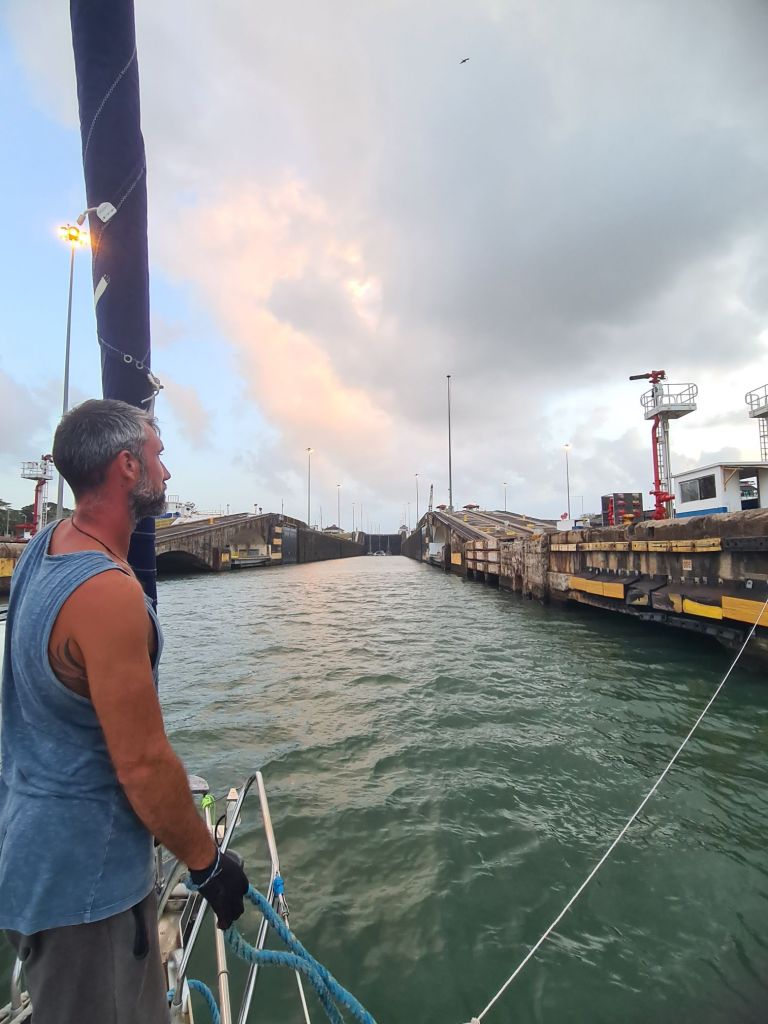
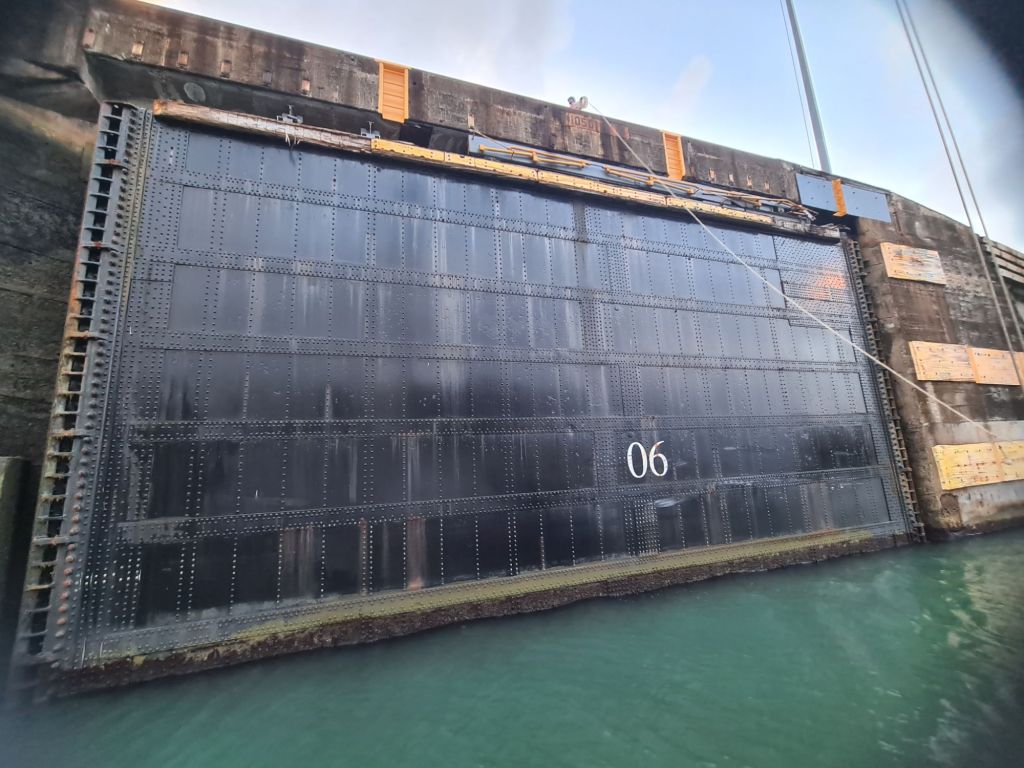
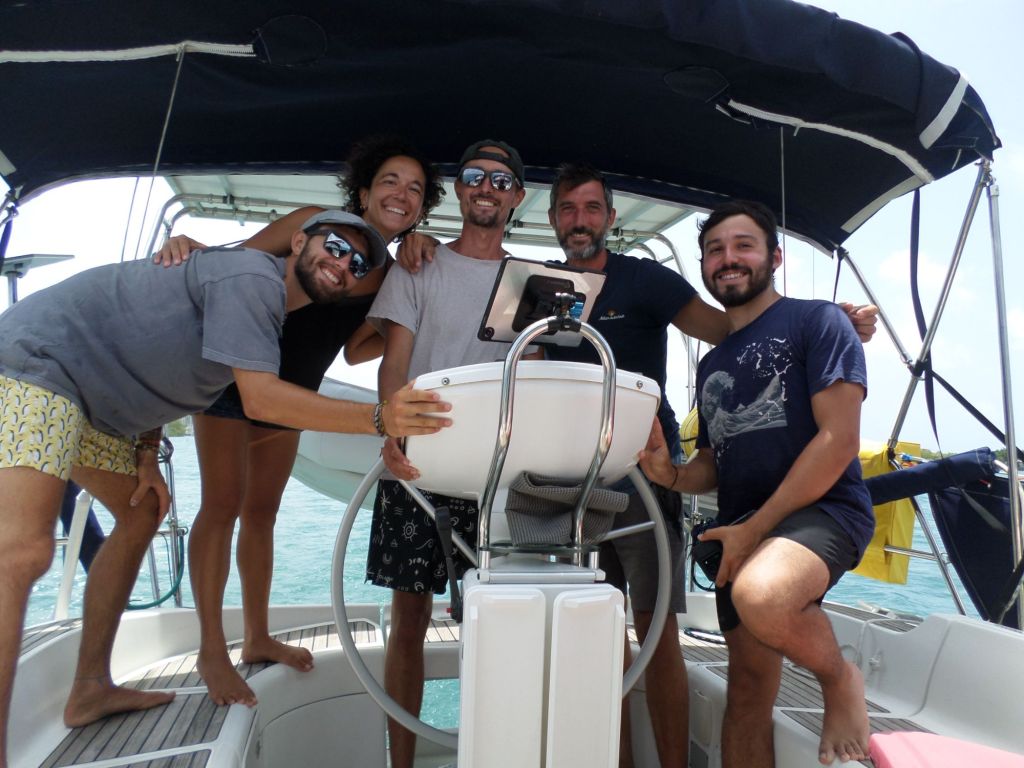
Panama is also, and above all, known for its canal! The famous Panama Canal (they didn’t put much effort into the name there either). For a bit of history, it was the French who began the construction of the canal at the end of the 19th century, but the project turned into a fiasco. Over 20,000 lives were lost due to disease, working conditions, and the climate. The project was abandoned. A few years later, the United States took over the construction with modified plans. Instead of building a canal like the one in Suez, they created a lock system. The project was launched, and after a few thousand more deaths, the canal opened its doors in 1914. It remained the property of the United States until 1999, when it was handed over to Panama. During my stay in the capital, I got in touch with Loïc and Charlotte, a couple who would be traversing the canal in 2 days. They were looking for a « line-handler » since to pass through the gigantic locks of the canal, four line handlers are needed to manage the mooring lines and one person at the helm. Anyway, I left the next day for Shelter Bay, the marina where the couple was located. I stopped in Colón on the way, the first city built in Panama. Nothing to say, the city is ugly. We left the marina the next day heading towards the canal with 8 other sailboats. It was going to be a special canal crossing: only sailboats! Oh, and every boat crossing the canal must have a sort of « canal guide. » Not a tourist guide, but a guide who communicates with other boats and the officials to manage the passage. So, we arrived in front of these gigantic steel gates and felt like hobbits in a city! So small! We passed the first three locks and then arrived at Gatun Lake. A lake famous for its crocodiles and caimans! The guide confirmed that swimming was not allowed as it was dangerous; there are plenty of crocs. Spoiler alert: we saw none. We spent the night on the lake and departed the next day for the continuation of the canal. 35 nautical miles to reach the next lock. It took us several hours, and we passed the fourth lock! During the journey, we passed by giants of the sea, over 300 meters long, with thousands of containers on board. We passed the last two locks and then a port area with tons of cargo ships loading or unloading goods. Everything was oversized, really. We went to anchor, and our little team of line handlers headed back to shore, and we each went our separate ways. It was a smooth canal crossing, everything went well. It’s still an enormous thing, whether in size or control. Each year, about 14,000 boats cross the canal, averaging 38 per day.
I meet NJ at the hostel and we leave the next day for Portobello! A small town on the Caribbean coast, there is a lovely hostel where we will spend our first evening playing billiards and dancing with the owner, an Italian and a Frenchman! Music blasting, costumes, and billiards! What a wonderful evening that was! The next day, we head a little further north to Linton Bay, the big marina in the area. Big is a strong word, but the boats heading to Colombia often make a stop there. Without hesitation, I learn that a boat is leaving tomorrow for Colombia! What luck! We go see him right away and he invites us to dinner to get to know each other better. The chemistry is good, he speaks very quickly and he is stressed, but that’s okay. He asks for $250 for the crossing (about 48 hours), all included. I negotiate the price down to $200 and then I confirm my trip! It’s not cheap, but it’s important to know that there is no land route, ferry, or shuttle to reach Colombia from Panama. Only charter boats that take a 5-day journey through the paradise islands of San Blas, generally asking for more than $500. NJ, on the other hand, will stay in Panama a bit longer before heading back to Europe for other projects! As for me, I can’t wait to set foot in South America! And what better place to start than Colombia? After more than 6 months in the islands and on the oceans, I’m just one boat away from arriving in Colombia! I say goodbye to NJ early in the morning and then head to Linton Bay to board this last boat trip for a long time…
Direction South America!
Ps: It would be great to get feedback on the blog: things to improve, do you like it?, length of posts, photos, etc…
cedriclombaerde@gmail.com
WhatsApp: +33768532476
En savoir plus sur Les aventures de Cécé
Abonnez-vous pour recevoir les derniers articles par e-mail.

 Les aventures de Cécé