46 hours. That’s how long it took to cross from Panama to Colombia. 7, the number of times I vomited during this crossing. There are days when things just don’t go right, and today was one of those days. As an excuse, I would say we were going against the wind and there was a strong swell. Despite this seasickness, we arrived at Cartagena de las Indias, the main city on Colombia’s Caribbean coast, which should not be confused with Cartagena in Spain.
Here I am finally in Colombia! After spending 7 months at sea, in the islands, and on land, I have finally set foot on the South American continent! Well, Colombia: what do we know about this country? Pablo Escobar, drug traffickers, drugs… Wow! That’s pretty scarce information about such a large country. To remedy my gaps, I am doing some research online. It is a country in South America (so far so good), populated by about 52 million inhabitants on a territory twice the size of France. The country is traversed by the Andes mountain range, with peaks reaching up to 5,700 meters in altitude. It is covered by numerous forests (including the Amazon rainforest), and thanks to its mountain ranges, it holds 10% of the world’s biodiversity. It is also the country with the most bird species in the world, the most orchid species, and ranks second for species of butterflies, plants, freshwater fish, and amphibians. In short, there is an incredible diversity in this country.
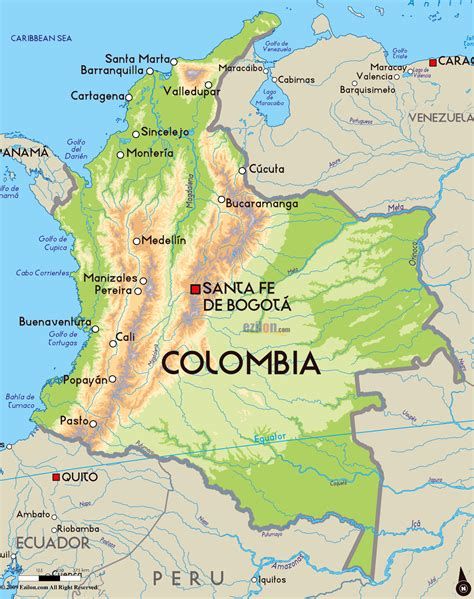
The country has a reputation for being dangerous. So yes and no, it’s more complicated. The war against guerrillas and paramilitary troops is still ongoing. Some regions of Colombia are at war, such as the Catatumbo region, on the border with Venezuela. When I say at war, I mean that armed groups are trying to take control of the coca fields (the plant used to make cocaine). In the big cities (Bogotá, Medellín, Cartagena…), some neighborhoods are also dangerous. One does not venture there without a good reason. Now that you’re not feeling reassured, let me assure you! Many regions are safe for tourists. The police are very present, and many tourists arrive every day to visit these beautiful places. Of course, it’s advisable to avoid displaying large amounts of cash or shiny new devices in the street.
Colombia is also a country of motorcycles. They are everywhere! It’s a very convenient way to get around the city or for short distances (up to 30 minutes). Rarely with a helmet, rarely safe given the driving in Colombia, but to this day, I haven’t had or seen any accidents. Street vendors can be found absolutely everywhere: in the countryside, in the cities, on the buses. There’s always someone with a thermos selling a « tinto, » Colombian coffee, arepas (a super widespread corn cake), or anything and everything. Colombians are generally very friendly, always ready to help, and with a warm smile! But when it comes to picking up a hitchhiker, it’s another story. In short, it’s a country with a very wide gap in wealth (rich class, poor class, and a little middle class). The contrast is striking in certain places.
Now that you have a brief overview of Colombia, let’s get back to our main topic.
At the port of Cartagena, the captain went to get the passports, but we have to wait for the immigration lady, and she won’t be back until 3 PM! Well, I think I’ll have a drink while waiting. At 4 PM, still nothing. At 5 PM, I meet Romain, a hitchhiker who is trying to return to Europe! I’m already pretty drunk, and all I want is to go to a hostel, take a shower, and sleep! Around 5:30 PM, I finally get the precious document, with the stamp from Colombia! I can stay in the country for 3 months without a visa. The perks of having a French passport. I rush to the hostel, and after a quick shower, a pizza, and a Couchsurfing language exchange evening, I hit the hay!
I’m enjoying my stay in Cartagena to reconnect with Couchsurfing, it must be said that it’s not very popular on the islands! For my first day, I stroll through the old town before heading out to play volleyball with community members. I meet plenty of Colombians, volunteers from the hostel, and French people working in the city. Not a bad day for integration! We are a lot, about twenty, I would say. We play a good part of the afternoon and in the evening we gather in the city to have a drink together and to dance salsa! Because yes, salsa is the national dance here. All Colombians can dance salsa! (I’m probably exaggerating). We meet in the Getsemani neighborhood, an old sketchy area transformed into a festive neighborhood! The buildings are colorful, murals adorn every wall, bars and restaurants everywhere – basically, the place to be. Here locals and tourists blend together, and in the main square, Plaza Trinidad, street performances abound: hip hop, a football juggler, a puppeteer… And this happens every evening! It’s no wonder Cartagena is nicknamed « La discoteca del mundo! » We all have a wonderful evening and, still tired from my journey, I head off to bed.
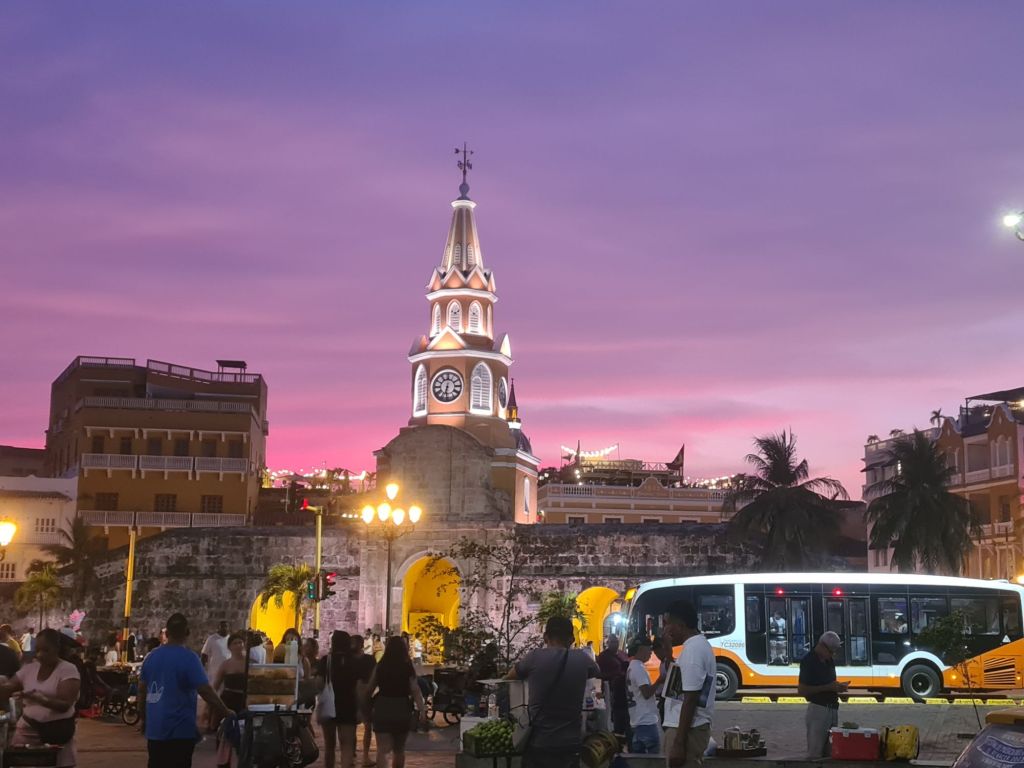
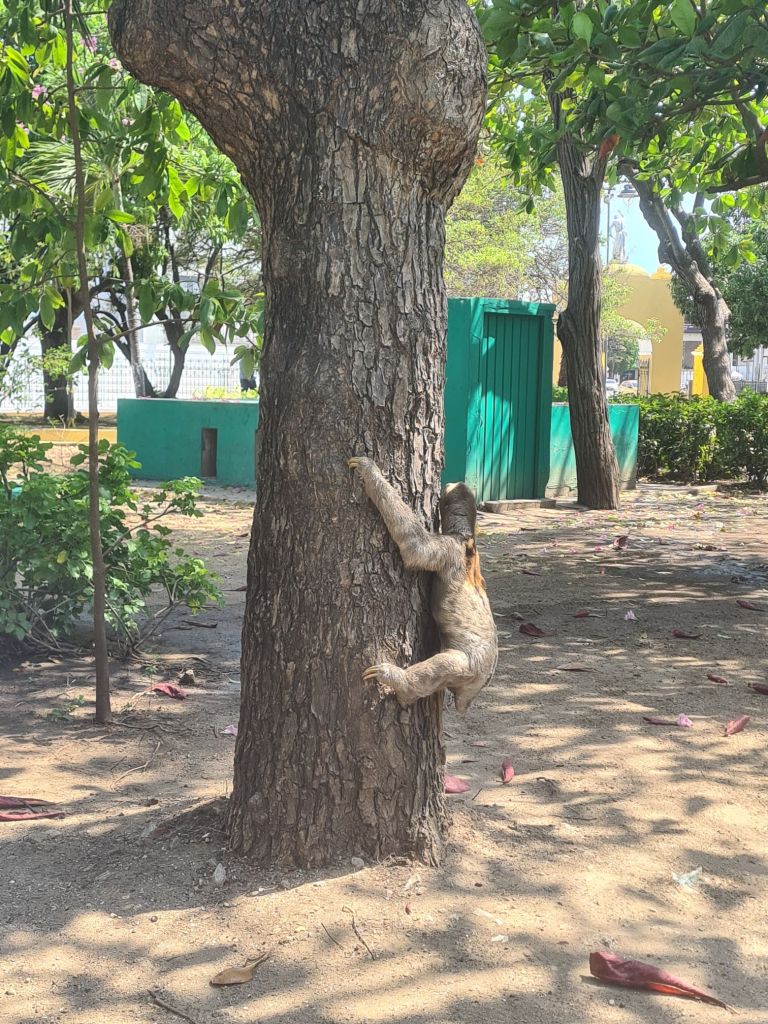
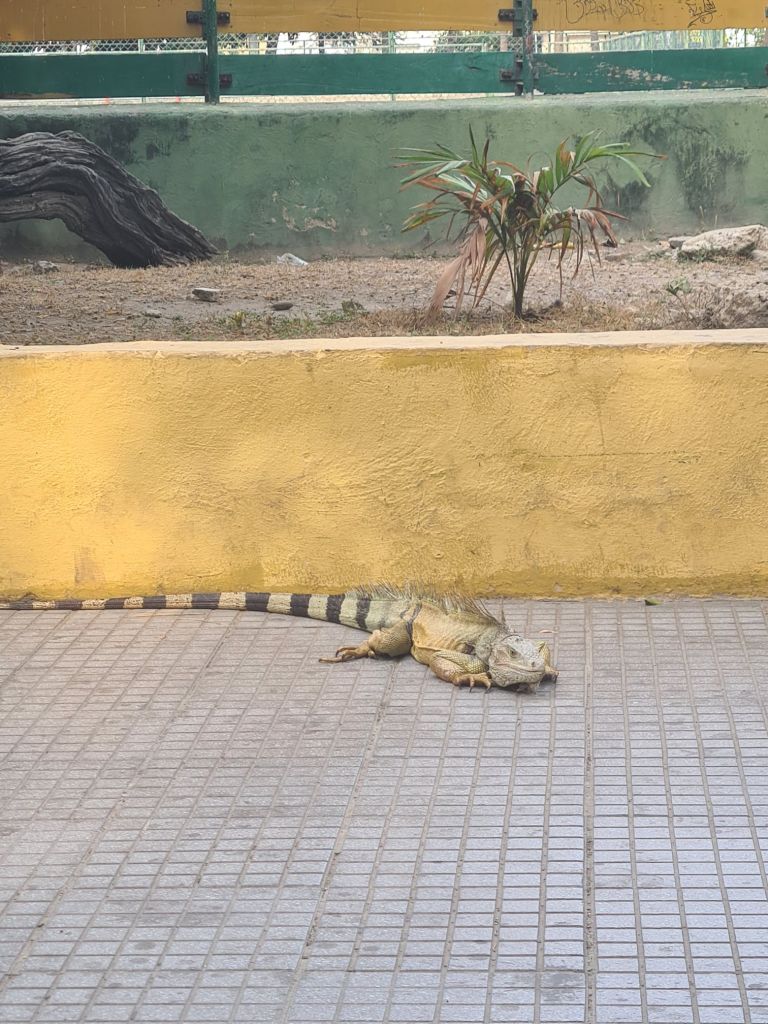
On Sunday, it’s the last day of a renowned film festival, so I’m going to attend a screening in a lovely old theater. The film was terrible (or maybe my novice mind couldn’t grasp the author’s message). For my last day in Cartagena, I must learn a bit more about this historically rich city! And what better way than to take a walking tour? For those unfamiliar, it’s a city walk with a guide who shares the history of the place, its buildings, the culture, etc. The concept is simple: the tour is free, and at the end, you give what you want to the guide. Generally, it’s around $10. Cartagena has a deep history with conquistadors, slavery, the Inquisition, maritime commerce… The tour is super interesting! We’ll even see sloths, an iguana, and little monkeys in the city’s park. During the city tour, I spotted someone typing on a typewriter, shoeshiners, numerous street vendors, tourists, the police, and plenty of other things. Regarding safety, there’s zero issue in downtown Cartagena. There are people everywhere, and I haven’t heard of any assaults or anything. The only thing I was told was to be cautious of the police trying to extort money from tourists at night. For my last evening, I return to Getsemani with some people from the hostel, and we meet Romain, the hitchhiking sailor from the first day, and friends of friends. We all have a great evening, ending with some salsa dancing.
Cities are great, but not for more than a few days! I pack my bags and after an hour on the bus, here I am at the outskirts of the city. I extend my thumb for the first time on the South American continent and… Nothing. I must say the spot isn’t great at all: there’s a lot of traffic and it moves quickly. Well, I find a bus to take me further to an intersection. I give it another shot and after more than an hour of waiting… Nothing. Nada. No one stops. Next time I’ll try to make a sign; maybe that works better here. So, another bus it is. I will end my hitchhiking day with a moto-taxi that will take me to Rincon del Mar, a small village on the Caribbean coast. Why did I go there? Good question. Actually, in Dominica, we met a Colombian who recommended the place and gave us the address of his friends. Let’s see what it’s like! The village is by the sea, with plenty of hostels, hotels, and restaurants. In fact, it’s a small village that has become touristy. You’ll find many Colombians on vacation, as well as quite a few French people.
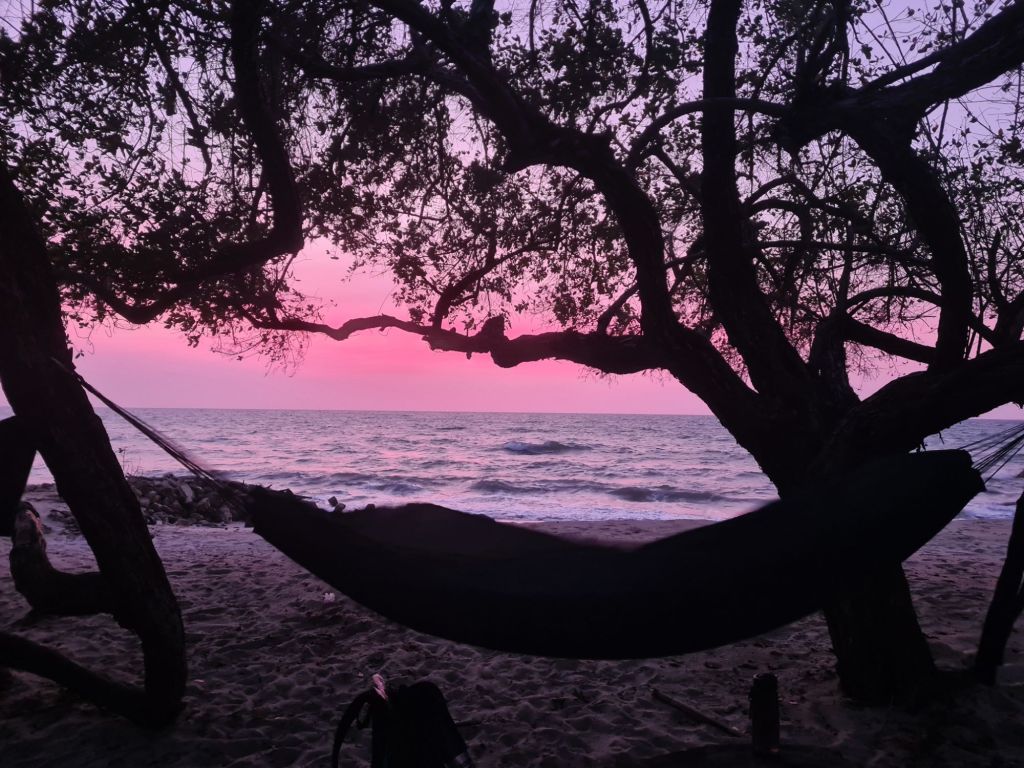
I meet Marcella and Nico, an Italian-Colombian couple, and their newborn Leandro (1 year old). They warmly welcome me, and I quickly become their guest for the evening. The saying « the friends of my friends are my friends » has never felt truer! I dine with them, sharing stories about my encounter with Felipe (our mutual friend), my time in Dominica, Martinique, and the boat trip that continues to amaze Nico. We chat, but time flies and sleep soon catches up with us. Tonight, it’s hammock time! It’s been a while! The next morning, I tell them about my desire to find a volunteer opportunity in the area to settle down a bit and reflect on a few things. Without hesitation, they make a few phone calls, and an hour later, I’m talking with Tania, the co-manager of a hostel. She explains the volunteering details, the benefits, the job, the hours, etc. I call her back in the afternoon to confirm. I start the next day but can move my things today. It was quick. Welcome to Taida Hostel! A small hostel among many others, close to the mangroves. I will stay there for about 2 weeks. My job? Reception from 5 PM to 10 PM. In reality, I spend most of my time in the outdoor hammocks. Once my few tasks are done, all I have to do is wait for the travelers to arrive for check-in. So, I spend my evenings reading and playing the ukulele in a hammock, nice, right? One of my main tasks is to turn on the water. Let me explain: in the village, there is no running water. A guy comes several times a week with a hose to fill the tanks. It’s fresh water but not drinkable. This water is used for showers, dishes, and toilets. For drinking, you have to buy water jugs from the store or have a filtered water bottle, but even with that, the water still tastes terrible. No baths, no watering, and no waste of water here; we maximize what we can. My evenings are quite calm, and usually not much happens. My days are also pretty quiet: eating, beach, nap, tough life, huh? Breakfast is part of the deal for volunteering, as well as housing (a bed in a shared room that will be changed to my outdoor hammock). Well, it’s not an amazing deal, but I wanted to settle down a bit somewhere, so I didn’t complain too much. As you can understand, I’m taking this time to rest but also to reflect on what’s next. Where will I go next? What do I want to do in Colombia? In South America? Work? Volunteer? Where, when? In short, intense reflections. I’m somewhat antisocial, but it feels good. By the end of the first week, I’m starting to feel better and have a clearer idea of what I want to do. Find volunteer opportunities, hitchhike to them, and head south on the continent. All at a leisurely pace; no need to rush.
I meet 3 French people who are doing an exchange in Brazil and are passing through Colombia for the holidays. We go on an excursion into the mangroves nearby with a guide. We learn all about the work they have done to clean up the mangrove, the species of fish, birds, and insects that live there, and we stop on the other bank to observe sloths, iguanas, and eagles. It was super nice! A few days later, I meet Mathilde and Anna, two French sisters who are staying at the hostel. Anna has been traveling in South America for about a month, and her sister, Mathilde, came to spend a few weeks with her in Colombia. We hit it off well and spend some afternoons at the beach, just chilling together. Holy Week also comes, ending with Easter Sunday. Colombians being mostly Catholic, it’s Ze Fiesta in Colombia. In Rincon, that means bringing out huge speakers that blast sound at a level so high it becomes unpleasant. Everyone plays their music, and like in many places in the Caribbean, the louder the sound, the better! And it doesn’t matter if the neighbor also plays music; everyone plays their own. In short, in this chaos, people dance in the streets, zouk, drink, and chat (I don’t know how they can hear each other, but oh well). The festivities last a few days and end with a concert on the beach. Honestly, I’ve never heard sound that loud; I lasted 15 minutes before I left because it was downright painful. During this Holy Week, I also caught a sort of virus—like a mix of the flu and a stomach bug. A nice combo that quickly wears me out. I eat very little, can’t walk too long, and spend a lot of time in the bathroom. In short, the joy. It passes after 5 days, and after that, we decide to move to Cartagena with the sisters because Mathilde has to catch her flight to Bogotá and return to France. So, I leave Rincón after 2 weeks spent in this village, a locals’ village but solely focused on tourism. Plenty of hostels and restaurants, and regarding activities, it’s only with providers. There are no activities to do without a guide or alone. In short, I was not too fond of the place.
In Cartagena, I return to my hostel where I reunite with familiar faces. I plan to try to learn French with a girl from the hostel, attend two salsa classes, and stroll around the city. With Anna, we go out in the evening with people she met during her walks. After a few days, I head to Barranquilla, Shakira’s city, undoubtedly more popular than Jesus here. I attempt hitchhiking again, but once more I have to settle for a bus to make the journey. No one stops here. According to locals, Colombians are afraid, and hitchhiking is not practiced on the coast. In Barranquilla, I find a host via Couchsurfing, José, who will host me for my first night. We head out in the city with one of his friends, which is a chance to see the city by night and learn more about this place and its surroundings. José lives in the northern part of the city, in brand-new buildings that strongly resemble Europe. The contrast with the rest of the city is immense. While most homes have little water (non-potable), precarious facilities, and little or no appliances, José’s apartment has a shower, refrigerator, washing machine, immaculate paint, and furniture that looks straight out of a store. The difference is huge. And it becomes even more noticeable the next day when I go to the city center to walk around. It’s just a giant market. Thousands of vendors line the streets, selling fruits and vegetables, electronics, clothes, fans, bike or motorcycle parts, SIM cards, phones—basically everything. Don’t imagine a market like in France where everything is clean and well organized. Here, everyone does what they can to earn a little money to survive. Makeshift stalls, trash on the ground, motorcycles passing everywhere, loud music, it’s all very different. I spend a second night in this city, this time in a hostel where I meet a guy from the United States traveling light (not at all).
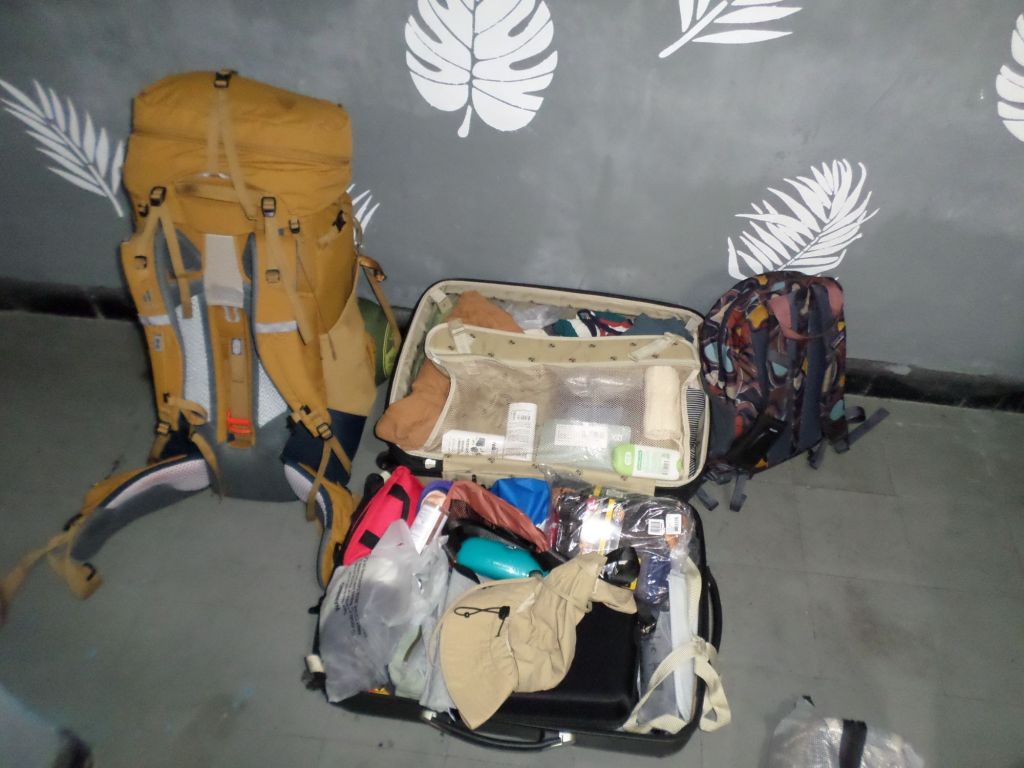
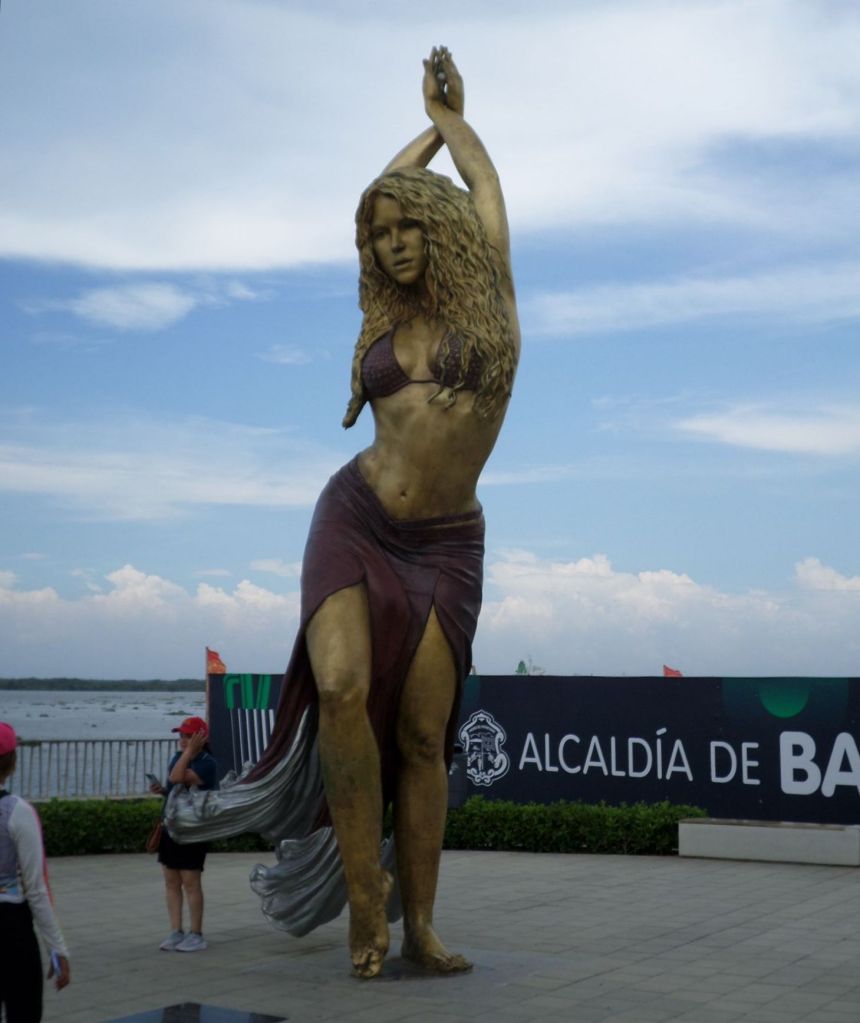
On a journey, we all do it differently, right? The next day, I’m going for a walk on the Malecón, known for its statue of Shakira (I told you she has reached divine status here).
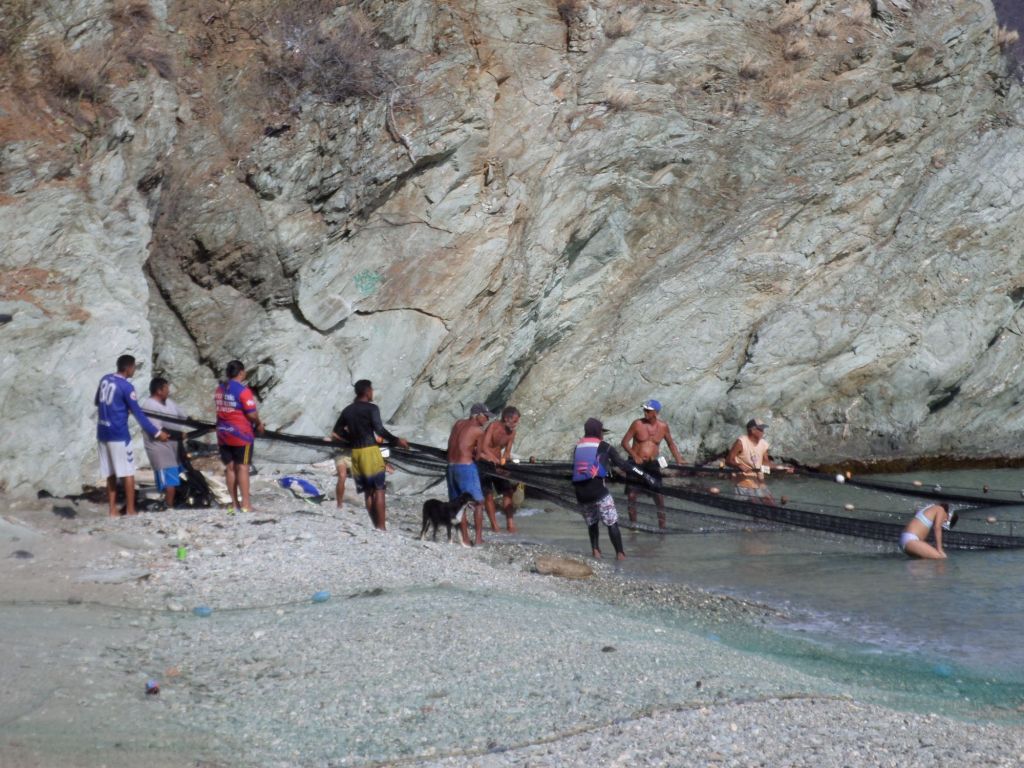
Then I head to a roundabout to hitchhike to Santa Marta. I was warned that the neighborhood in question is dangerous. I arrive on-site and immediately a crackhead approaches me. I don’t have time to say anything when a bus driver tells me to get on his bus to Santa Marta. Well, no hitchhiking today either. In Santa Marta, I book a night at the cheapest hostel in the city (around €3 a night). I drop off my things and then go out with a guy from Couchsurfing to a rooftop bar. We chat, and just as he leaves, Anna joins me at the bar where we play a few games of pool with two Israeli women. We are going to spend a few nights in Santa Marta with Anna, wandering the streets, meeting Couchsurfing people, Colombians living on the streets. Lots of encounters, discussions with homeless people. They tell us their lives, how they survive, life in Santa Marta. We end up in some « hot » neighborhoods, but kind people warn us each time that we should turn back. It’s not a legend; there are neighborhoods in every city that should be avoided, even by Colombians. We spend a beach day in Taganga (a small village north of Santa Marta). It’s a short walk along the coast; we pass several small beaches and end up settling on a fishermen’s beach where there are no other people except for the fishermen and a guy who lives there. We spend the afternoon swimming, snorkeling, and napping on the beach. When the fisherman in the water starts shouting, everyone gets up and begins to pull in the fishing net. Then, once the fish are brought to shore and placed in a tub, the net is reset, and everyone goes back to their nap.
Second post coming soon!
En savoir plus sur Les aventures de Cécé
Abonnez-vous pour recevoir les derniers articles par e-mail.

 Les aventures de Cécé