Just south of Santa Marta lies the village of Minca. This tourist village is situated in the mountains and jungle, a 40-minute drive from Santa Marta with a huge difference in climate. You go from a dry city where you can count the rainy days on one hand, where temperatures rise to 40°, to a village where humidity reigns supreme, rain is an everyday occurrence, and temperatures are much cooler. It’s the jungle, after all! Anna tries hitchhiking, but as you probably already know, it doesn’t work. We then find two motorcycles that take us along the mountain roads, loaded with our backpacks. Safety first!
In a small youth hostel, we meet Mathieu, a French traveler looking to settle in Colombia. There’s also a Quebecer and another Frenchman traveling together for a little while. Everyone speaks French, so we quickly bond over some drinks. In the evening, we head to admire the sunset over Santa Marta from a construction site slightly away from the village. It’s a magnificent spectacle. We plan to stay a few days in the village to do some hiking in the jungle. On the way to a waterfall, I help a lady carry her groceries back home. The only catch is that she lives atop a steep hill. It ends up being a solid 30-minute walk. But she offers me coffee, an avocado, and some bananas for a snack. We chat, and then I continue on my way. The next day, we set off with Anna to make a loop in the jungle. We hit a heavy tropical downpour, typical for that environment—an endless shower. We find a hotel/café along the way and take shelter there. By chance, we meet two French travelers also seeking refuge. They’ve been hitchhiking and sleeping in tents or hammocks every night for several years. Much respect to them given the weather! We finish the trail in their company, still under the rain, of course. We reach the end of the path leading to a road towards Minca. We’re freezing, soaked to the bone—not great at all. We try to hitchhike home, but the road is infrequently traveled. Luck strikes! A motorcycle stops! We hop on (three people fit!) and head, braving the cold and the curves, towards Minca. It’s my first hitchhiking ride in South America!!! We return to the hostel for a hot shower… Oh wait, there’s no hot water, right. Well, we’re still cold.
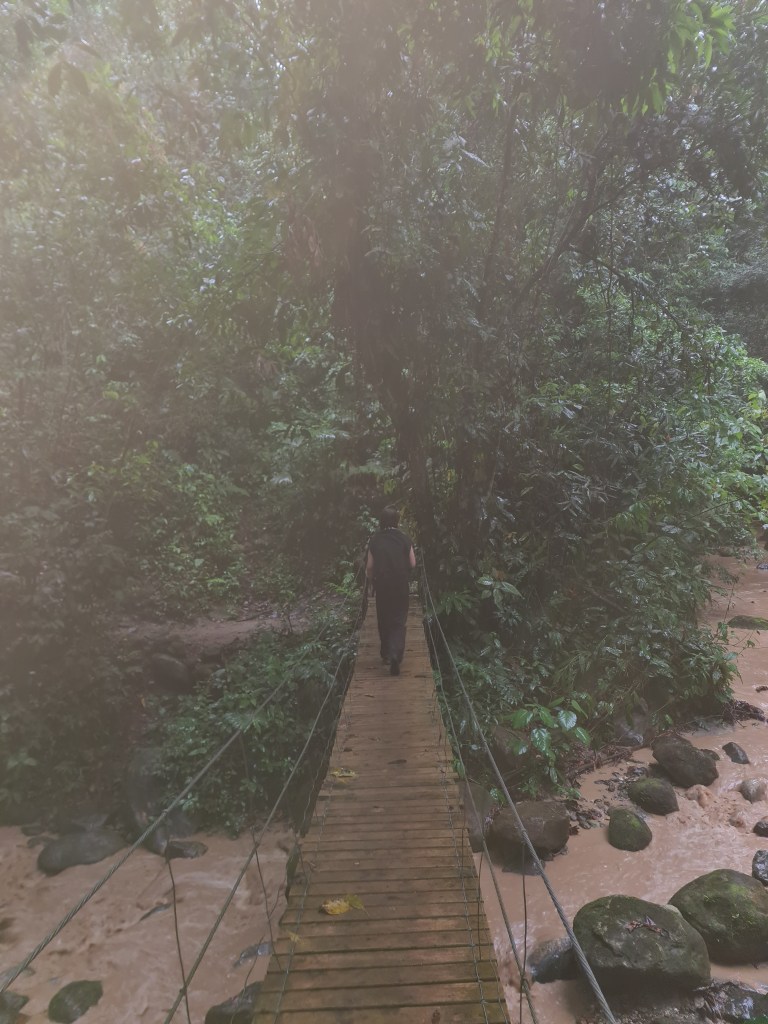
During this stay, the little virus from Rincon makes its appearance again, and each in turn is going to be sick for the duration of a day (or more for some). Everyone gets it! We will also have the opportunity to hold a cacao ceremony. What is it, you may ask? It’s a ceremony where we meditate, smell, and drink cacao diluted in hot water, meditate again, and end with a little dance. It’s original; I didn’t know about it. It can only do good anyway. The next day, we return to Santa Marta. Anna will spend 2 nights in the city and I’m heading to Tayrona Park. I find a charming little inn on the outskirts of the park where I spend two nights.
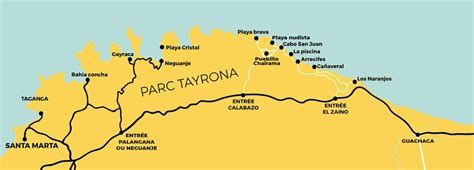
We meet two days later at the Calabazo entrance (in the middle of the map) and we enter the park! We spend the night in a small family inn at the entrance where we meet the owner’s son. He is 4 years old, and we have fun playing hide-and-seek, jumping from a rock, and enjoying typical children’s games. We leave some belongings to lighten our load, then we head towards the coast. We walk for about 3 hours through the forest and arrive just before the rain at the « campsite ». It’s a somewhat upscale camping site with huts, pre-set tents, and hammocks for rent. There is nothing else around, so the prices are quite high for Colombia. We also have to eat at the restaurant. But the place is really beautiful.
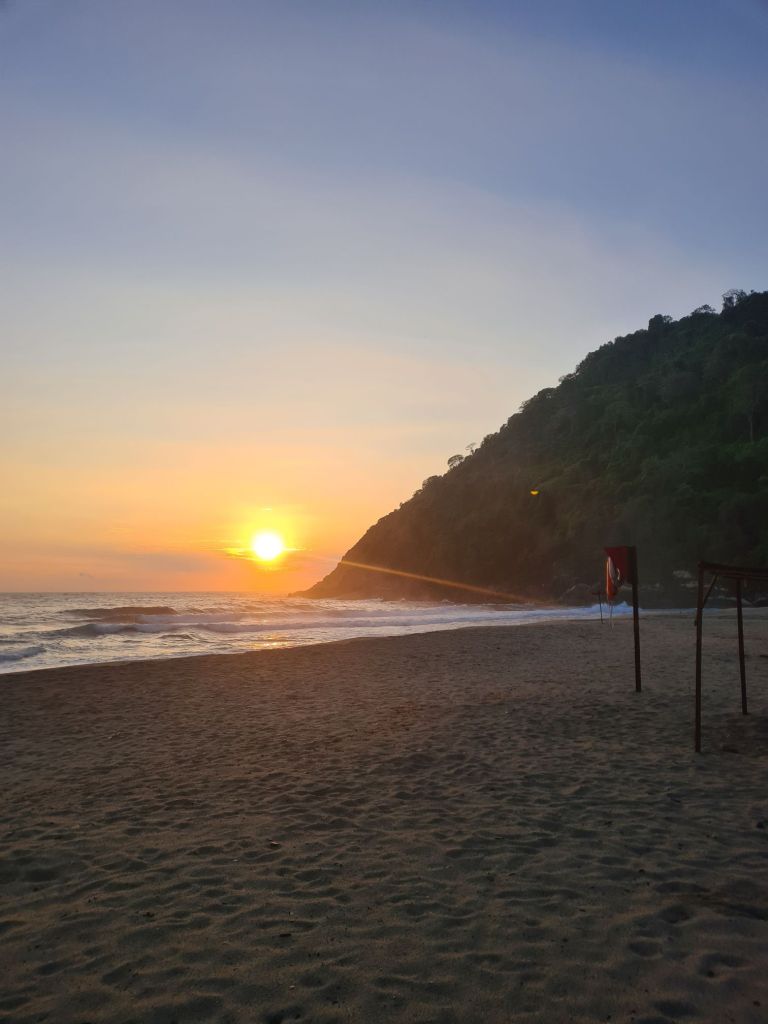
We set off the next day after a humid night in a hammock. Destination: Cabo San Juan! The most famous spot in Tyrona Park! We walk for a few hours through the forest, and tired from our trek, we take a dip at the first beach we see. Cabo San Juan feels a lot like a tourist factory. I’m exaggerating a bit, but that’s the impression we have. We eat a sandwich and then continue our walk to La Piscina, which is the most beautiful beach (in our opinion) in the park. We find a campsite not too far away where we can sleep in hammocks. We drop off our stuff and go admire the sunset. We take the opportunity to grab a bite to eat and have a drink. On our last day, we head back to La Piscina. Beach day, chill, and then it’s time to leave the park. We still have a few hours of walking ahead, and there we are, out! We catch a bus to Calabazo where we need to pick up our things. Just another hour of walking! We try hitchhiking again and find a truck that can drop us off in Santa Marta! Awesome!
Here we are back in Santa Marta at the youth hostel. I will stay here for 2 nights, just long enough to figure out how to file a tax return and do some laundry. After a little rest, I’m heading south! I’m leaving Anna, who will stay a bit longer in Santa Marta, and I’m heading to a hitchhiking spot. I start hitchhiking in the middle of the morning, giving a thumbs up and a big smile; it should work! 20 min, 30 min, 1 hour… Well, as often happens when I hitchhike, I’ve developed a sixth sense: I can tell when no one is going to stop. I decide to take a bus to get out of the city and I’m off to Fundación, a town in the Magdalena region. I grab a bite to eat and get back to work. 20 min, 30 min, an hour and a half… A tuk-tuk stops! It drops me off at a gas station on the national road heading south. 20 min… 2 hours later, I haven’t moved an inch. It’s 3 PM and I haven’t made much progress. A bus stops. It says “Bucaramanga.” I have no idea where this city is. I quickly check on the maps. It’s a bit further south. It’s not a good day for hitchhiking, or even a good country. I get on this almost empty bus. I chat with the bus assistant driver who tells me that the city is about 9 hours away. Wow, that’s not close at all. It’s also important to know that South American buses are known to be as cold as the North Pole. They blast the AC super cold. And did I think about that? Not at all. T-shirt and shorts, I’m freezing. Impossible to sleep. We arrive at Bucaramanga station around 12:30 AM. Do I have a place to sleep? Not at all. I’m not ready to sleep on a bench or in a station yet. I find a very cheap hotel at the last minute, and 45 minutes later, here I am in a private room. I can finally get some sleep!
Bucaramanga, the capital of the Santander region, is large but not gigantic. There are many people on Couchsurfing, so I send a few messages to look for a place to stay for a few nights. A certain Edgar responds to me. Cool, this is going to be great! We arrange to meet in the afternoon. In the meantime, I go out for lunch. In the restaurant, I meet a grandfather who speaks a bit of French. We chat briefly, as often happens with people who speak a little French. But this grandfather suggests taking me to the French Alliance nearby. He introduces me to the center’s director, and we chat; it’s nice. Then, he takes me to the University of Bucaramanga, where he was a professor for 40 years. I get a private tour of the university, and I even give my number to offer French classes! (spoiler: I won’t actually teach at the university). He then drops me off near Edgar’s place, my Couchsurfing host. Without wasting any time, we head off in his car to his finca (his farm). He has a guesthouse in the heights of the city. It’s an old renovated farm that he rents out. It’s absolutely beautiful.
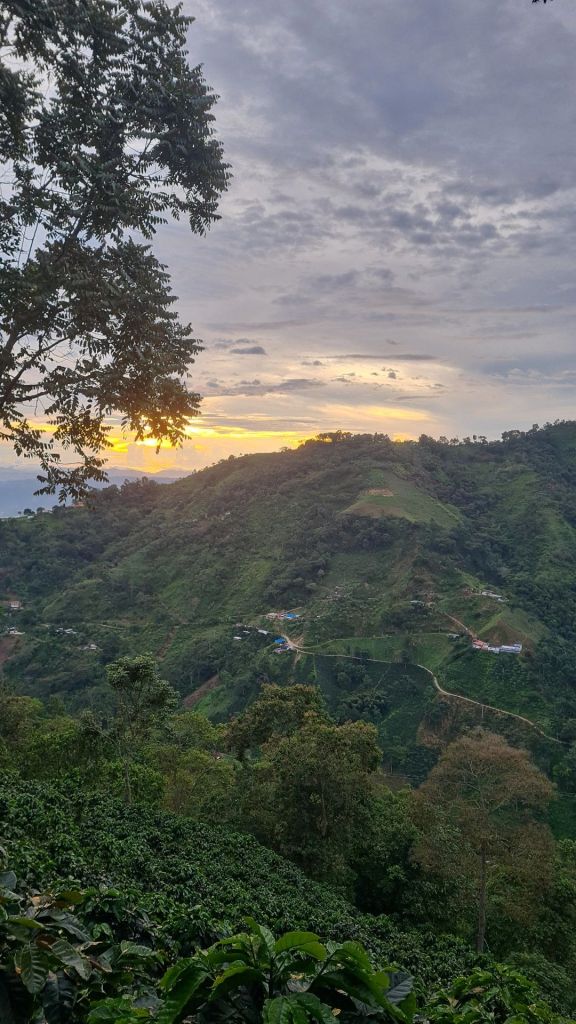
I stay 2 nights at the finca, with plans to eat, swim in the private waterfall, and relax. In short, the good life. Edgar spends a lot of time on his cryptocurrency platform. He tries his best to teach me the basics, but it remains complex for me. After this little retreat in the mountains, we head back to the city with Edgar. I spend a night in his apartment and the next day, I take a bus heading south of Bucaramanga. The goal: to hitchhike. I position myself at a gas station and get to work. I watch all the cars that stop, all the trucks, and despite a little scare when I approach them, they understand the process and politely decline (they’re not going in the right direction). After half an hour, a tow truck agrees to take me. We tow a truck and head off, me, the tow truck driver, and the truck driver, towards San Gil. It’s not very far (3 hours of driving). The road we take goes over the heights of the Chicamocha canyon, the second largest canyon in the world. The view is stunning. We move slowly with a truck behind, but we make progress. The guys drop me off in San Gil and I head to a youth hostel to drop off my things. I come across a super welcoming hostel, and for my first night, there’s a music/karaoke show! It’s a small event, but the people present are cool and there’s good dancing. So we end up with karaoke featuring Colombian classics (which I obviously don’t know), American songs, and I take care of the French song part.
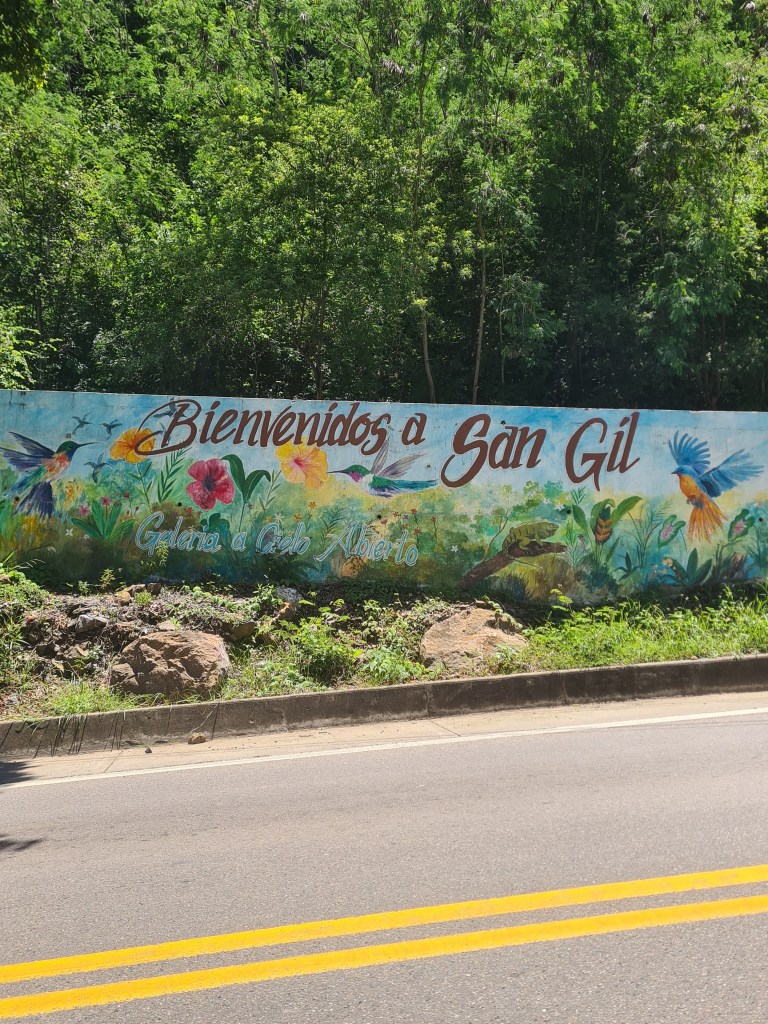
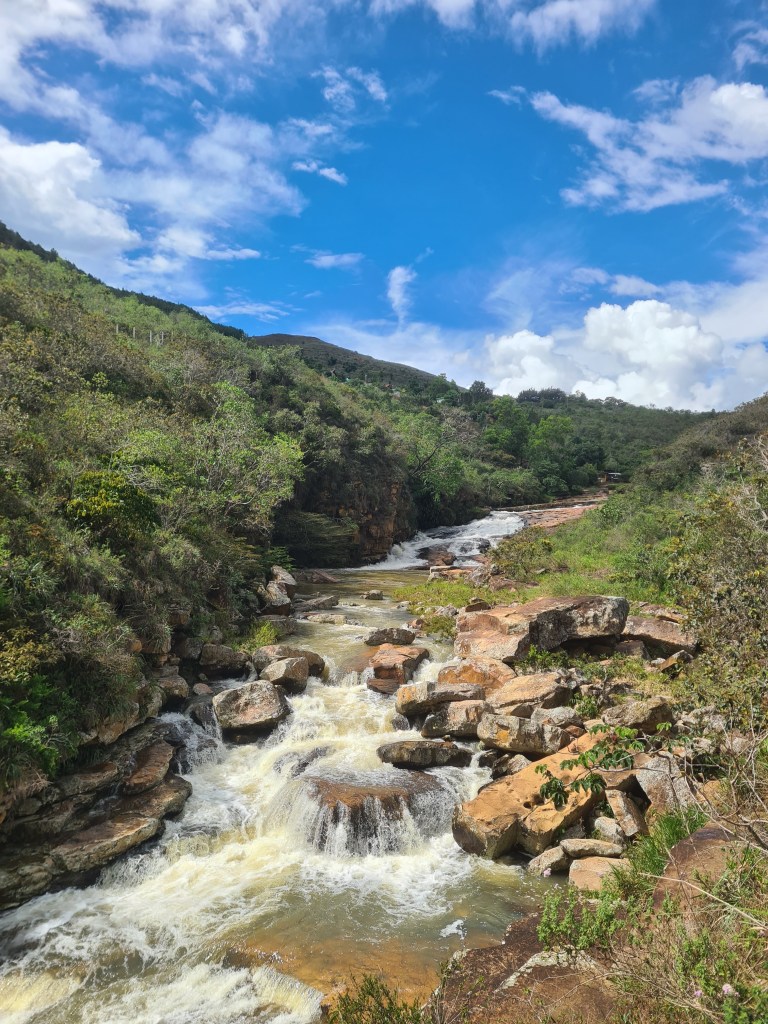
I will stay for a week in San Gil. I’ll have time to stroll through the surrounding villages, do some research on a few topics, and let’s not forget to rest; it’s very important. In the category of the most beautiful village in Colombia, I name Barichara, voted the most beautiful village in Colombia (I don’t know when or how, but that’s what I’ve been told). It is an ancient village from the era of the conquistadors, indeed very pretty. Not far from San Gil is the village of Curití, also quite beautiful, known for its « Pescaderito, » a lovely river where one can swim. During my stay, I receive messages via Workaway (a volunteer platform). A lady living south of Bogotá with her 2-year-old daughter needs help and someone to teach her French, and a German woman who is part of an NGO is looking for someone to help in 2 schools in the Colombian pampas for 3 months. The idea would be to teach English and do activities with the children. I am housed and fed at a family’s home during this time. It sounds cool, but we need to discuss in detail what I will be doing. This volunteering opportunity really excites me, so we set up a video call to discuss it. She will contact me in a week to confirm with the local association, but it should happen! From that moment on, I contact friends who are English teachers for advice on how to teach the language. I call Iain, an English and Spanish teacher for over 20 years, whom I met in England in 2022 and saw again in Montenegro in 2024. This gives me a little idea of the job. I then head towards Villa de Leyva, a small tourist village in the Boyacá region. To get there, it took me a day and a half, several hitchhiked rides, multiple buses, a night in a hammock in the cold, and a musical sunrise with the singing of the birds. I arrive in Villa de Leyva, but I find it very touristy. There’s a huge paved square in the center of the village, and… I didn’t linger there much longer. Headed to Tunja to sleep! Once in the city, I realize there are no hostels or accommodations for travelers. No response on CouchSurfing either. It’s cold, it’s raining; it’s not great. Anna is in Bogotá tonight to take her return flight to France tomorrow. So I motivate myself to take a few more hours of bus travel to go join her in Bogotá. I spent a large part of my day in transit; it wore me out! But it’s Anna’s last night in Colombia, so we’re going to celebrate. I meet her with Zélie, a Frenchwoman I met in Rincon del Mar (see previous post). We meet at the bar, then Zélie, who has been in Bogotá for about a month and a half, takes us to a nightclub. Everyone is well-dressed in the club; we look a bit out of place, but we don’t care. Well, it’s not tonight that I’ll get my sleep. Anna has her flight in the late afternoon the next day. That gives us time to stroll around the city and buy some souvenirs for her return. As all good things must come to an end, Anna leaves Colombia, and I find myself alone with Zélie.
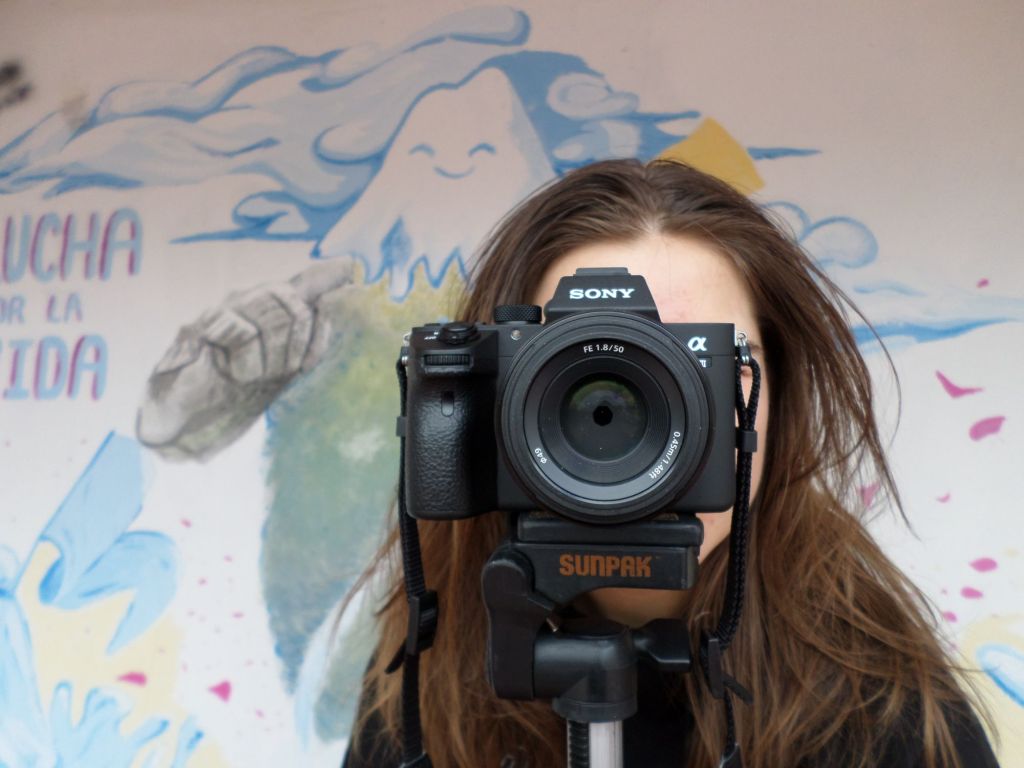
Zélie, the good plans, takes us to an event organized by students where rock and hard rock will play. We have a great end of the afternoon with good sound in our ears, and then I return to my hostel for the night. The next day is Sunday, it’s rest time. I will just stroll around, and in the evening, I will have dinner peacefully with a guy from Couchsurfing. I talked to Zélie, and she’s willing to host me for a few days in her shared apartment. So, I’m moving my stuff over to her place and will crash on her rug for a few days. I also see Eva, who was also at Rincon del Mar and studies cinema with Zélie at the National University of Colombia. Since the girls have very few classes (really), we have a lot of free time to brunch, watch movies, stroll, etc. I often accompany them to university, which is gigantic, and during their maximum 3 hours of classes per day, I wander around or settle down to write or read. We will also spend time in the « agricultural » part of the university where we will help with gardening and planting flowers. It is the largest university in the country if I’m not mistaken; there are plenty of stalls selling food, cafes, clothes, snacks, basically everything. In the main square, there is a huge painting of Che Guevara, we are not right-wing here. I help the girls with their photography projects by posing as a model or providing new ideas and such. I’m taking advantage of my stay in the capital, with over 8 million inhabitants, to visit some parks, the botanical garden, streets with mural art, and to meet up with a friend from Santa Marta.
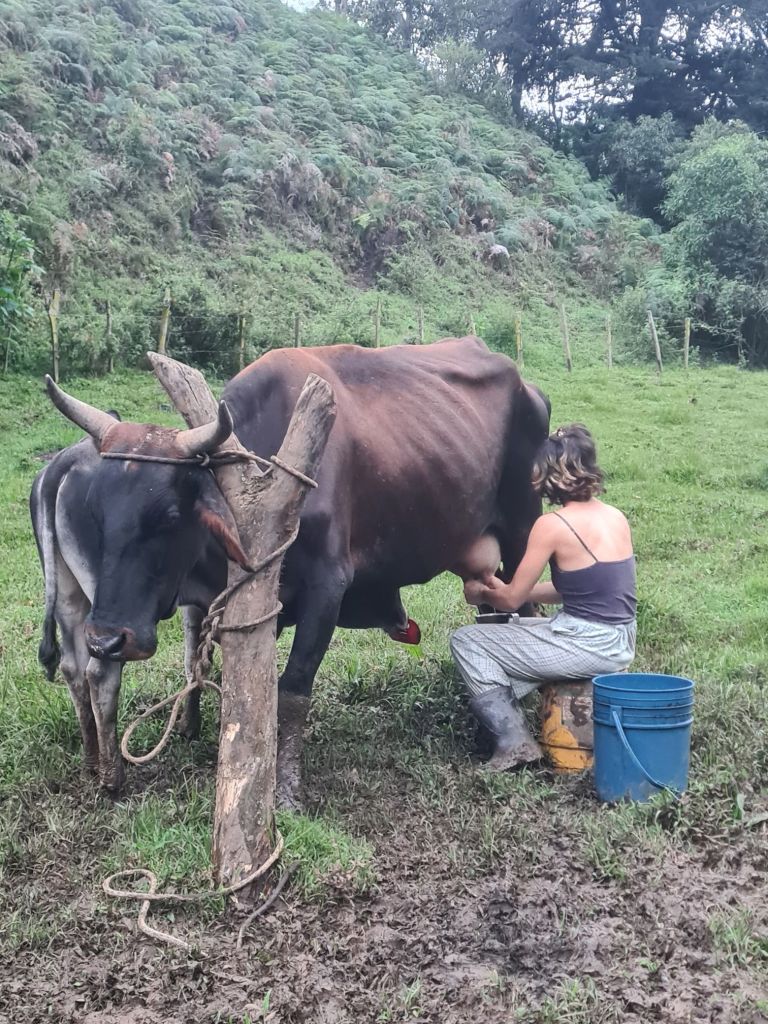
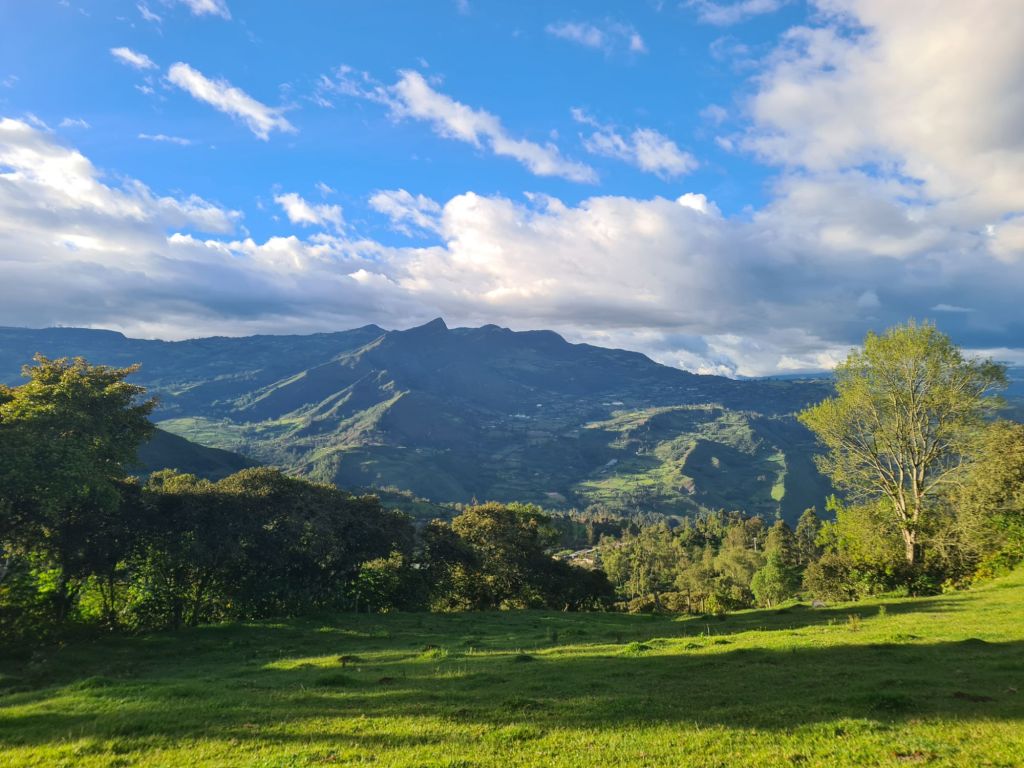
Meanwhile, I am waiting for a call that is supposed to happen with the NGO and the Colombian association present on-site. I won’t wait indefinitely, so I decide to go to the lady who wants to practice her French. It’s a 2.5-hour drive, so it’s not far. It’s back on the buses! Honestly, I’m doing well, and I arrive at my destination in the heights of Cáqueza. Pangla, as she’s called, lives in a « finca, » a Colombian farm, at altitude. It’s cold and rainy on my first day. I meet her and her daughter, Chesma. She will be 3 years old soon and understands and speaks a little English (her mother lived in the United States for a long time, so they speak both languages simultaneously). Pangla already has a good foundation in French, and I’ll try to teach her expressions, vocabulary, and correct her pronunciation. The house is rudimentary; it’s a farm that has been somewhat remodeled for living. When I say rudimentary, I mean that for cooking, it’s over a wood fire, and we go to fetch wood from around the fields; the water comes from a river catchment, the toilet is a bucket, and the toilet paper is tree leaves; the shower involves heating water over the fire, and we rinse in a large plastic can cut in half. Pangla studies mathematics and has her exam at the end of the week. I take care of Chesma; we play, walk around, gather wood, paint… With Pangla, we converse in French/English/Spanish and help each other improve our respective languages. At Pangla’s, there’s no meat; the food is almost vegan! She makes as much of her food as possible, from grinding grains to make flour and bread, to yogurt made with milk from the cows, to peanut butter… The fruits and vegetables come from the neighborhood, a short supply chain and home-cooked cuisine. Days pass, and the climate is humid, cold, and it often rains. Not at all my kind of weather. In the meantime, we have our famous video call where they inform me that it’s school vacation in Colombia until early July! So I can only go from July 1st or 2nd. That gives me just under a month before I start. I discuss the weather with Pangla too, and after her exam, I decide to set sail to visit Medellín! No issues with Pangla; we part as good friends, and after getting into a transport truck that passed by, I head back toward Bogotá. I stayed 5 nights in the Colombian countryside, and that was enough for me. It will be nicer in Medellín! Changing buses in Bogotá, I get on a night bus to Medellín. We should arrive around 6 in the morning. This time, I came prepared. I brought my sleeping bag to sleep because it will be cold on the bus. It’s not the most comfortable, but I manage to sleep a few hours before arriving. I had taken the care to contact Syami, a couchsurfing mom who agreed to host me for two nights. And as a bonus, I can arrive directly when I get to Medellín! Arriving at 6, by 7 I am at her place, and by 7:30 she has left the house with her daughter, leaving me alone in the apartment. I take the opportunity to take a nice (cold) shower, then I go to finish my short night from the bus.

Medellín has a unique feature here in Colombia: the city has a metro system, which greatly facilitates the movement of the population. My host lends me a metro card, and so I set out to explore the city with a goal: to visit youth hostels in search of a volunteer position to stay for two or three weeks. I go to the tourist neighborhoods of Poblado and Laureles and go door-to-door. I face some rejections, but then I stumble upon a hostel that is actually looking for a volunteer. We talk, the vibe is good, there’s a sense of a friendly atmosphere, so why not. I’ll write to them that very night to confirm. That’s done! Now, let’s go have coffee with some couchsurfing friends: an American and a Colombian, and coffee is just what we need for a nice afternoon. I return to Syami’s place for dinner, and we have a relaxing evening. The next morning, I have a Brazilian bracelet-making session with her daughter and give a small English lesson. I teach them the numbers in English, then I meet up with some couchsurfing friends for coffee and then lunch in the city center. In the evening, it’s crêpes at Syami’s! I had promised them, so here we go. I thank my host and leave the apartment the next morning to head to the youth hostel.
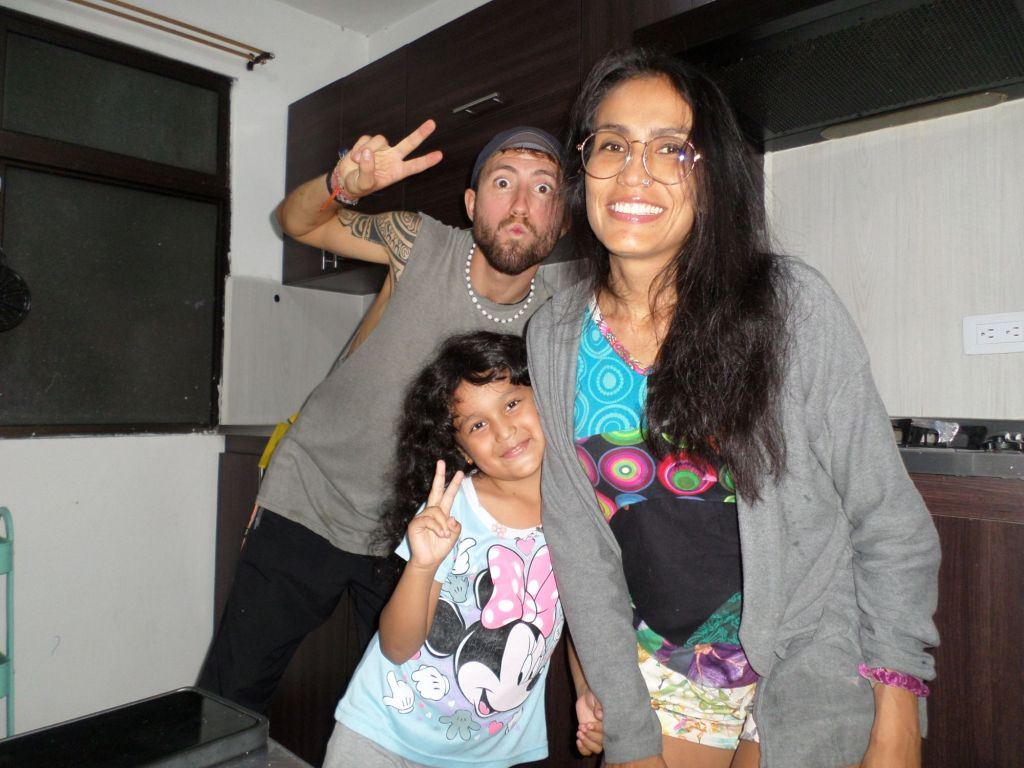
Welcome to Hostal Casa Estacion! I will be staying here until the end of the month or so before heading to Yopal, northeast of Bogotá, for my next volunteering assignment. In the meantime, I am exploring the neighborhood and attending quite a few events. It turns out that the hostel is just a stone’s throw away from La Casa de la Cultura, a venue for cultural events such as meditation, dance, performances, and more. I spend my Thursday evenings learning salsa moves, some mornings doing yoga/meditation, and some evenings watching dance performances or other events. All of this happens in one place. On Mondays, there’s another salsa class, but at a more advanced level. Then throughout the week, there might be more dance classes, language exchanges, or going out for coffee with couchsurfing folks. In short, there are plenty of events. At the same time, I’m doing reception at the hostel, and since it’s usually quiet there, I take the opportunity to write my blog, download ukulele tabs, books, or do research. This is just what I need before heading out to the deep countryside for three months. June 21 marks the summer solstice, and my supervisor informs me that there’s an event to celebrate this day with a group of people she knows. It’s a day at Mont Tusa, south of Medellín, with a program that includes yoga, meditation, prayers, offerings, music, and hiking to the mountain’s summit. It is said to be the largest natural pyramid in the world (or at least in South America, which is still quite impressive). We wake up early to go, and once we arrive, we meet many people with a strong spiritual belief. We then hike to a building that will serve as our meditation space later, but before that, we have a yoga session to prepare our bodies. Stretching, breathing, movement, then we gather inside for a session of prayer/meditation/purification. It’s a place with great energy, at the foot of a sacred mountain. We then set off for the ascent. The climb is steep, but we need to take several breaks to let people who were at the summit come back down. We reach the top a bit soaked from a rain shower but happy and in awe of the view. An offering table is set up, and a moment of shared gratitude begins. We then head back down since the park closes at 5 PM, and we still have a bit of road to cover. Once at the bottom, we enjoy our lunch, and night falls quickly. To wrap up the evening, we rendezvous on a hill in an adjacent field to listen to an archaeologist and traditional music from the indigenous people living here. Evening meditation, and then it’s the end of this day. We head toward the parking lot to return to Medellín. However, on this mountain road, I feel a storm brewing in my stomach. However, a storm doesn’t stay in the belly; it has to come out. I release a big chunk out of the window, and in fact, every 15 minutes, we have to stop for me to empty my stomach. I am soon joined by our driver, Nicolas, and his girlfriend. Three out of five people throwing up in a car is a bit suspicious. Thus, we spend our journey back emptying our guts on the road, but somehow we manage to arrive in Medellín.
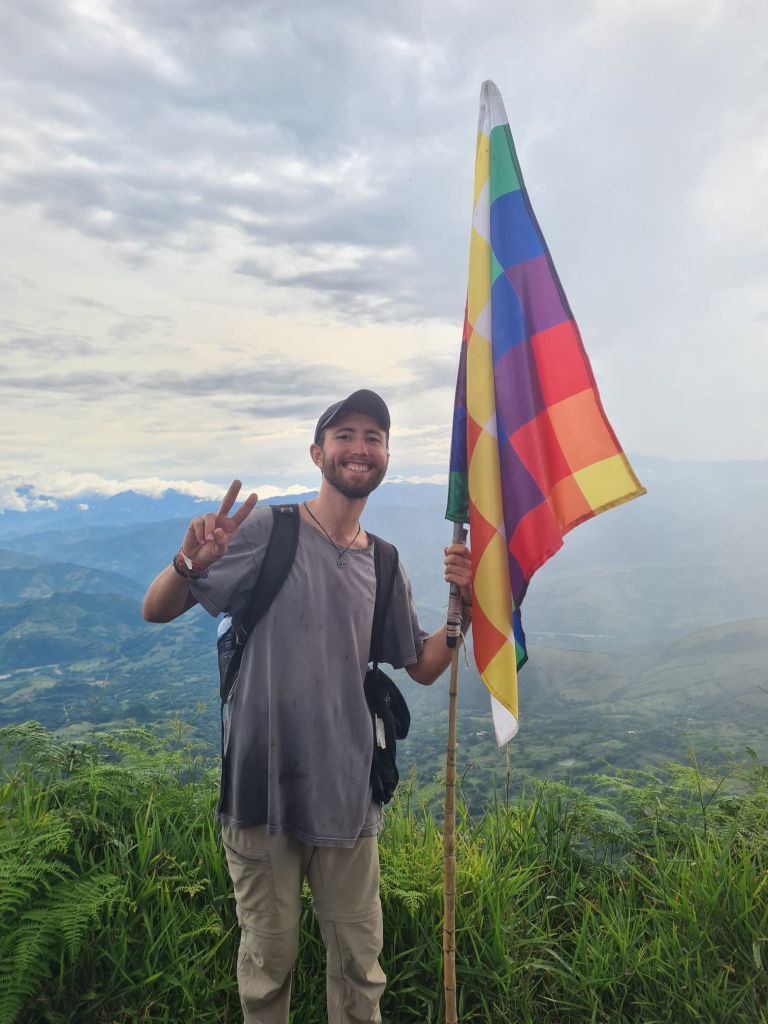
Life at the inn continues as usual; my evenings are well filled with all my classes or reception shifts at the inn, and we go out with the other volunteers for a small movie night, a bar night with a ball pit… In short, we don’t get bored! On Sunday, for my last weekend, we will go to the Medellín Pride march with all the staff and some friends of friends, and the day is set to be festive! Departure is scheduled for Tuesday morning to Guatapé, a tourist village not far from Medellín, then I will choose to hitchhike to Yopal, where I will start my volunteering on July 7th. I will spend three months in the countryside without any network (so no posts or news), teaching English, among other things. I will return in October for the next adventures of Cécé!
En savoir plus sur Les aventures de Cécé
Abonnez-vous pour recevoir les derniers articles par e-mail.

 Les aventures de Cécé