The comeback on the road with Eva! After leaving some belongings in Cuenca to lighten the load, we’re off on vacation this Friday, December 19th. We’re expected in Piura, Peru, on December 23rd to celebrate Christmas with Gian, the Couchsurfing ambassador of Peru, and his family.
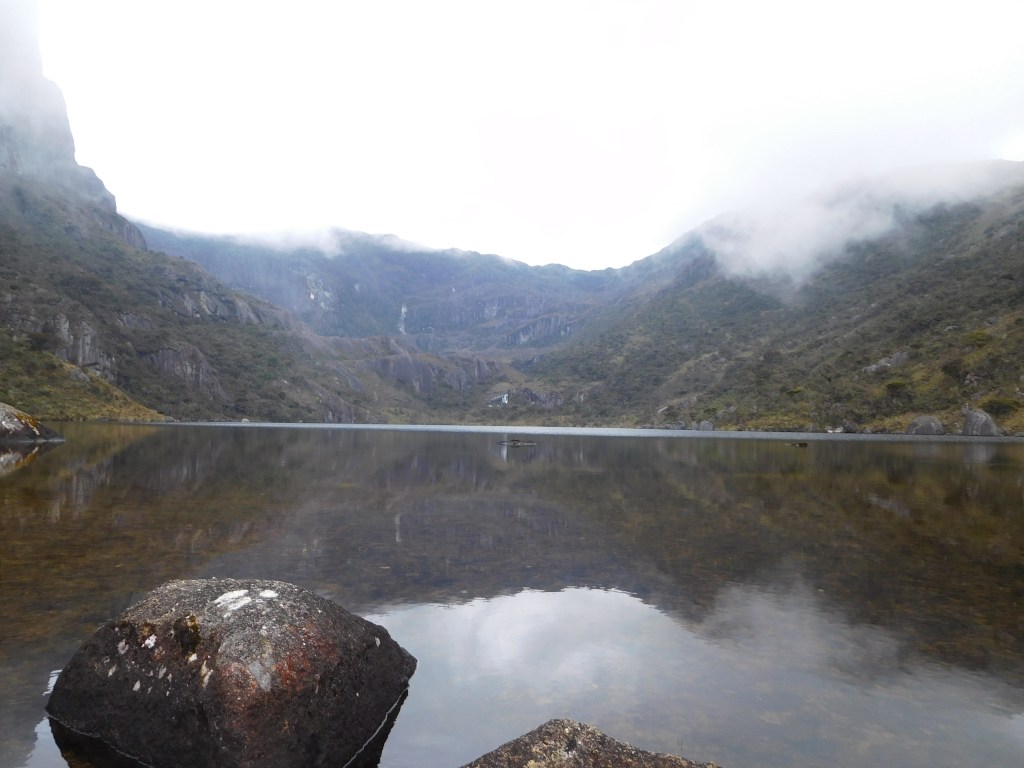
We have the idea of going to Yacuri National Park (in the south of the country, near the border with Peru) to see the mountain lakes. Then, we will cross the nearby border and head to Piura, all in 4 days.
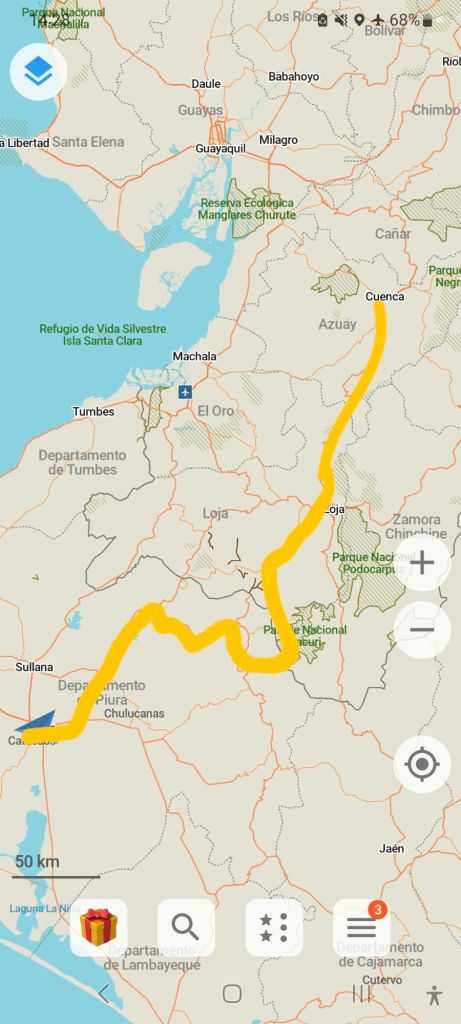
Spoiler: it’s exhausting.
But let’s start at the beginning. So, I said my goodbyes to Cuenca, a city where I hesitated to stay longer and settle temporarily, to head to the bus terminal. We got on a little bus with our backpacks to reach Cumbe, a small town south of Cuenca. We’ll start hitchhiking from here. There’s only one road down to Loja, so it shouldn’t be too complicated. Luís agrees with us, and off we go in his truck for about a 2-hour drive. Turns, turns, mountains, and turns, we finally arrive in Saraguro. In this village, we learn about a French foundation that helps educate children and supports other projects. It’s random, but this is Ecuador; anything is possible. Gradually, through contacts, we’ll stay with two French volunteers doing civic service for a year. Knowing that it rains very often here and it’s not warm, I wouldn’t have lasted. Anyway, we go to eat at the restaurant with the chef, chat a bit, and then we learn there’s a fiesta in a nearby community. We’re tired, but it’s a chance to see a village celebration, so we grab our warm clothes and set off on foot to the village. Assisted by a car that takes us, we arrive at the village’s multipurpose court, where the event is taking place. We were promised dancing, singing, and a big party, but in the end, it was a village beauty pageant (with 2 contestants), and the people were boring. Or maybe we were just too early. In any case, we’re not too keen on staying here too long, so we slip away from the evening to return to our temporary accommodation and get a good night’s sleep.
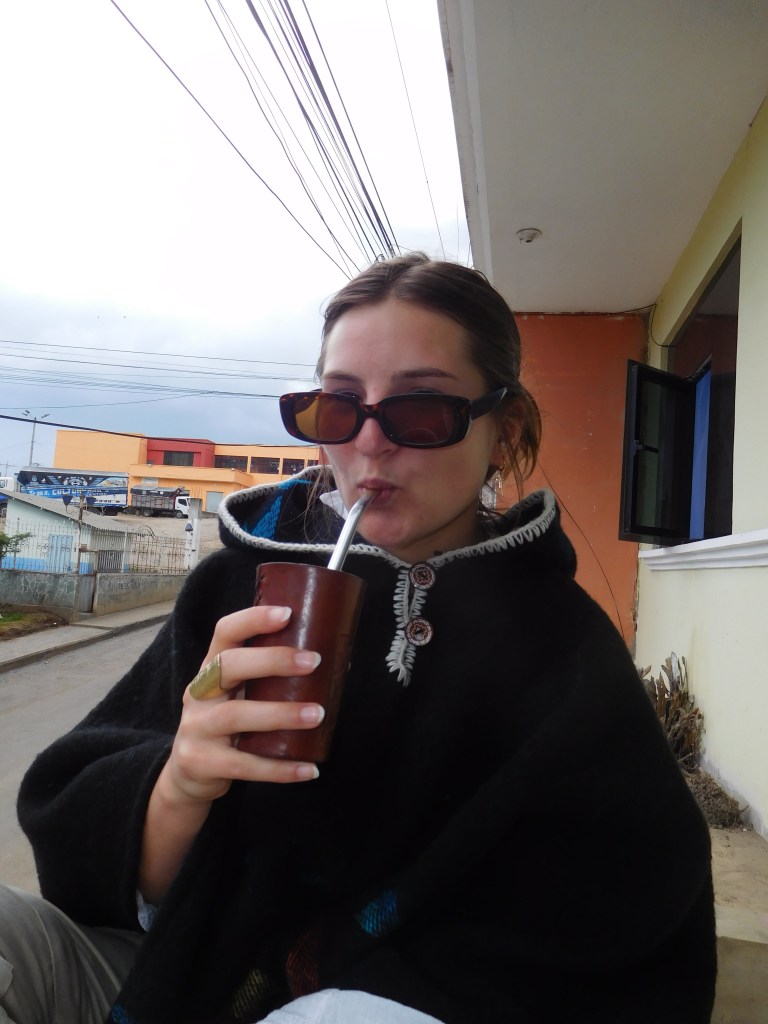
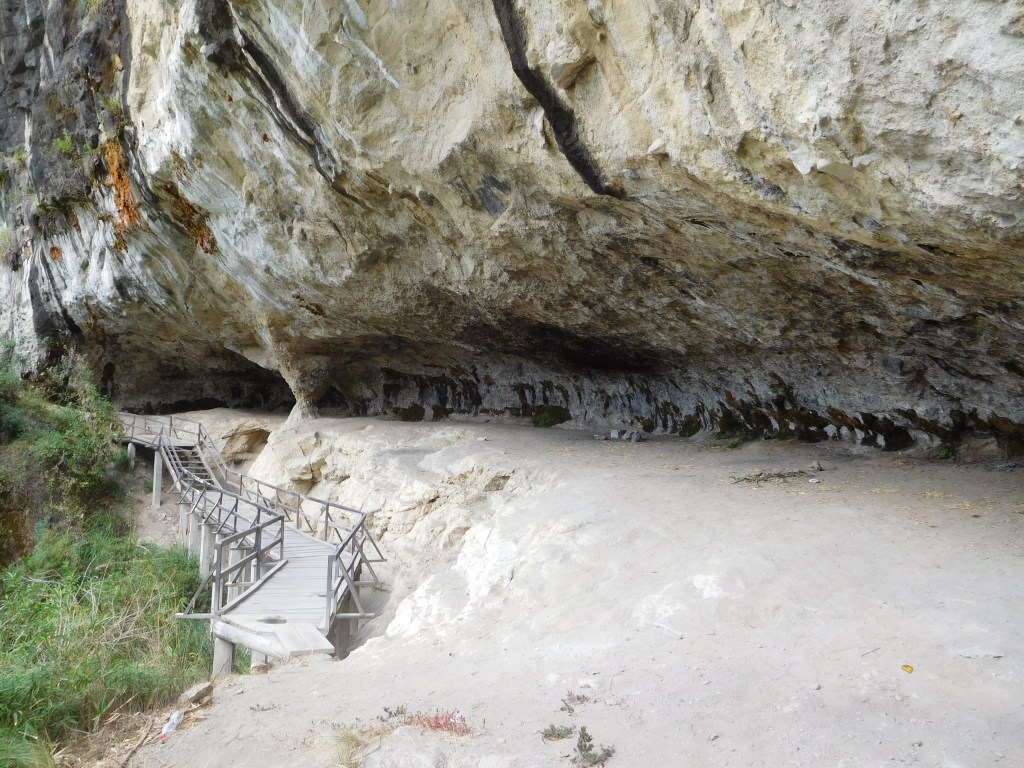
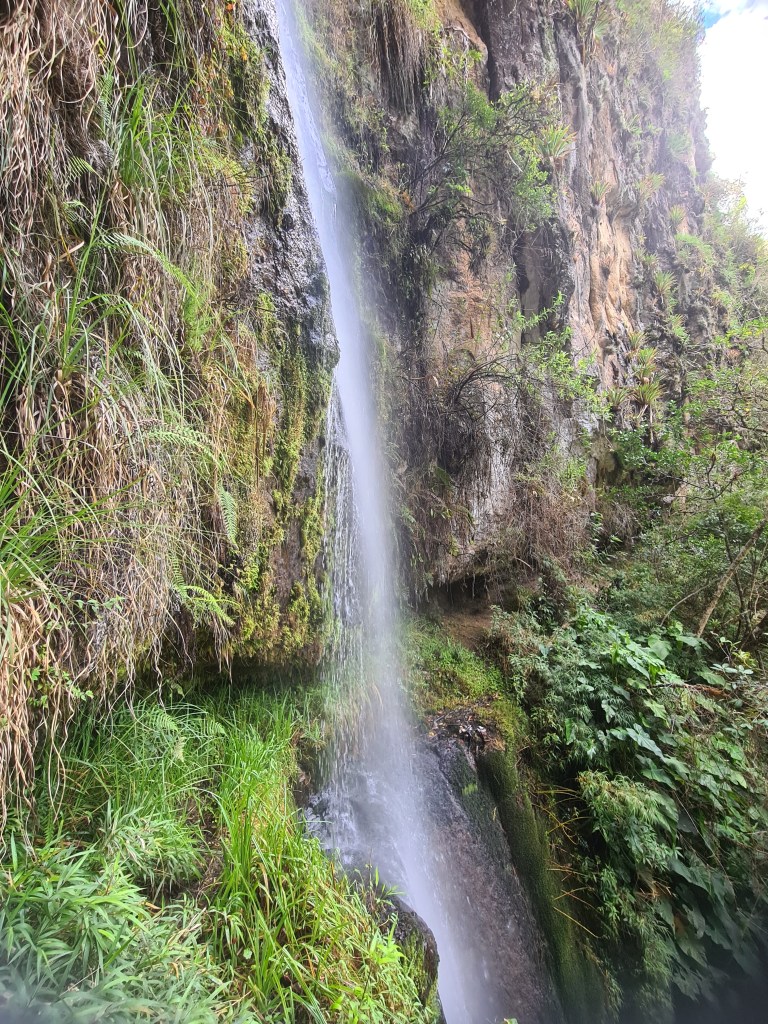
We decided to come to Saraguro for one simple reason: I saw on the map that there is an « Inca cave » and a waterfall. There’s no need to look far for reasons. After buying a poncho and enjoying a good breakfast, we set off to discover this famous cave. After a short hike in the mountains, we easily find the Inca’s pool. Well, it wasn’t there when we arrived, oh well. A very lovely waterfall flows into a pool, but it has been concreted, which is a bit ugly. A few dozen meters later, we stumble upon the famous cave! Without a guide, we only have our imagination to bring this cavity to life. The place is conducive to meditation, thanks to its soothing calm.
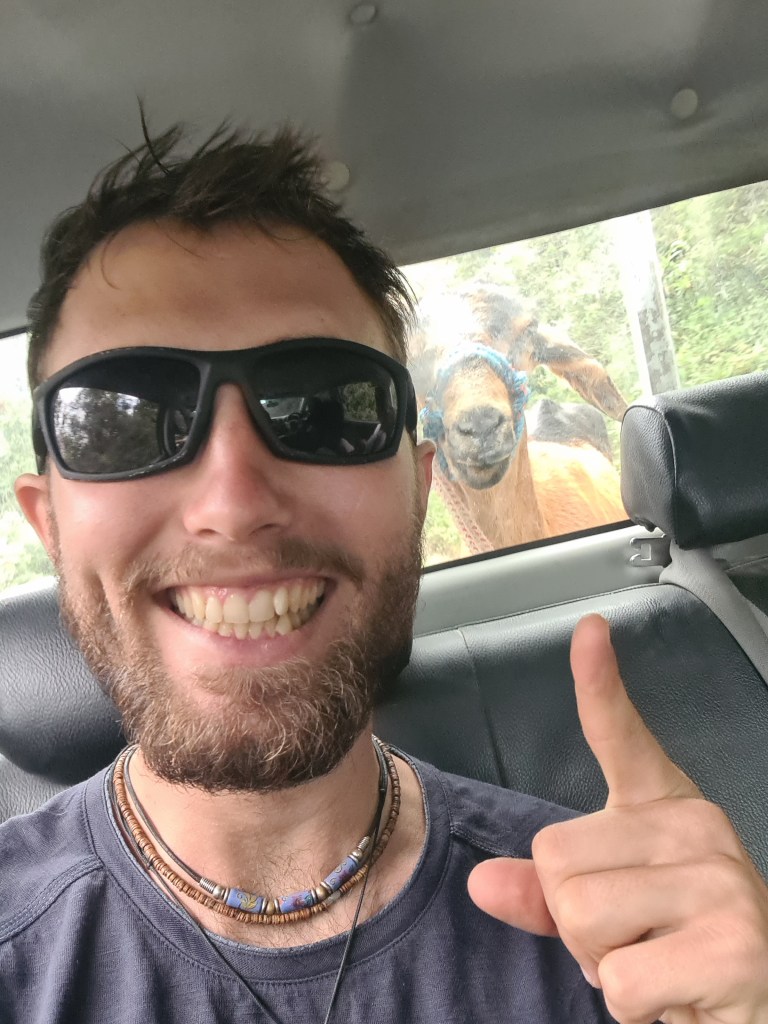
Once our minds are rested, we return to the village to collect our belongings and get to work: stretching out our arms and sticking out our thumbs. Big black clouds arrive quickly; we just have time to find shelter before the deluge begins. This refuge allows us to find a car for the next village, about a twenty-minute drive away. Once again, the rain is still with us. It pours down while we stick out our thumbs. But luck is never far away, and a nice couple picks us up, taking us with them to Loja. This ride is particularly interesting as the husband and wife are very curious about our journeys, our way of traveling, but especially the reason behind it. Why hitchhike? What does it bring you? What lessons do you learn from your travels? What have you experienced? Wow, it’s not every day that you have intense philosophical discussions while hitchhiking. It’s a wonderful moment of sharing with these two people, reminding us why we hitchhike.
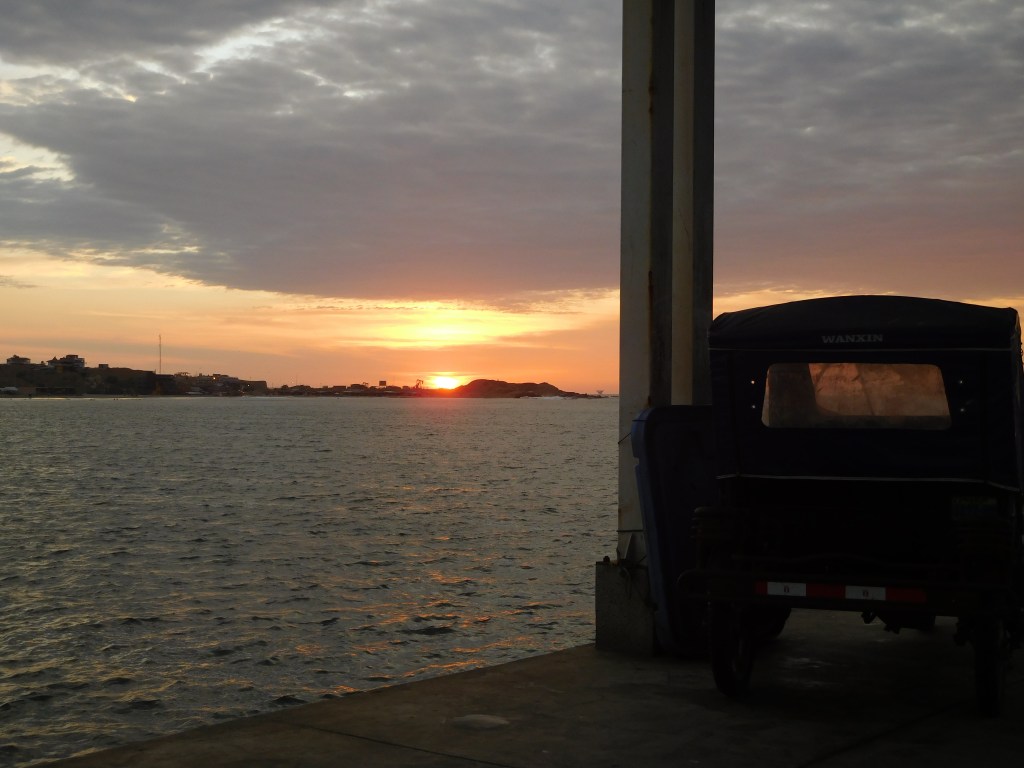
We stay on the outskirts of Loja to continue our journey and reach the city of Catamayo, not far from Loja. We are close in distance, but as we pass the mountains, we change valleys. Warm and dry air, an incredible sunset, a city reminiscent of the Costa Brava in Spain. We wander with our large bags, and our steps lead us to a small airport. It’s worth noting that Eva and I had agreed it would be a good challenge to sleep in an airplane. So we head towards the airport and start talking to a customs officer. He explains that due to his hierarchy, it won’t be possible, but he would have loved to! Too bad, maybe next time. We move along and stumble upon a bar that seems empty next to the sugarcane fields. We grab a drink and ask if we could spend the night. Except that we forgot one thing: it’s Saturday and only 8 PM. There’s apparently going to be a small party tonight. Goodness! The plan falls apart. Well, not entirely. We dig a little deeper into the subject and eventually manage to get a spot in a building under construction in their yard. We settle down and then go to sleep. Well, we aren’t going to sleep very well because of the party (until 3 AM), barking dogs, passing cars, and other noises…
So, full of energy, we break camp at dawn with the goal of reaching Gonzanama and then Jimbura. The road will be long until we reach the mountains. A little walk to wake up, followed by a small wait in the scorching sun in the middle of nowhere. We move forward a few kilometers before getting on a truck. Luckily, it’s headed to Gonzanama! In this small village, we stop for lunch and thanks to a recommendation from our driver, we enjoy one of the best almuerzos we’ve seen in Ecuador! With our batteries recharged, we start a little digestive walk to hitchhike. There aren’t many people, so they stop easily. A pickup truck comes by, a family, a passing village festival, then more walking, photoshoots along the road, and more family. We gradually make our way to Jimbura. We take a short break by a river to nap and pick some mangoes, then we get back on the road. We venture a bit further and encounter an ice cream delivery man. He takes us to a tiny village to sell ice cream, and in the process, we’re offered « trago, » which means alcoholic drink. We keep company with some drunken folks before heading back with our seller in his nice truck. He drives us to Amaluza, where we arrive at sunset. There we hesitate: should we stop here for the night or try to reach Jimbura this evening? We’re told that no one goes there at this hour, and it’s better to wait until tomorrow. But we’ve learned not to trust Ecuadorians too much when it comes to information. We find a car winding along this dirt path in zigzags. He asks us for a contribution for the ride.
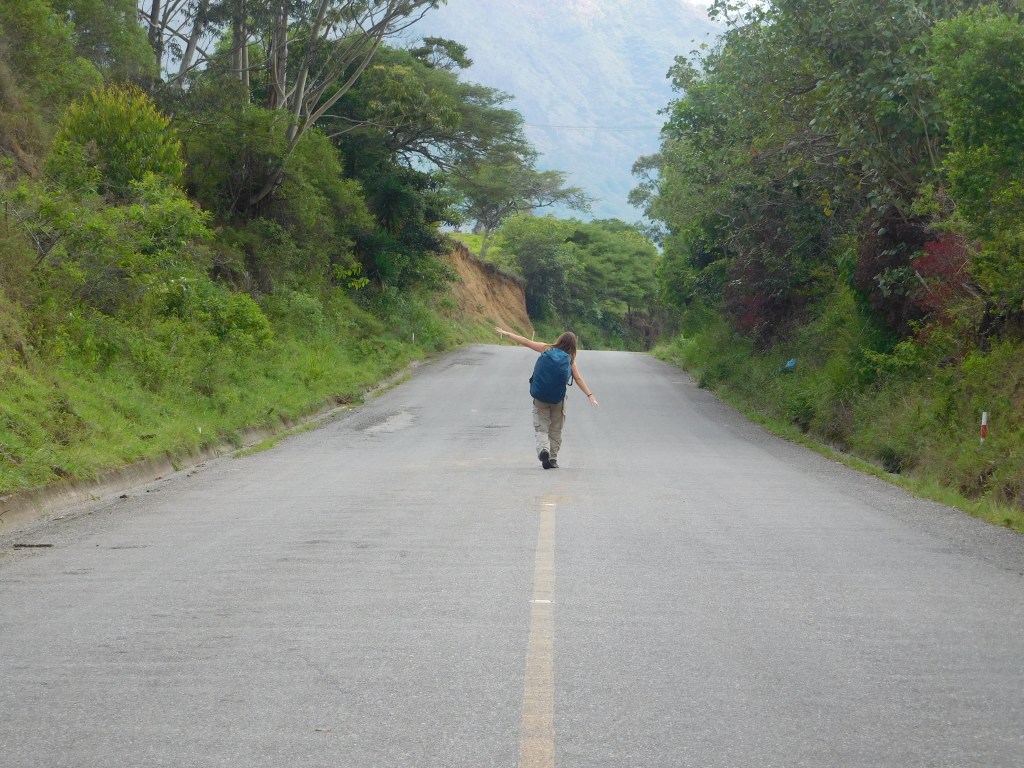
Jimbura isn’t very big. I would even say it’s small. However, it’s a border village with Peru. We find a tienda that prepares food for us, then we go to ask for hospitality from the village priest. Less fun than Father Angel (see the post from previous vacations with Eva), but he opens the door to a room adjacent to the church. Here, there’s no bed, just the floor. We improvise a mattress with tarps and clothes, and then we find ourselves lying down, exhausted from the day. And I must say that we both slept very well on the floor.
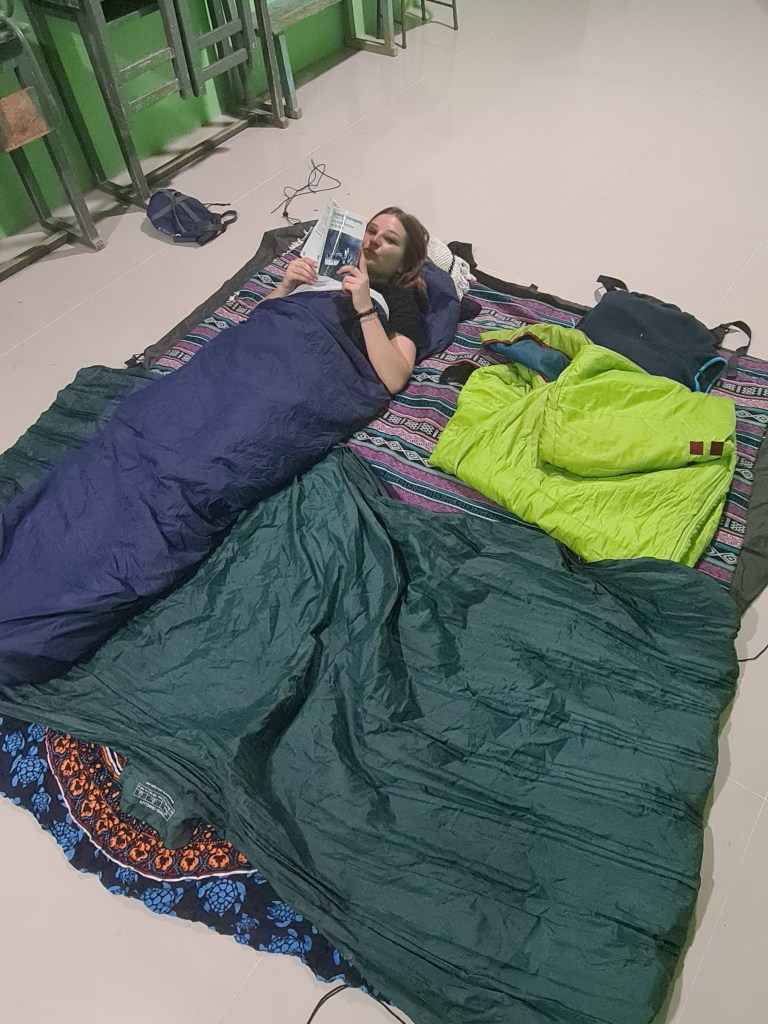
Today we want to go see the Jimbura lagoons in the national park. Getting there seems like a hassle. « Seems like » because we find a family who is going to work on their farm and will take us along. We leave our bags with a lady near the border and head out with our small daypacks and the Ukulele (remember, this is important). After a good hour of mountain road, we arrive at the refuge and the park office. We check in with an agent from the ministry who tells us, « You need to be back down by 1 PM, it’s the rules. » It’s 11 AM, and we just have enough time to go up and come back down. We try to negotiate, but nothing works; the guy is not listening at all. He puts the pressure on us, and tired of talking with him, we agree. We’ll come back by 1 PM. So, I leave my Ukulele in the office because I won’t have time to play it once we’re up there. We start the little hike, insulting that jerk as we go, and we come across a group that is coming down. There I spot « Ministerio Ecuador » on the jacket of one guy. We chat, and he tells us he works with the other idiot down below. He also says there’s no problem coming back later, we can do our thing. So I ask him to put my Ukulele outside the office so that when we come back down, I can retrieve it and head back relaxed. Perfect!
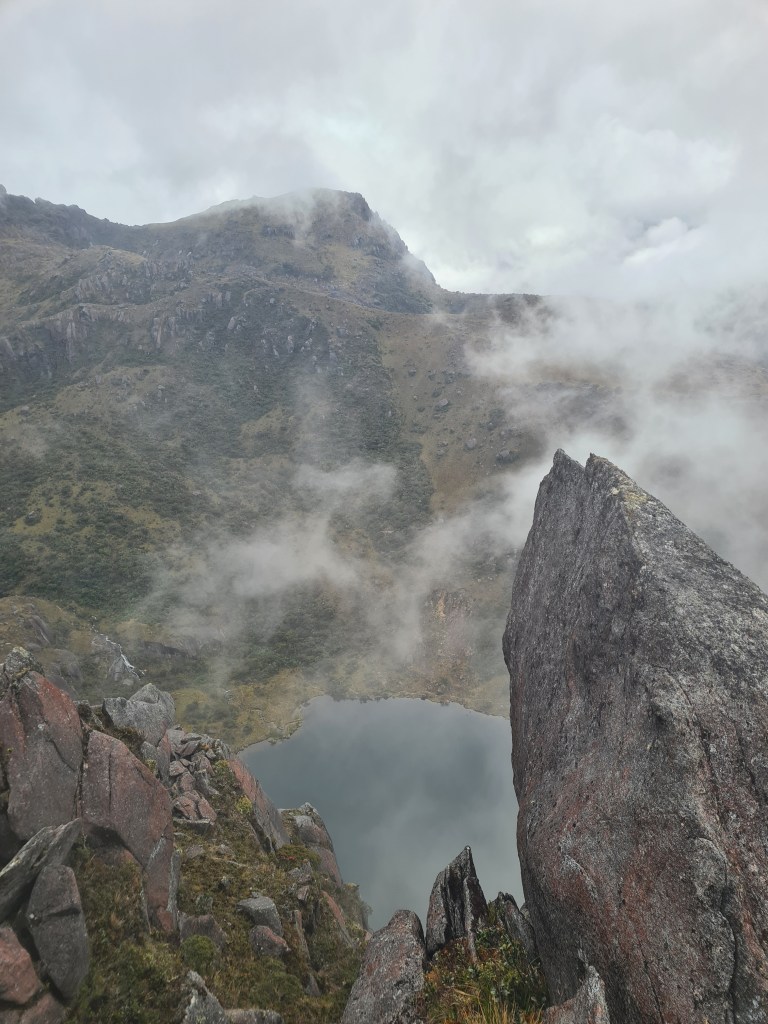
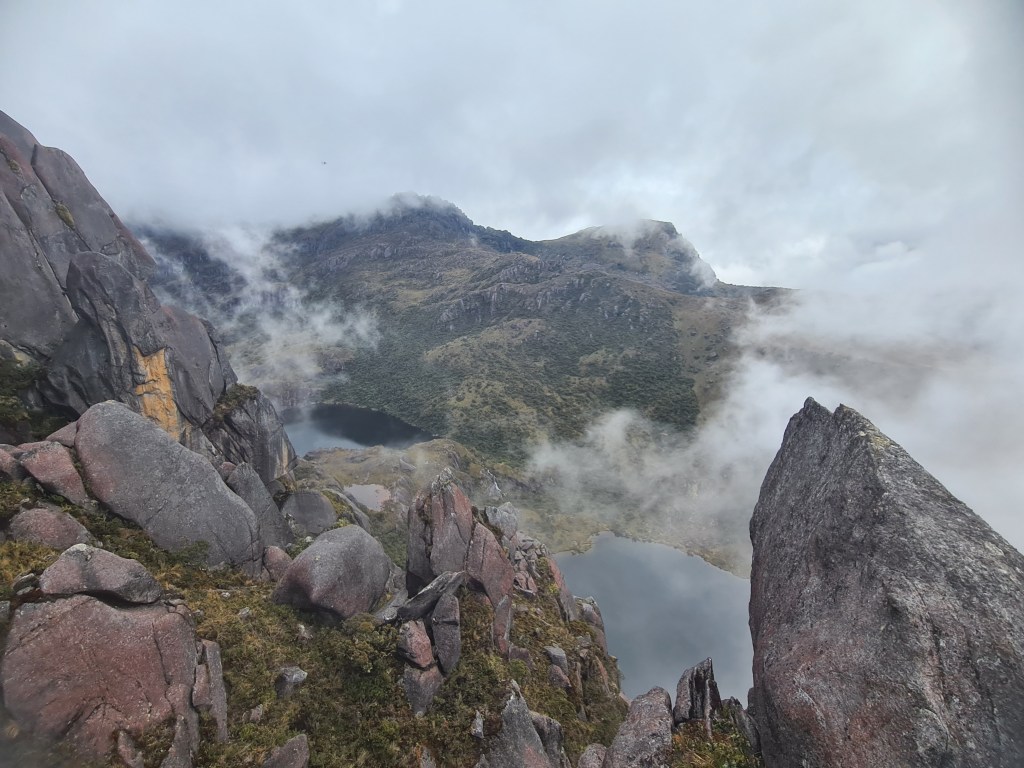
So, with a light heart, we climb up to see these lagoons and scale the rocks to enjoy a breathtaking view. It is absolutely magnificent. From our vantage point, we look out over two lakes below, and the silence that reigns there is majestic. We observe a few birds that live in the area, then slowly make our way back down to the lake and the refuge. Once at the bottom, I search the building but can’t find my instrument. It’s in the office. It annoys me that the guy is so stupid because we have to leave the country that same evening. We left the country in the morning at the village, which complicates things. We find a car to take us back down from the park, collect our bags and, luckily, find the nice colleague who lives nearby. We go to see him, explain the situation. It’s a pain, but in the end we pay him to make a return trip to fetch the ukulele. Time, energy and money wasted because of one idiot.
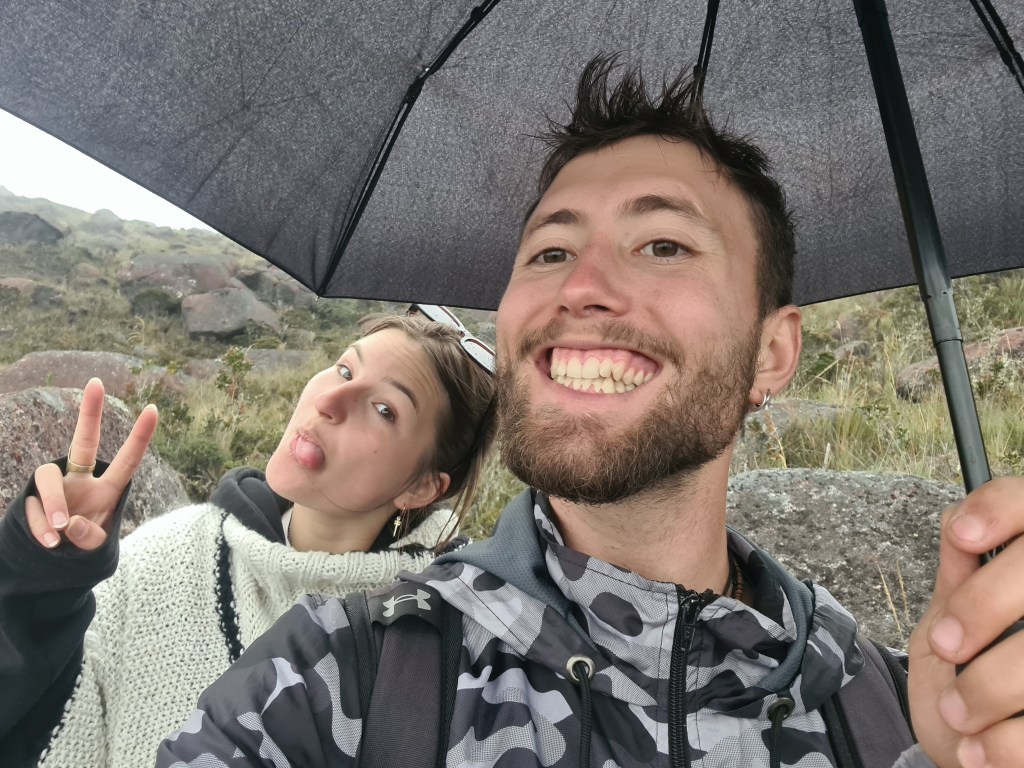
Anyway, the matter is settled, we head towards the border, a few kilometers further on. It’s not very busy around here, and we easily get our precious stamp. Last stop by car until Espindola, a border village on the Peruvian side where another surprise awaits us…
Our driver informs us that all the people from the village leave at 4 a.m. for Ayabaca (a small town about a 3-hour drive away) and that this is our only option to leave here. Well, we are used to shaky information, so we don’t panic. Then, during our dinner at a little lady’s place, she tells us the same thing, hmm. Police station, here we go again. So we’re going to have to get up in the middle of the night to reach the town. What a hassle! The search for a place to stay for the night begins, which will end at a little lady’s house who will delight us with small cakes and an infusion. Her husband makes the early trip and can take us.
The night was short but refreshing. As planned, we left at 4 am, illuminated by a wonderful starry sky. Eva and I had some good ideas, so we decided to stay outside and make the journey in the back of the pickup truck. We froze our behinds off, so to speak, but the sight of shooting stars and the Milky Way comforted us. It’s a mountain road, winding in all directions, shaking us up quite a bit due to the potholes. We arrived in view of Ayabaca, greeted by the rising sun above a sea of clouds. It’s quite a sight. We didn’t have many soles, the Peruvian currency, so we paid the driver with mangoes and then headed to the market for breakfast. They’re more accommodating than in Europe. We quickly realized that hitchhiking would be complicated here, so we hopped into a “colectivo,” a shared car, heading to Piura, our destination for Christmas. Once again, it was quite a spectacle: the back was filled with bags, clutter, and people. After 20 minutes, we discovered chickens struggling to breathe under an elderly woman. The mountain road was bumpy as well, and we got shaken up pretty well in the back of the pickup. We made good progress, but the distance was quite large. I’d say we traveled about 5-6 hours to reach Piura, all under a blazing sun to get some color. So, we were quite exhausted when we got out of the truck.
In Piura, we met up with Gian, who I had spoken to via Couchsurfing. He invited us to spend Christmas at his place with other travelers and his family. We arrived shortly after our journey in a pickup truck, and he immediately made us feel at home. We met two Belgians, an American, and his family who live with him. It felt more like a guesthouse, but in Latin America, it is common for several families to share homes. We were going to sleep at the top; we managed to set up the hammocks despite the wobbly columns. We spent the rest of the afternoon/evening relaxing at the house and a large part of the next day as well. In the evening, it was the Christmas Eve celebration. At Gian’s, dinner is served at midnight, and before that, nothing special happens—no big appetizers, mass, or anything, it’s relaxed. We all eat together; well, on one side are the travelers and on the other, it’s more freestyle. It was different from the big meals we’re used to. We had a great time, and around 3 in the morning, we were exhausted, so we went up to sleep with Eva.
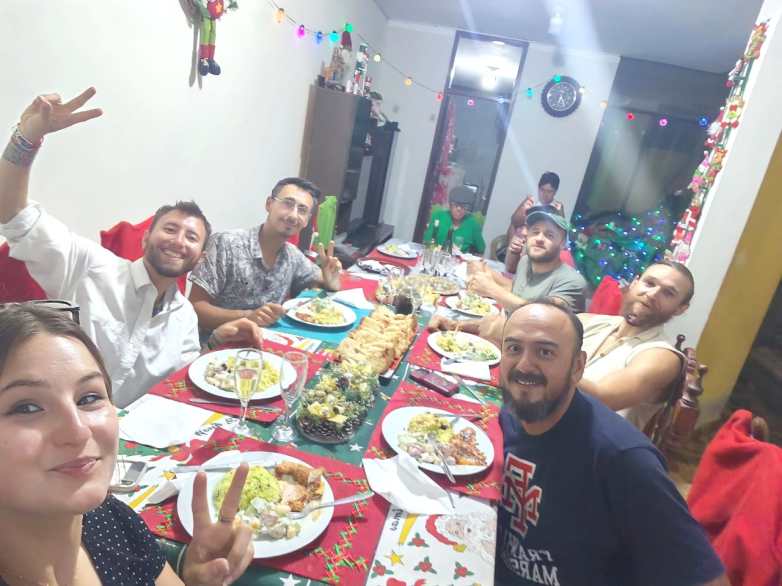
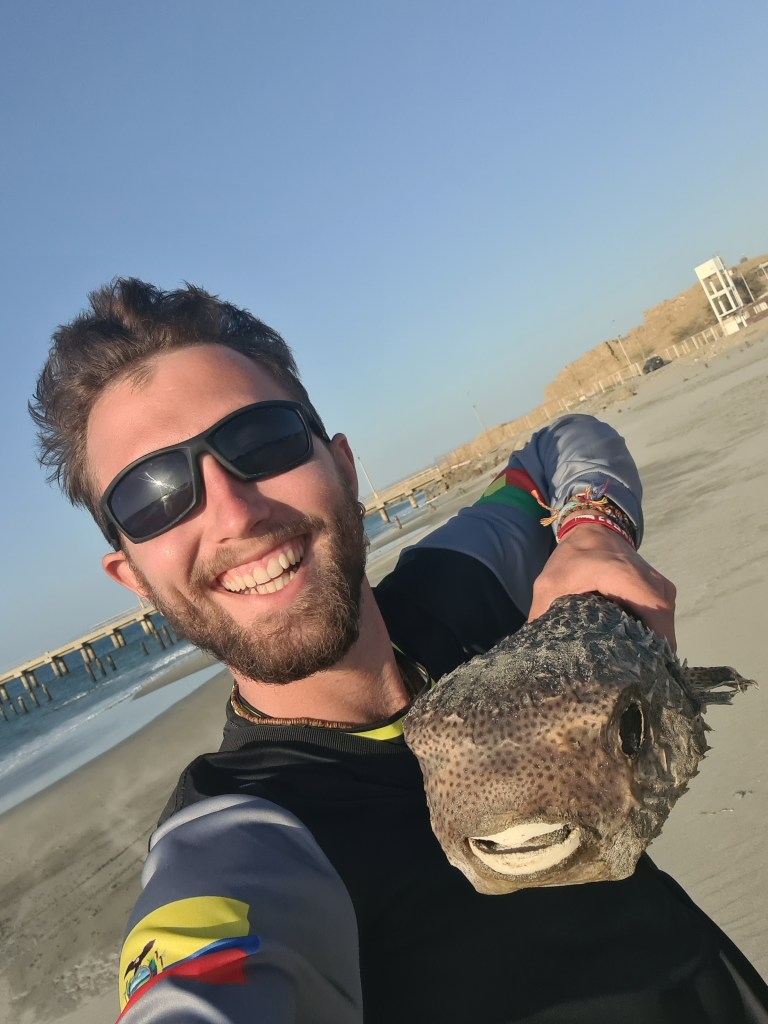
December 25th! A peaceful wake-up, lunch is scheduled for around 1 PM. Eva and I decide to head to the beach after eating to have a small Christmas gathering. We have lunch with everyone, once again not organized at a large table as is customary, but that’s okay. We thank everyone and then head towards the bus terminal to reach the small village of Lobitos, in the northwest of the country. About 2.5 hours of travel to arrive at the beach at night where we will find a lifeguard tower to set up our hammocks and spend the night. We exchange small gifts that we picked up in Piura a few days ago: socks, masks, and other little trinkets.
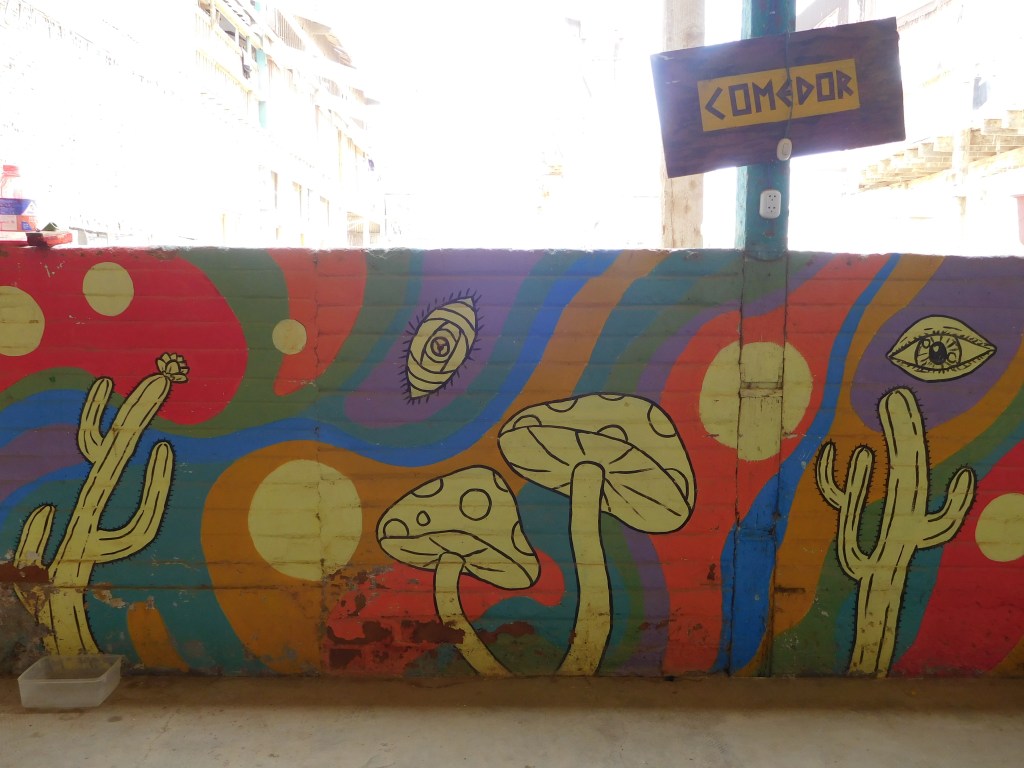
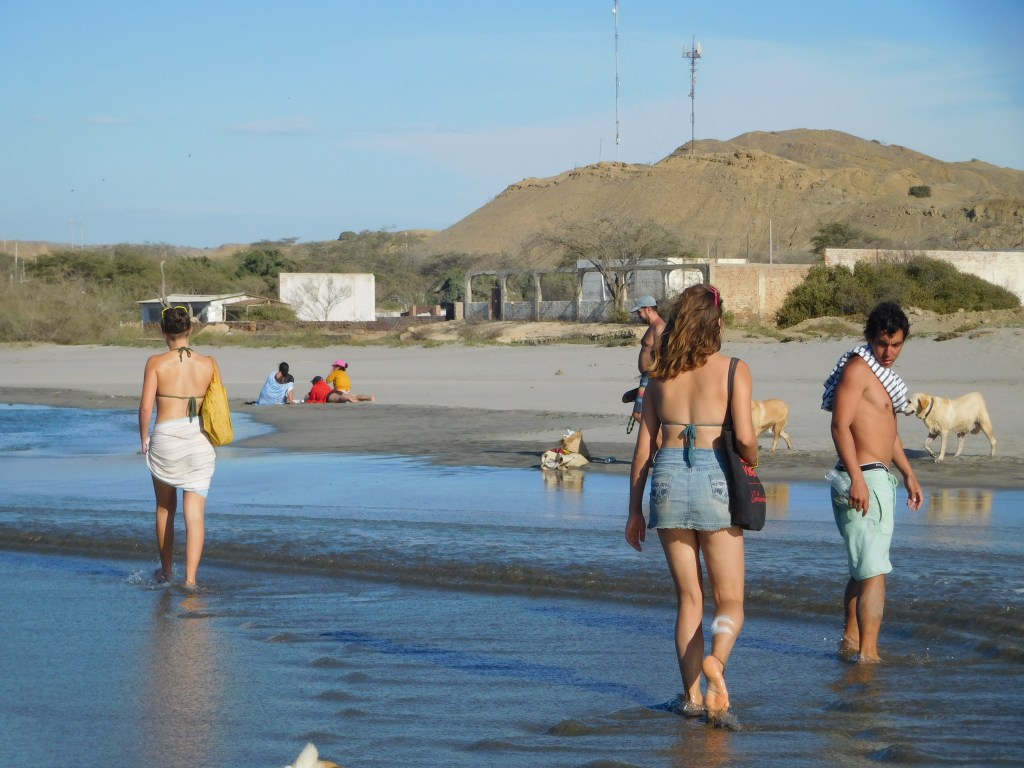
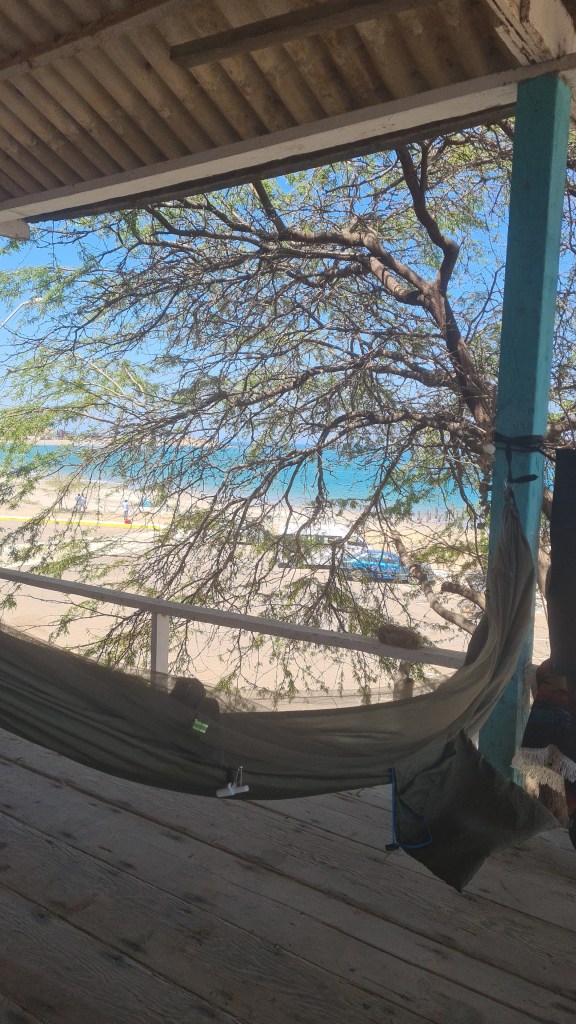
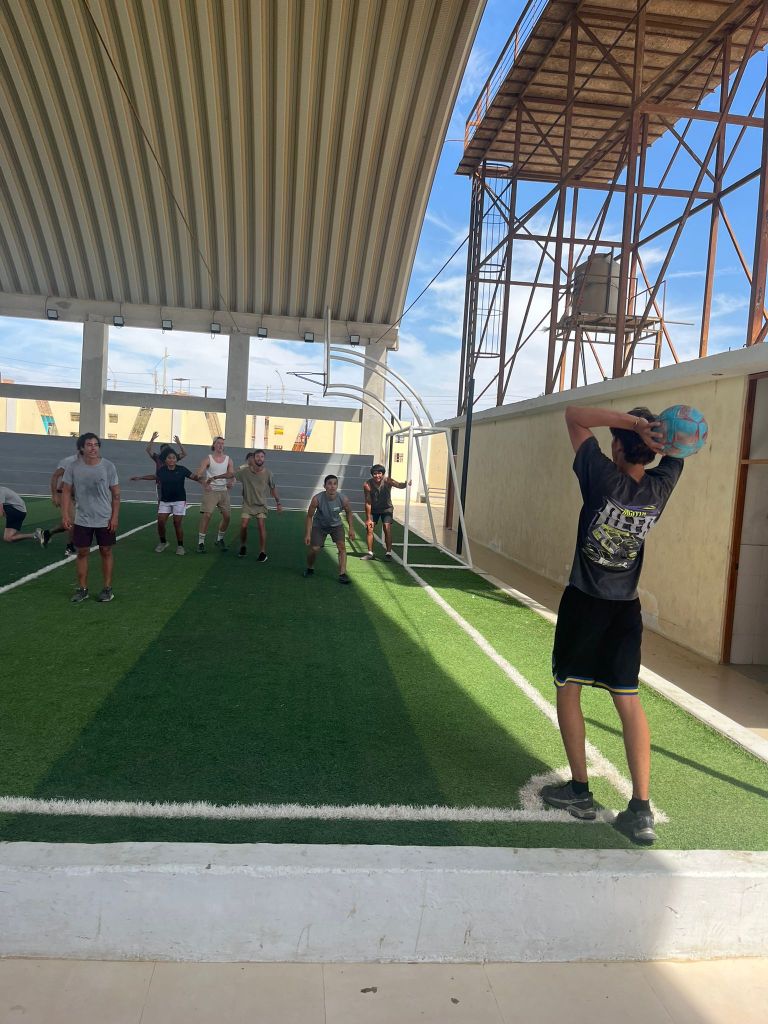
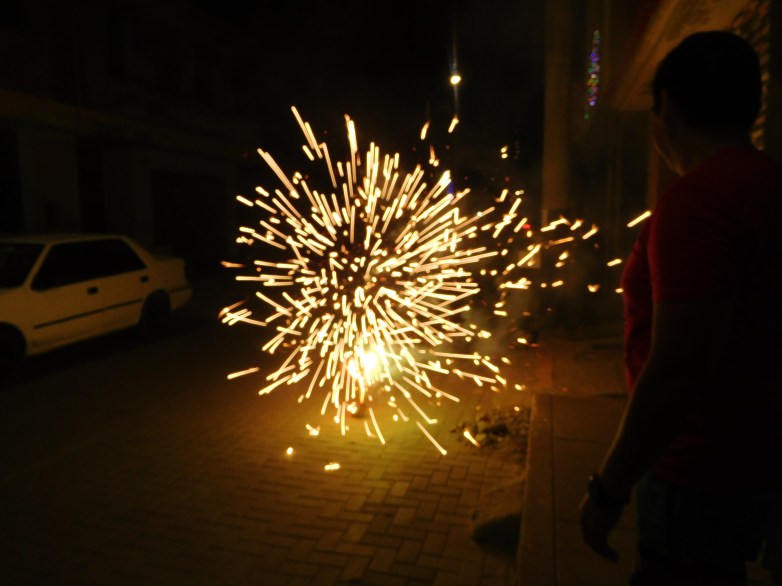
Lobitos is a small village, originally a base for oil but now converted into a surfing tourism spot. We will stay for several days at the Surf Camp, a warehouse transformed into a youth hostel. We set up our hammocks, meet the volunteers who work here, and take some time to relax. We spend the first few days of our stay resting, dining at restaurants, and swimming, then for the New Year, we go to a nearby hostel/bar on the beach where we’ve made a few friends to celebrate together. We toast, play games, eat, and everything is going very well. Just before midnight, we move to the main beach to dance and arrive right in time for the fireworks and the countdown. 10, 9, 8, 7, 6, 5, 4, 3, 2, 1 HAPPY NEW YEAR! Welcome to 2026! We’ll finish the evening dancing on the beach with friends, barefoot in the sand; life is simple, isn’t it?
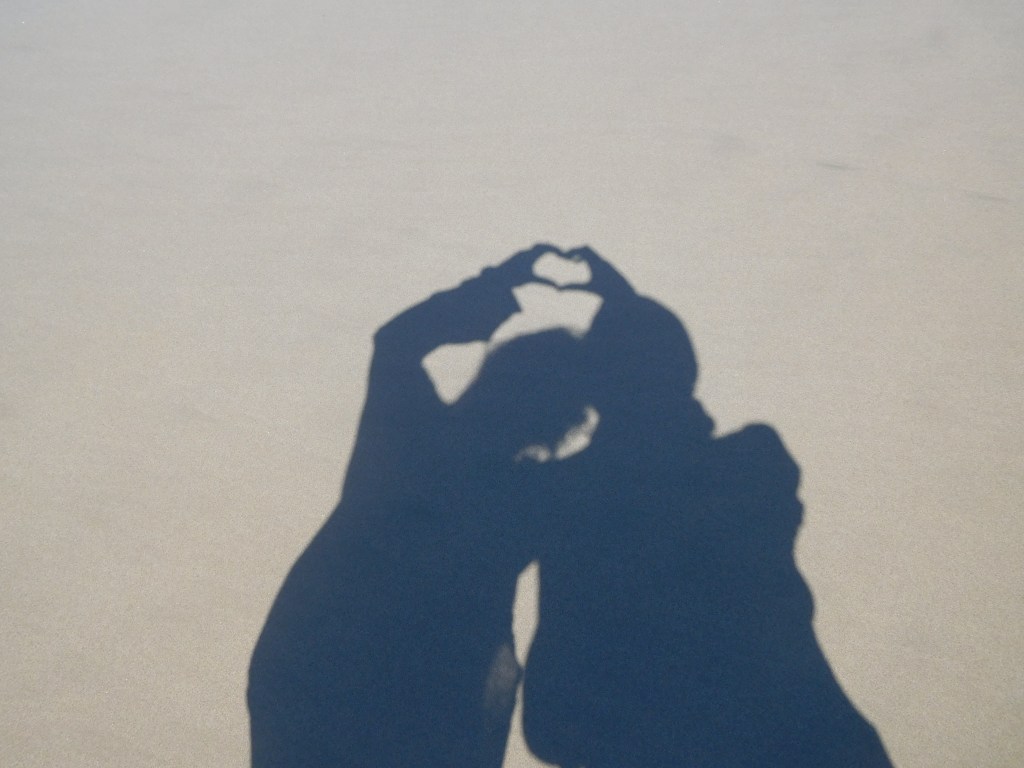

Two days later, Eva leaves me to return to work in Cuenca, at the French high school where she will be until next June, with no tearful farewells as we know we’ll see each other again in another country. I stay a few more days to enjoy the sea before setting off, with the Atlantic coast as my destination. But before that, I have to cross an entire continent; a new adventure begins for this new year!
Greetings and happy holidays!
En savoir plus sur Les aventures de Cécé
Abonnez-vous pour recevoir les derniers articles par e-mail.

 Les aventures de Cécé