The title announces the color: heading to the Atlantic! But well, I am here.
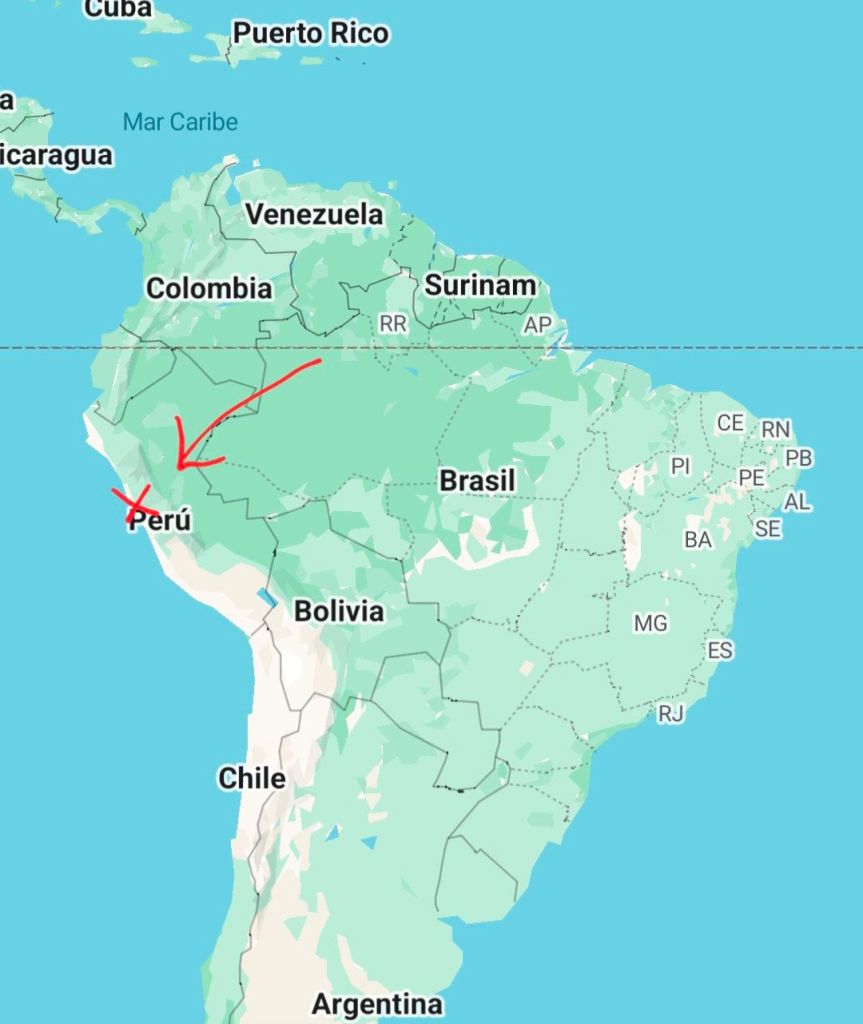
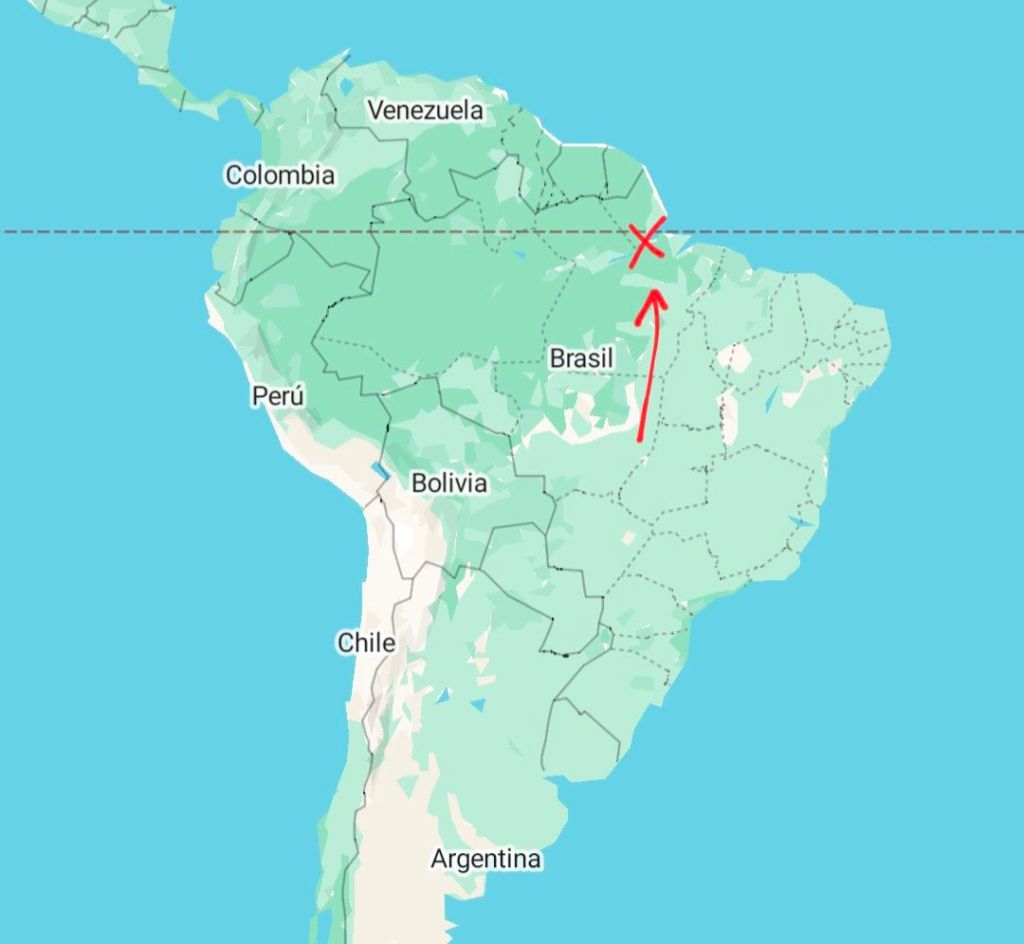
And I am going there.
So let me tell you, there are quite a few miles to cover. How do you cross a continent without a plane? There are not many ways. The first is by land. By car, on foot, by bike, or motorbike. It’s possible, but you have to go through either Venezuela or Bolivia. The second way is by water. I’m, of course, talking about descending the longest river in the world, namely: the Amazon! This river gives its name to the largest forest in the world, the Amazon rainforest! Spanning 9 countries, with most of its territory located in Brazil, it is renowned for its biodiversity, its global climate regulation role, and unfortunately, for its intensive deforestation. To cross the Amazon, there is a river route that starts from various points in Peru and Ecuador. All converge in Iquitos, the Peruvian capital of the Amazon. Then onwards to Letícia, the Triple Frontier, Manaus in Brazil, and finally reaching the mouth at the Atlantic.
But we are not there yet. First step, joining Iquitos. But I also want to visit some archaeological sites along the way, and one of the major places of Peruvian archaeology is located near Lambayeque, north of Chiclayo. I leave Lobitos with Maia, an Englishwoman who is heading to the mountains (same direction). We hitch a ride on a truck from Talara (near Lobitos) to Chiclayo. About 6 hours of driving spent in the back of a truck, cramped like little vegetables. We take a small tour of Chiclayo, but the heat being stifling, we decide to go see Zootopia 2 at the cinema. It feels good to go to the movies from time to time. She takes her bus to the mountains, and I leave the next day for Tucumé, where there is an archaeological site known for its 26 pyramids.
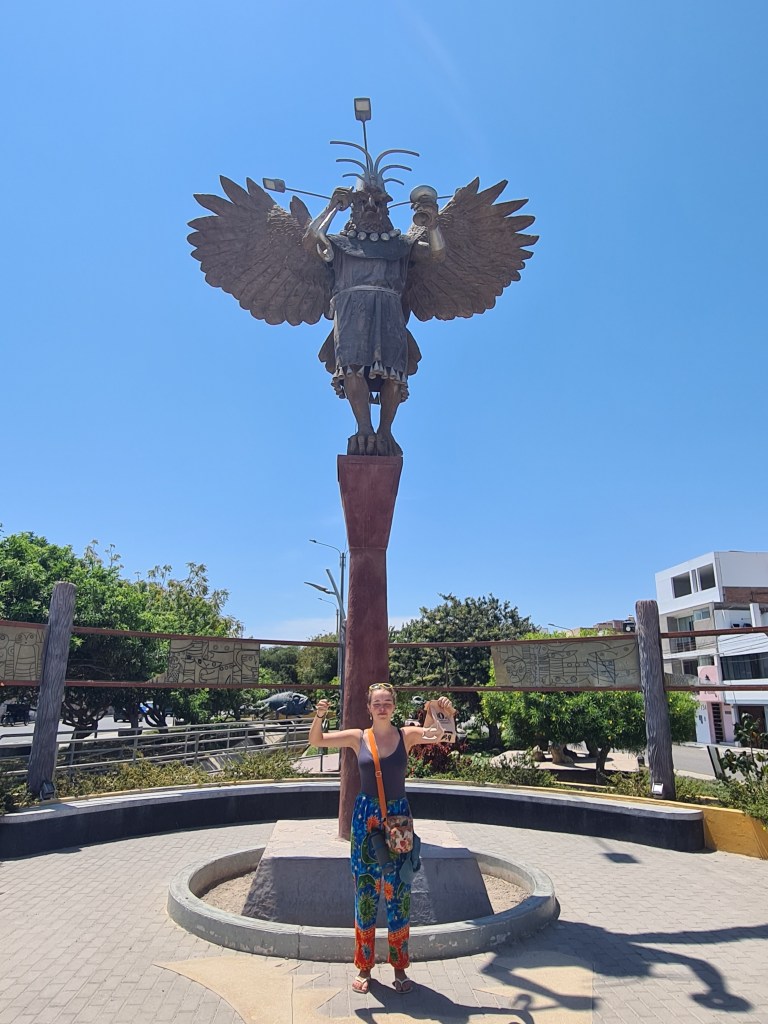
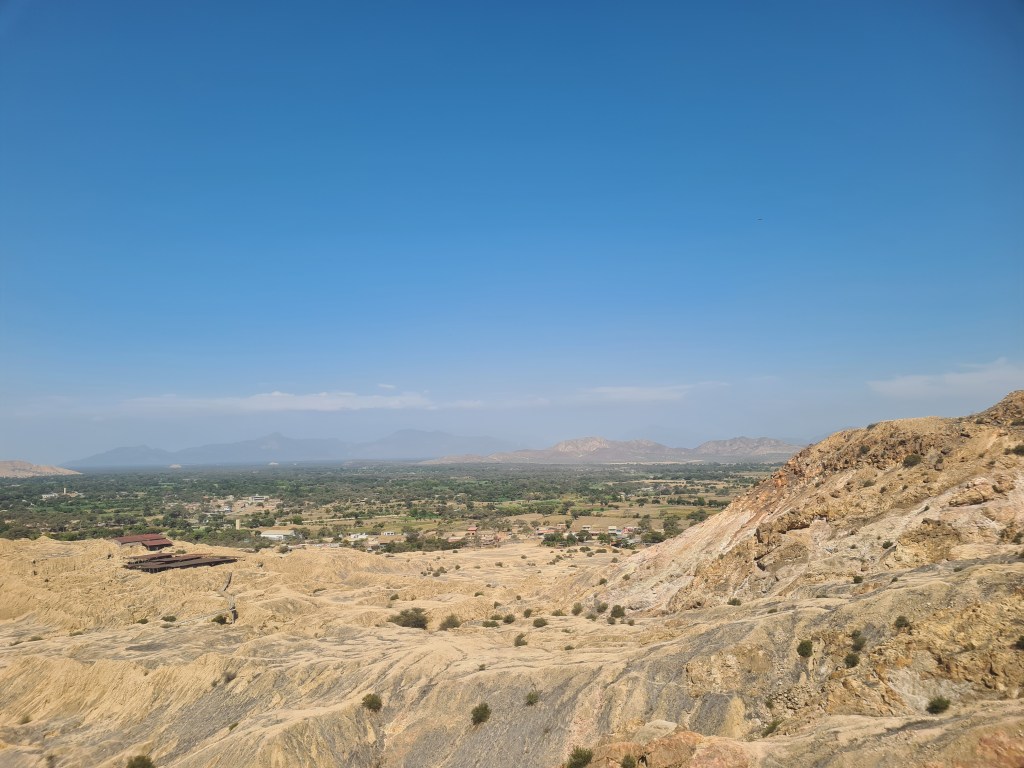
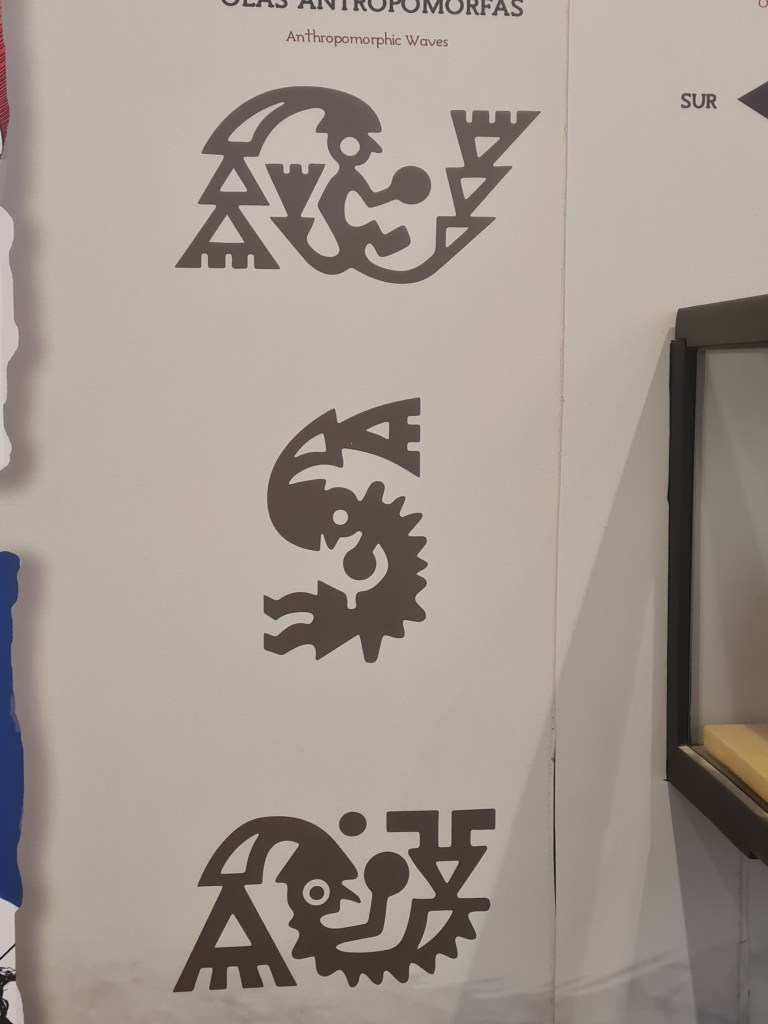
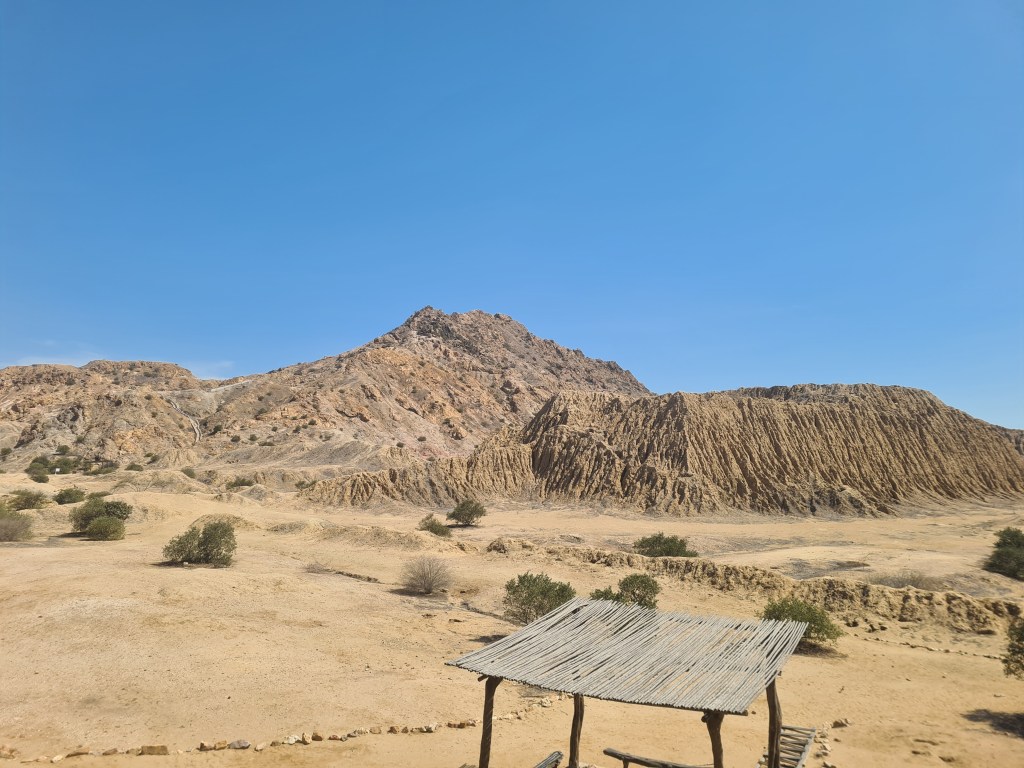
Don’t expect Egyptian pyramids; they have certainly suffered from erosion, but the site’s museum allows you to learn more about the region’s first inhabitants and the various cultures that have succeeded each other. A quiet visit, with a slight cold caught the day before in Chiclayo. I spent the night at a small gentleman’s place next to the site and set off the next day for the city of Lambayeque, where several museums recount the history of the region. A studious morning then, reading and discovering vestiges of an ancient civilization. I’m still under the weather, so I decide to go heal myself on the coast. The sea air cures all ailments.
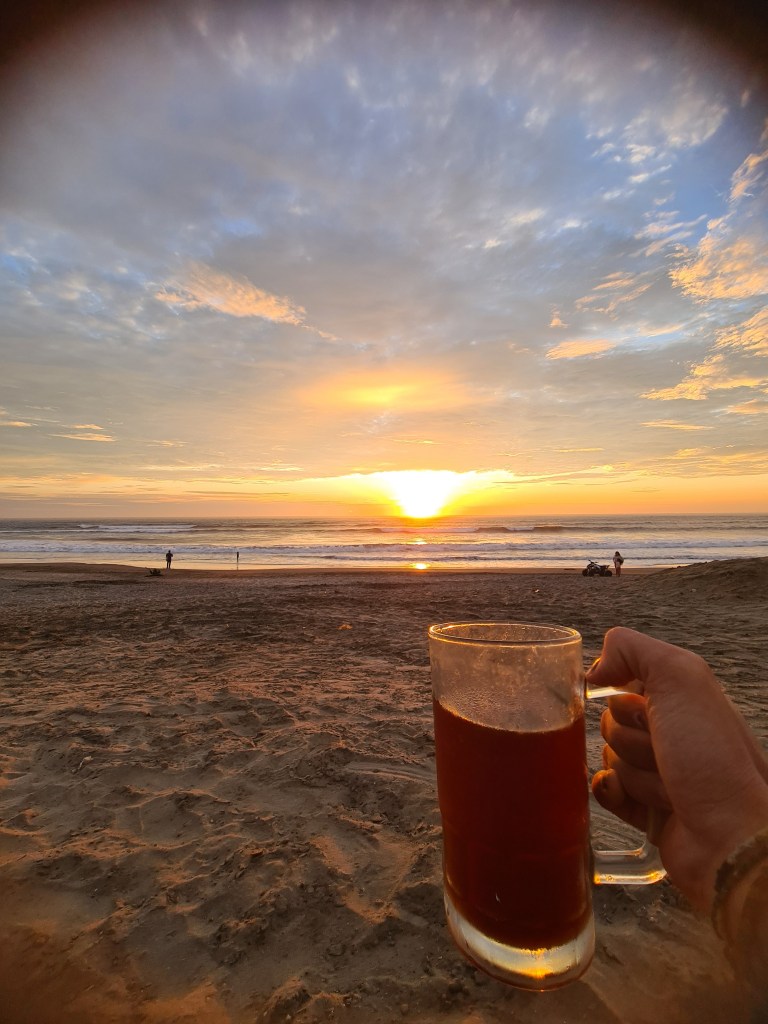
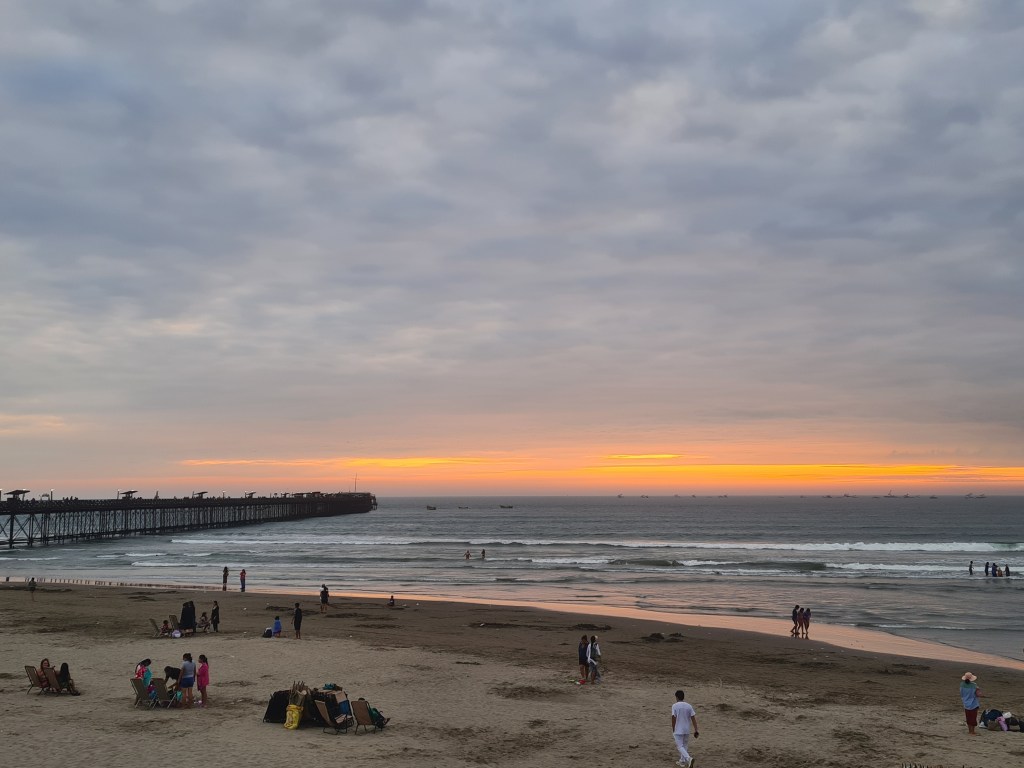
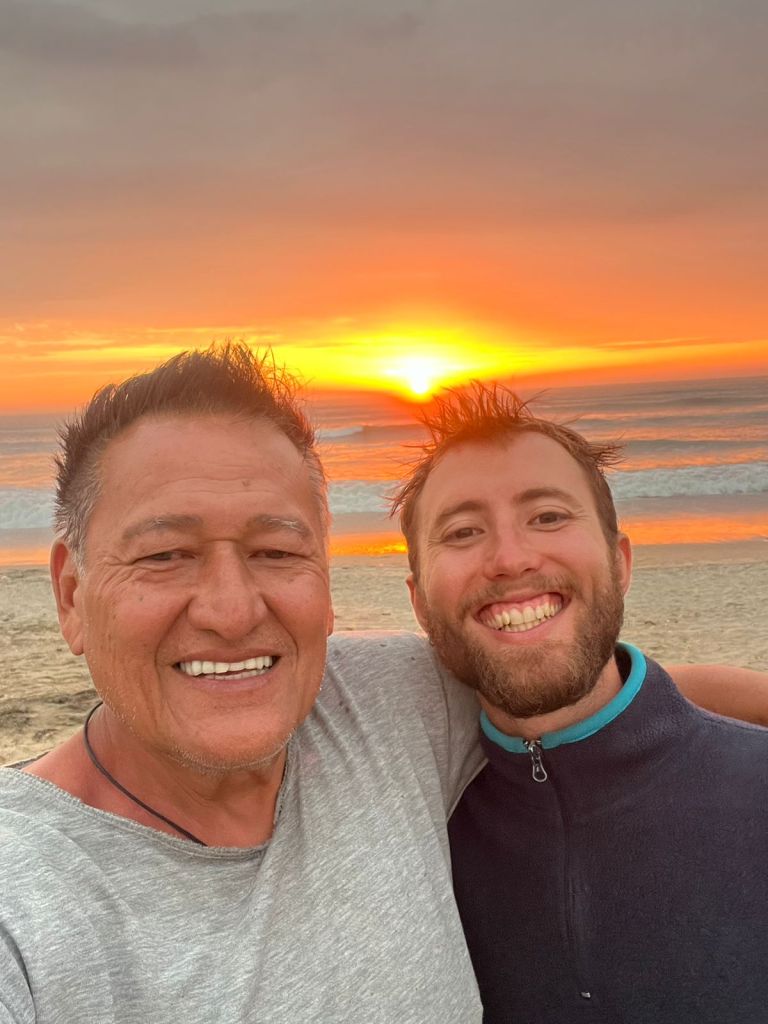
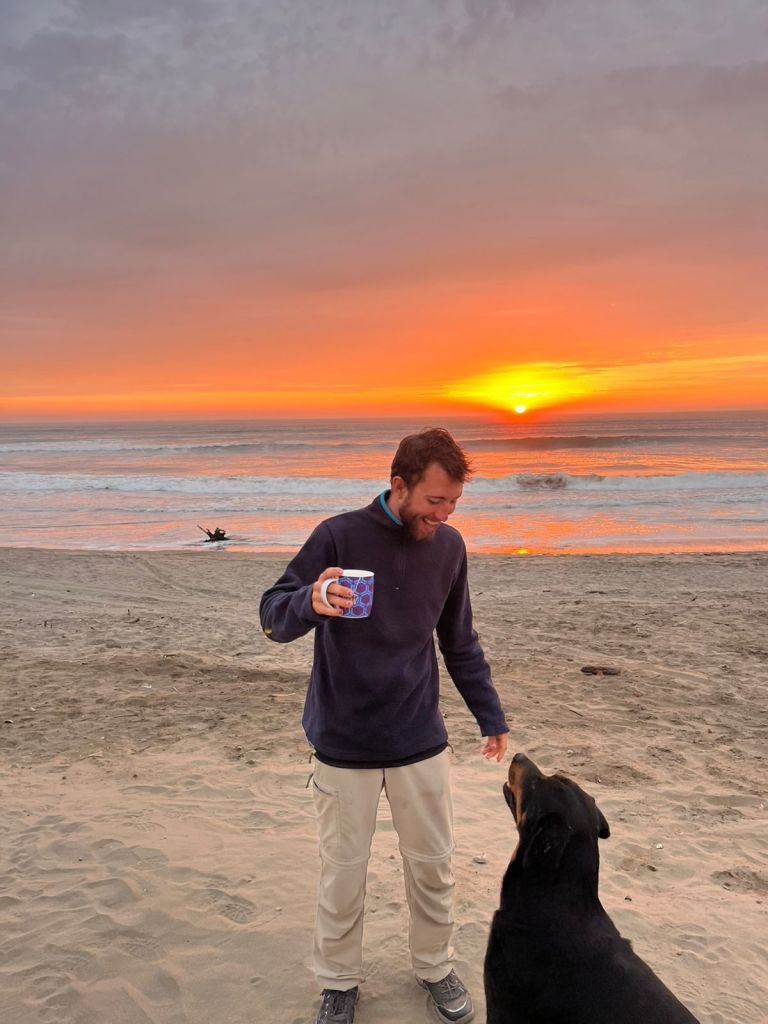
A quick dip in the town of San José, and since it’s still daylight, I head on to Pimentel. A small seaside town where residents from Chiclayo come to relax. I spot a « Backpacker » hostel on the map, so I make my way there with the idea of spending a night or two before continuing my journey. Not so fast. Upon arrival, the owner, Mario, asks if I can stay for a few days to help in his restaurant/bar for the weekend. In exchange for my help, I get accommodation and meals. Why not? Mario is Japanese-Peruvian; he used to run a hostel that El Niño destroyed a few years ago. Due to a lack of time and money (and I’ll say organization too), he hasn’t rebuilt it and, as he is also a chef, he started a restaurant. I will help set up the bar on the beach and teach two young siblings (aged 16 and 14) how to work in hospitality. The service goes well, but working in Peru is quite different from what we’re used to in Europe. Anyway, I spend a week at Mario’s, the food is good, but for reasons I won’t elaborate on here, I continue my journey with my next stop: Cajamarca, in the mountains.
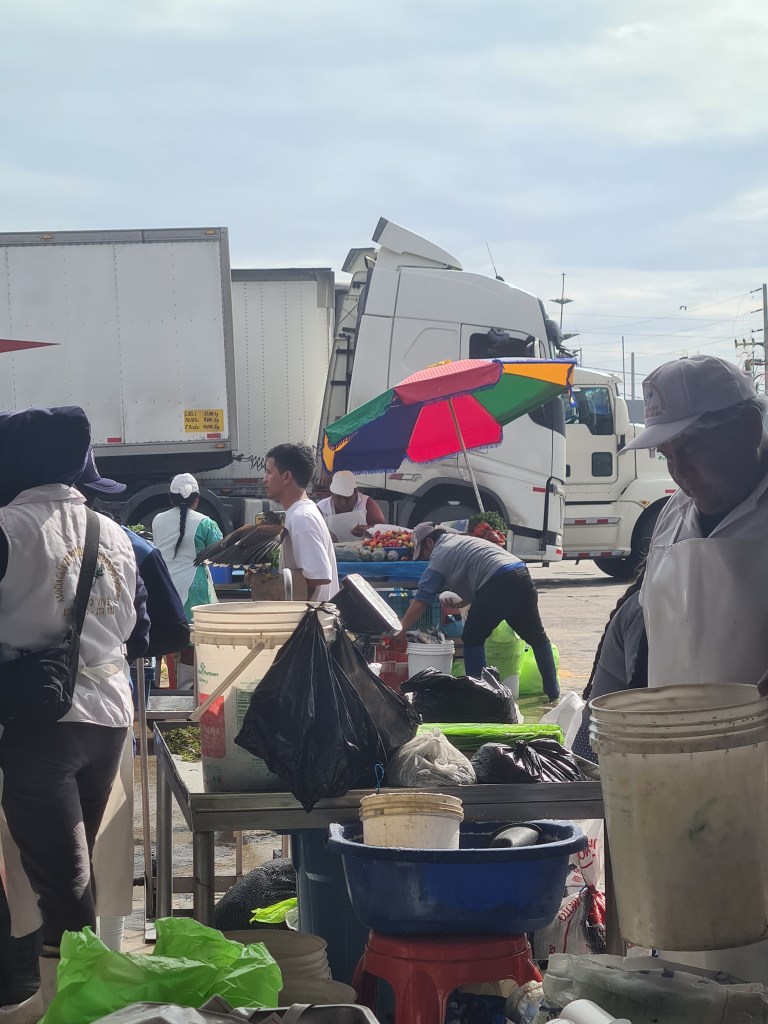
I move slowly hitchhiking, on foot until I get on a truck. I didn’t say « in » a truck but « on » a truck. In fact, I’m on the part between the truck and the cargo. Safety first, as the English say. A good hour like that and then I move onto the cargo for half an hour. Another car, and then for the last vehicle, I’m going to get into a tuk-tuk for a duration of 4 hours. What you need to know is that the driver has just completed a 12-hour drive that day. He left at 3 AM. The road is full of landslides. It’s raining. It’s a winding mountain road at night. Safety first, as they say. But we arrive in one piece in Cajamarca around 11 PM. I find a hotel to spend the night, and the next day I move to a nicer hostel in the center. A stroll in the city, visiting museums… It’s worth noting that the last Inca emperor, Atahualpa, was captured here by the conquistador Pizarro. He paid a large ransom to the Spaniards, but they, fearing a revolution, accused him of treason and executed him in public square.
I meet some travelers at the hostel and we decide to go see the site of Cumbemayo. We are with a group and a guide (which I do very rarely) at a natural/archaeological site. The next day, I go alone this time to see waterfalls in a small village, then I stop to see caves and rock paintings. Finally, I spend my afternoon at the thermal baths, Baño del Inca (Inca baths in good French), enjoying the hot springs. On my way back, I learn that there is a carnival parade tonight. We set off with a German who has just arrived to see this show.
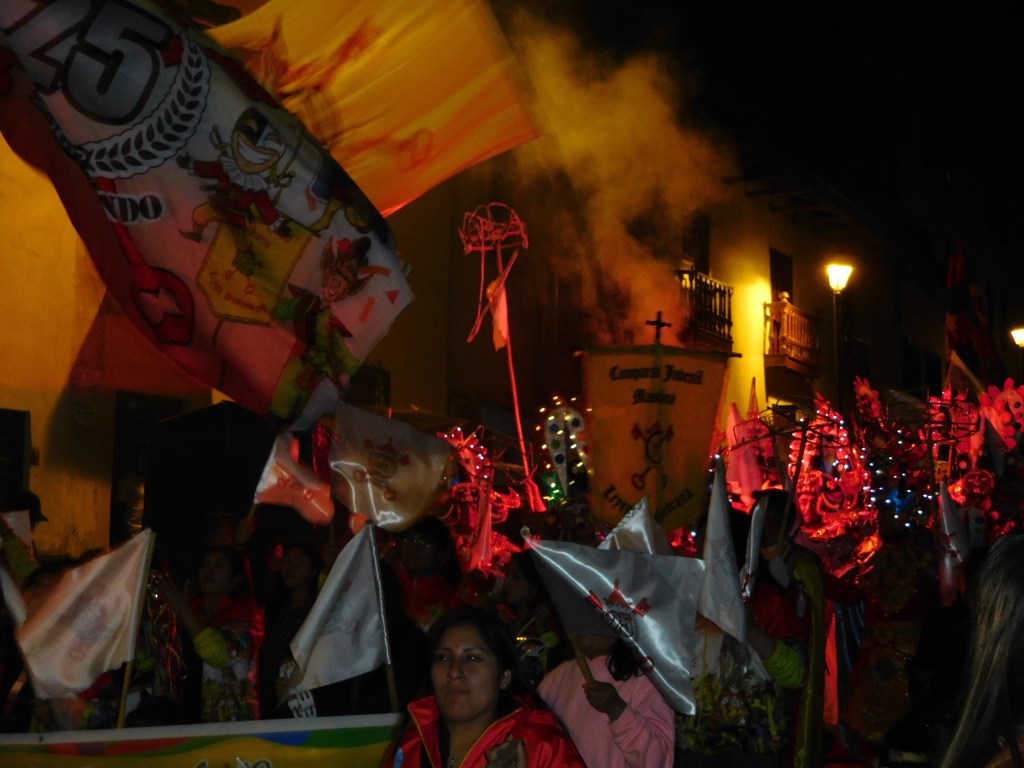
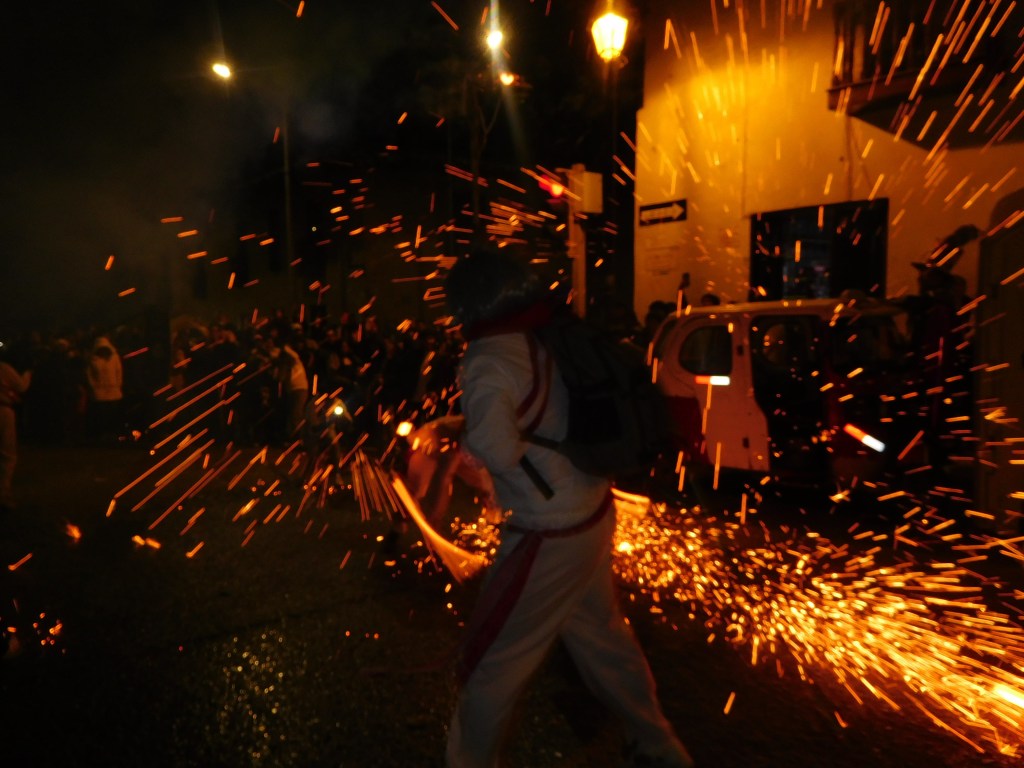
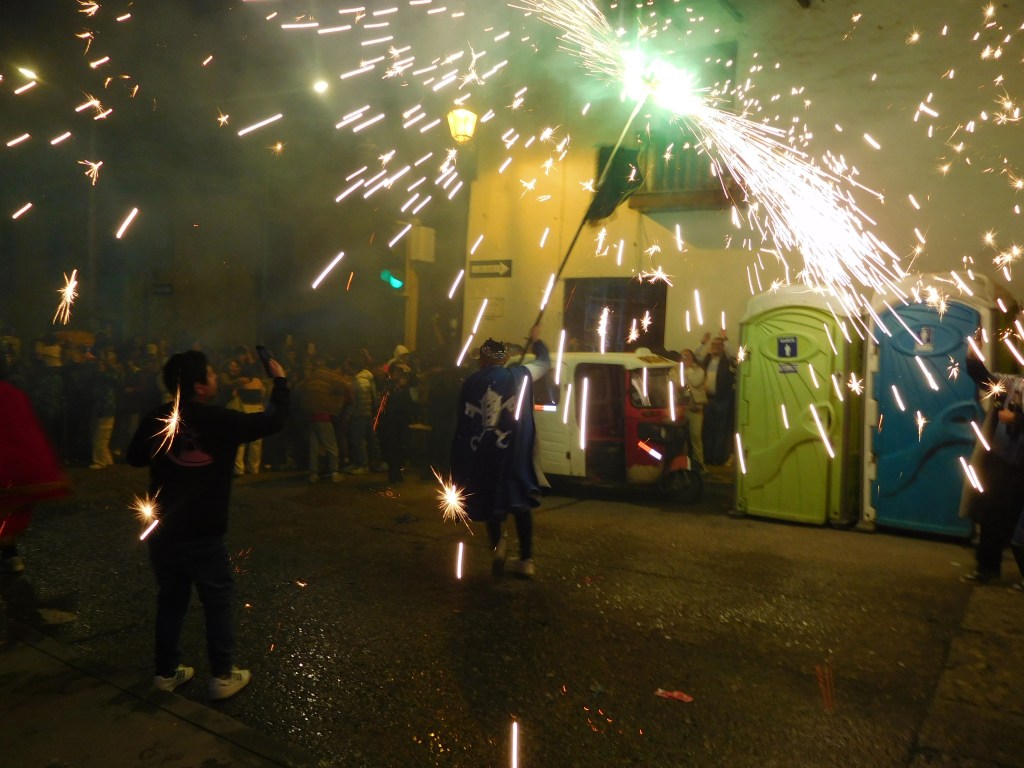
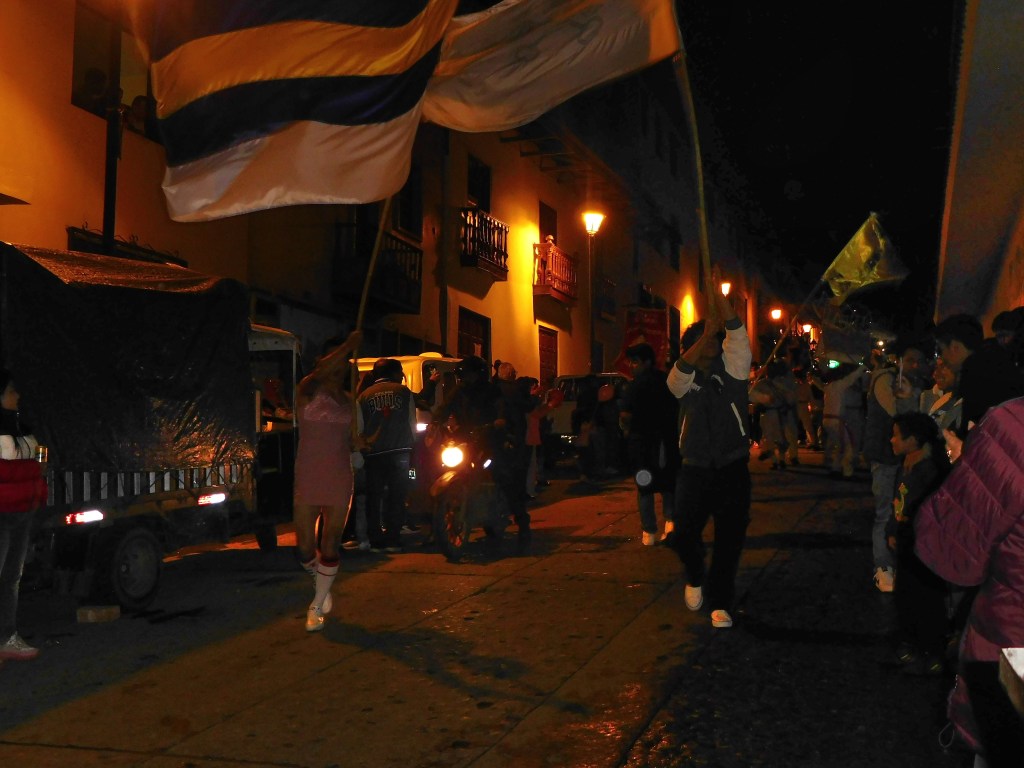
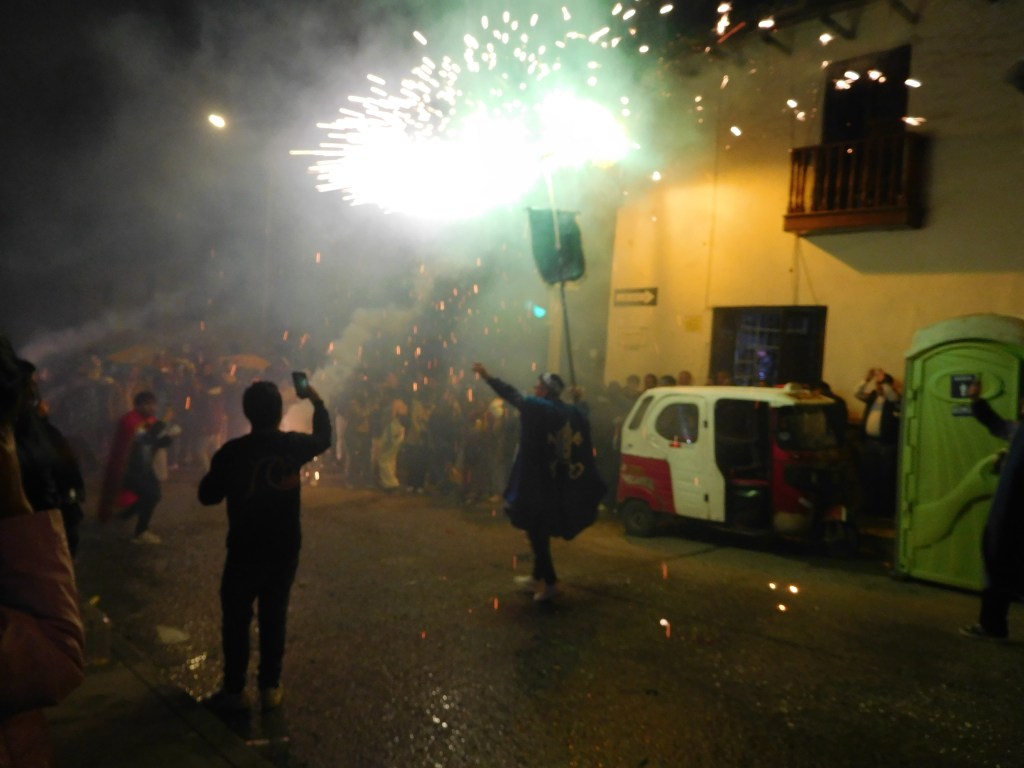
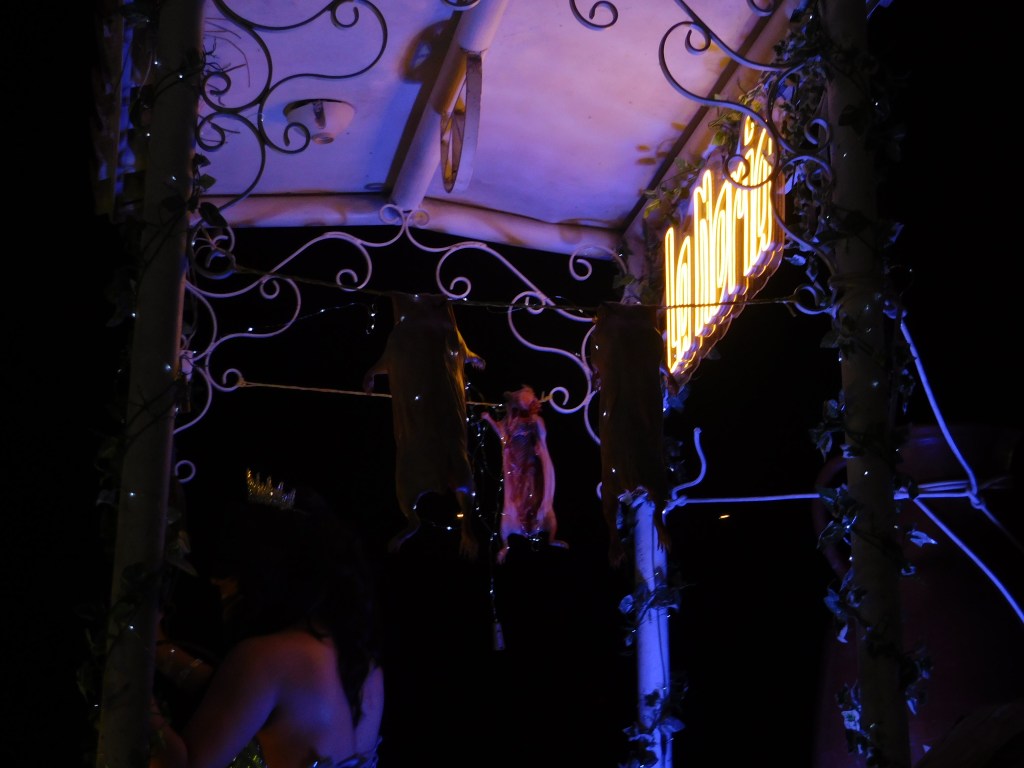
Full of costumes, musical instruments, fireworks (that’s dangerous), and people. In short, the city is celebrating tonight! Cajamarca is unofficially the Peruvian capital of carnival, and it’s proving it tonight! The week is ending on this festive note, and I’m off to get some rest.
Monday is the starting point! A long road awaits me to the gates of the Amazon. At the last minute, I learn that the road to Chachapoyas is open, so I change my plans and decide, as initially intended, to aim for Tarapoto. But slowly, it’s vacation time. Thus begins my adventure hitchhiking across the Andes, renowned worldwide for its majesty but also its danger. With a colectivo to get out of the city, a pickup, a car, a lunch, and a little patience, I hop onto a truck around Celendin. I do mean « on » a truck because I’m on the rooftop of the truck, with a companion and a dog. It’s a « ganadería » truck, which means it transports animals. Thus begins the ascent of the cordillera, slowly, on increasingly narrow and dangerous roads.
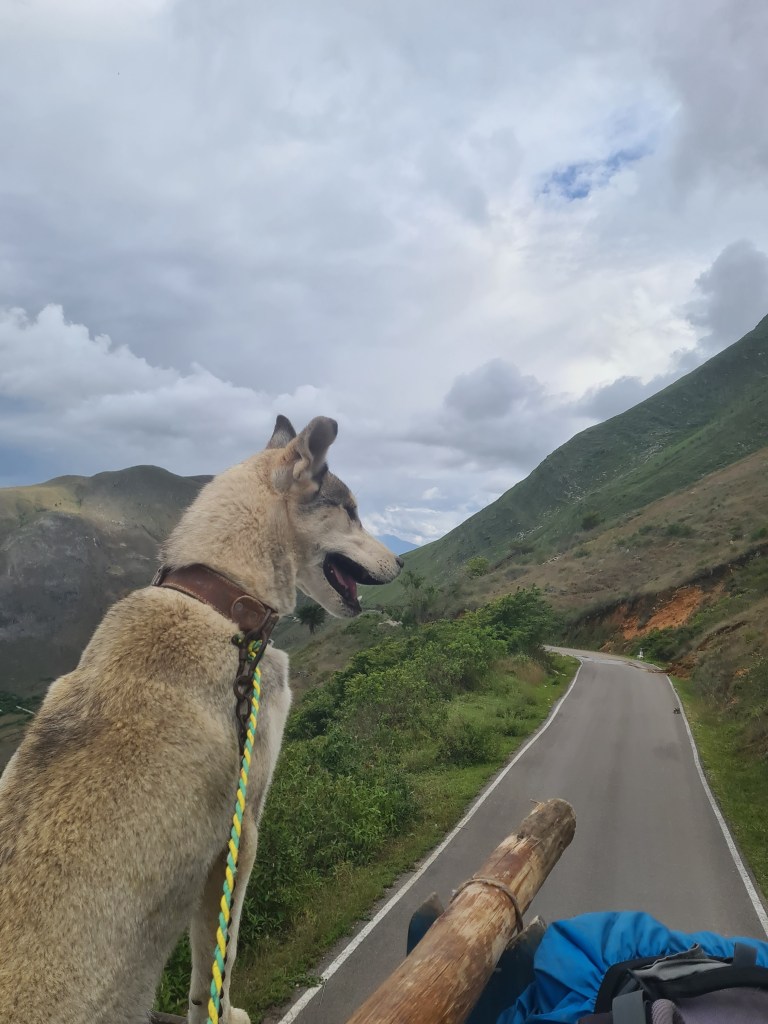
We travel like this for several hours. The scenery is breathtaking. Huge climbs, huge descents. Trucks passing each other, reversing. Hot, cold. The truck turns off at the Marañón River (the main tributary of the Amazon) and leaves me alone with a few houses nearby. It’s hot, humid and muggy here. I go looking for somewhere to sleep in a small village, but surprisingly, no one seems willing to help me find accommodation. I eventually come across some people who welcome me, somewhat reluctantly I feel, into their home to sleep in a hammock. To cut a long story short: a strange atmosphere, a pig dying a long death before being killed, waking up at 3 a.m. to the sound of rain, no sleep, departure at 6 a.m.
At dawn, a truck passes along the road that leads to Chachapoyas. It stops, picks me up, and now I’m in the company of José and David, two rugged truck drivers making deliveries here and there. They’re very friendly; we chat, stop to unload at people’s homes, and have breakfast… This is the most thrilling stretch of road. We climb (up to 3600m), we descend. We climb, we descend. The mountain range reveals itself behind every slope, behind every rock face. The sun rises gently in this unique landscape. And what about us? We patiently make our way along this mountain road. A honk at every turn, a turn of the wheel to dodge holes or fallen rocks. What better way to cross the range than in a truck? They take the time to show me where the taxi fell into the ravine last week, where the truck crashed into the mountain… Great stories.
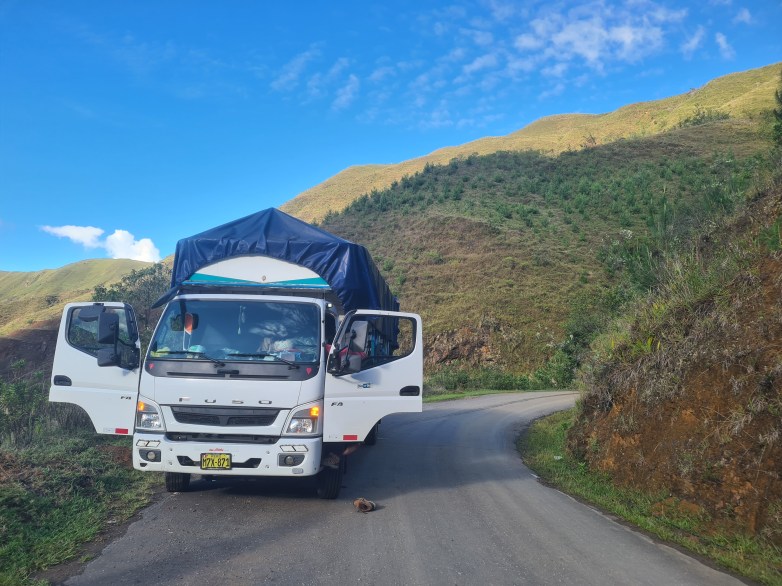
Once past Leyebamba, we are on the descent. We follow a river, the road is a bit better, and we can afford some small accelerations. The kilometers go by, and around 2:30 PM, here I am at the foot of the village of Tingo, a stopover in my little journey. I thank my companions for the road, with whom I spent quite a few hours, then once in the village, I start looking for accommodation. Problem: the whole village has no water. Ouch. Little by little, I find JJ, Juan José, who speaks a bit of French and has traveled quite a bit in his youth. We hit it off well, he has a room in his inn, and gives me plenty of advice and recommendations for the surrounding area.
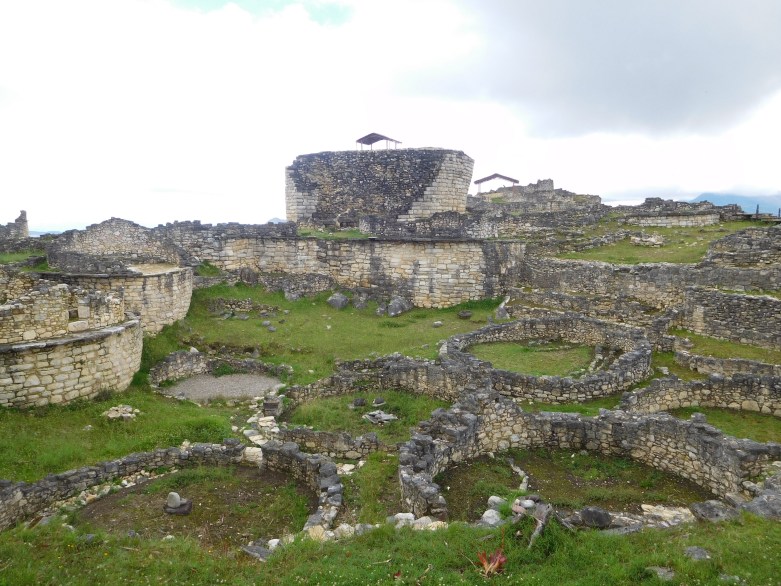
Nuevo Tingo is a village that serves as a starting point to visit the archaeological site of Kuelap. This is an ancient village of the Chachapoya civilization located atop a mountain. A unique feature of the site is that there is a cable car to access it (though there’s still a short 40-minute walk from the village). It may seem common to us, but here, it’s not every day that you see a cable car. Anyway, the view is incredible; I’m doing my little solo tour of the site, even if it lacks informative signs. Early afternoon, I leave the village with the day’s objective: Cocachimba. A small village that serves as the starting point to access the Gocta waterfall. A ride in a car and a motorcycle hitchhike (about 2 hours of travel) and I’m at the village!
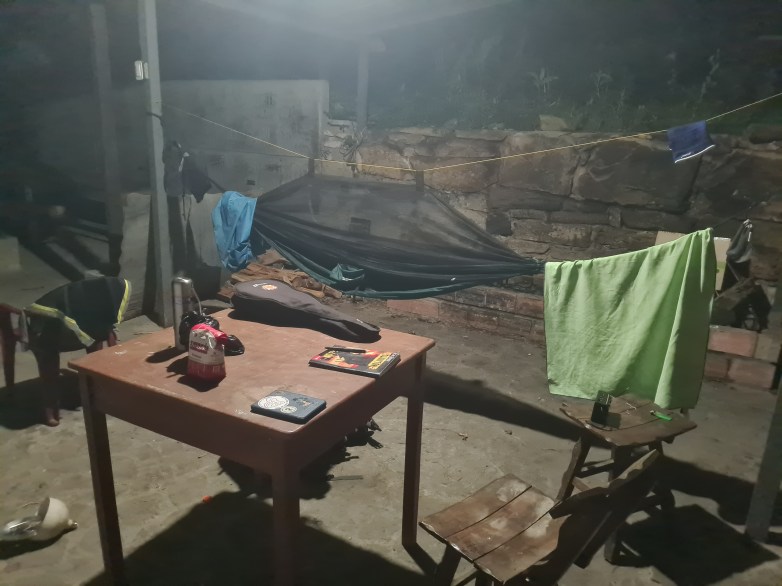
Unlike the previous day where I struggled for accommodation, here I am shown the stables in the city where I can set up my hammock. Electricity, water, and even sanitary facilities with a shower! A cold shower, I should clarify. It’s still early, so I have time to grab a bite to eat, settle in comfortably, and clean some clothes… I decide to wake up at 5 AM the next day to see the waterfall, which is apparently the 3rd largest in Peru (and the 17th in the world). I start the journey with my headlamp, and once daylight breaks, I manage to follow the path without any issues. It goes up and down endlessly, which is tough. Moreover, my stomach is acting up (a nice way to say something hasn’t settled well). I make it to the famous waterfall, which I must say is truly impressive. The water cascades down slowly. It’s a remarkable sight before me. Back to the camp. The situation isn’t improving. But life must go on, so I leave anyway. Colectivo, truck, and pickup. My last two drivers were super cool, and we had a great chat. I have another 2-3 hours of road until Tarapoto, but night is falling, and in my condition, I prefer to rest in Moyobamba for the night.
I’m hitchhiking in the morning, with just one pick-up that will take me directly to Tarapoto! He invites me to lunch in town, but my stomach is still upset, so I don’t linger for long and head to a hostel I had spotted. I settle in, empty myself, rest, then empty myself again. I will stay here for a few days to recover, and I also need to receive a letter that I’m having sent to the hostel. I will leave for Yurimaguas (the port) when I have the letter. That’s a good plan.
The next day, I meet Coline, a French woman who is also traveling and the only other person at the hostel. We spend a few days together cooking, eating, and talking about our lives, just chilling. We take a little trip to Lamas, a small village nearby, to explore and walk around. The next day we decide to visit a waterfall southeast of Tarapoto. We hitch a ride, take a tuk-tuk, and after a short half-hour walk, we arrive at the stunning waterfall. It flows gently and delicately, and there’s a large pool for swimming. Without a second thought, I jump into the water! The water is incredible, crystal clear. So we just hang out at the waterfall before slowly making our way back. We get picked up by a French guy on a motorcycle (random, classic), and we head back to Tarapoto in a colectivo.
AND THEN, TIN TIN TINNNN. Ladies and gentlemen, after five years of travelling around many countries, after hitchhiking all the way to Greece, after having crazy, kind, funny, interesting, and stupid drivers. Without ever having had the slightest accident or scratch, our colectivo has had an accident with a tuk tuk! The tuk tuk hit the right side of the combi and overturned. We in the combi were thrown off course, but the driver stopped on the side of the road. The tuk tuk is on its side, but everyone is fine. In our vehicle, my neighbour on the left, a Peruvian teenager, was quite shaken up. Coline was too, but we reassured her as best we could. It was more frightening than serious, and unfortunately, that’s not surprising when you see how Latinos drive. So that was my first accident!
Coline leaves the next day for the south and I stay a few more days, waiting for the letter to arrive. I prepare my bag for the crossing, cook some nice little dishes, visit the Ayahuasca museum. The letter arrives on Wednesday at the end of the day. I spend one last night at the hostel, then on Thursday morning I decide to take a colectivo to Yurimaguas. It’s a 2-hour drive, which will give me time to look for a boat. Not at all. After 1.5 hours of driving, we reach a traffic jam. The driver gets out, goes to see, and tells us, « End of the line, everyone gets out. » There is a blockage on the road, no one can pass. A bumpy journey begins. We walk past the blockage, take a moto taxi, walk again. We pass another blockage, walk, and then, with some luck, take a moto taxi. Each time the motos become a bit more expensive strangely. We move forward by small hops, but I finally arrive at the port of slow boats. Those that primarily transport goods. I find a boat quickly. It’s supposed to leave tonight normally.
It’s the end of the terrestrial roads; now it’s time for the jungle, time for the rivers, and the nautical world!
Don’t miss the next episode of the Adventures of Cécé 2! Will he manage to cross the Amazon? Are there crocs in the water? So many unanswered questions, at least for now.
Visit the « Gallery » tab for more thrills!
En savoir plus sur Les aventures de Cécé
Abonnez-vous pour recevoir les derniers articles par e-mail.

 Les aventures de Cécé