On this Thursday, January 29, around 5 p.m., I boarded the « Eduardo VII ».
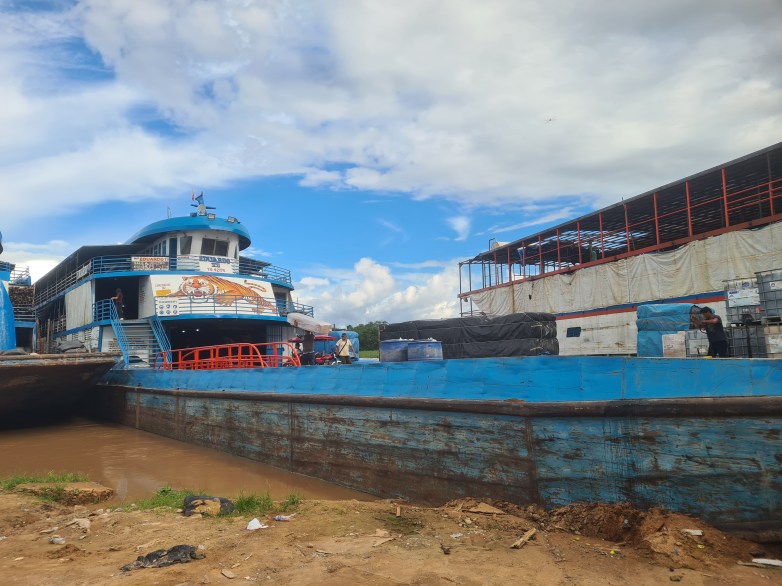
It’s a cargo boat heading to Iquitos. Departure scheduled for 5 PM. Never trust the schedules, especially not for boats. Slightly curiously, no one helps or indicates anything when I board the boat. Just « up there. » So I climb on, and indeed there are other hammocks and belongings. I set up my hammock and then quickly explore the boat. A small kitchen, two toilets with a shower (pipe coming from the ceiling), and otherwise just goods. I meet a couple of Russians who explain the meal times to me, how it all works roughly. We chat a bit, play chess, and then enjoy the sunset, still at the port of course. There I spot shapes in the water. Big fish or maybe crocodiles. We observe and according to a Peruvian, they are probably freshwater dolphins! We can’t see them very well, just their large backs brushing the surface.
To get to Iquitos from Yurimaguas, there are two ways: the fast way and the long way. The fast way involves taking a speed boat, and it’s a rushed overnight journey. The prices are significantly higher, of course. Expect around 12 hours of travel time.
The second, longer option involves boarding freight boats; it’s longer but cheaper. Expect about 3 days for 25 soles, which is around 6 euros. Note that the price includes 3 meals a day. Let’s just say that it’s the preferred option.
We leave the port on Thursday evening for another port in Yurimaguas, the last stop before the big departure. The boat stays at the dock all day, loading rice, cans of paint, and many other things. The last passengers board the boat, and soon we form a small group of travelers including a Russian couple: Valeria and Vlad. An Argentine: Jeremias, a Dutch woman: Rosita, and myself, the storyteller of this tale: Cédric. We set up camp, the Russians and the Argentine sleep on the ground while Rosita and I sleep in our hammocks. The day goes by, with a little shopping trip, but we mainly stay on the boat, afraid it might leave without us.
We set sail around 8 PM on Friday, January 30, 2026, heading to Iquitos!
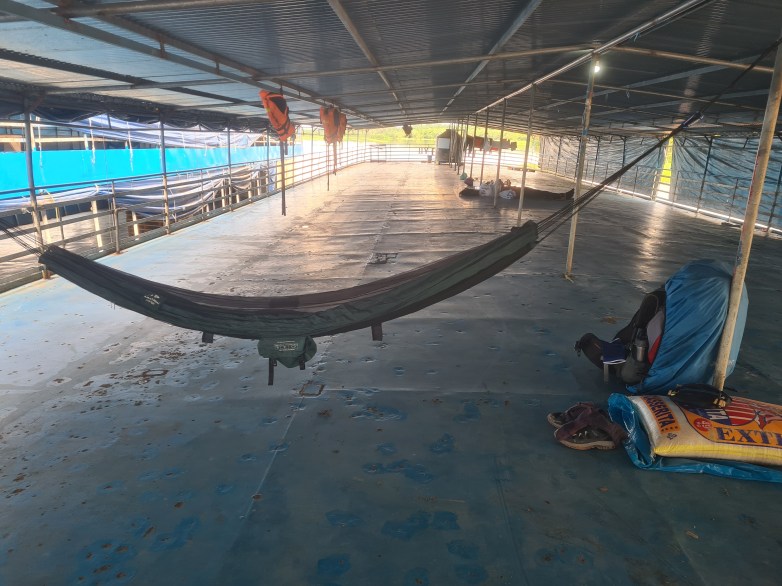
Day 1, Saturday, January 31.
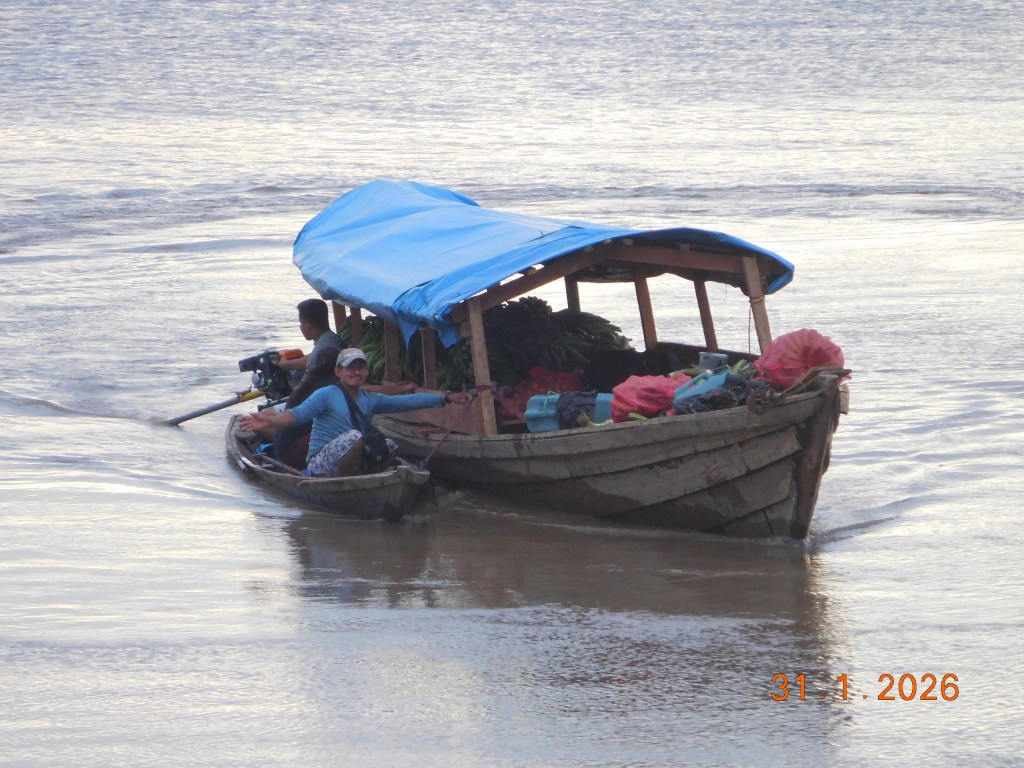
Waking up at dawn, people rise roughly at the same time. It’s worth mentioning that the Latinos quickly turn on the radio, play music, and make quite a racket early on. A little before 7 AM, the cook taps his ladle on the metal structure; it’s breakfast time! Oatmeal soup and 2 small rolls per person. This morning, I bring out my bracelet-making supplies while Valeria takes out her sketchbook. During our little workshop, several curious onlookers come to observe and chat with us. Around 10 AM, we’re approached by soldiers. They check the boat’s papers and the passengers, everything is in order, no issues. At 10:30 AM, we get approached by a boat of fruit and food vendors. At 11 AM, the ladle resonates on the boat: spaghetti and rice! We give our piece of chicken to other passengers. Then comes the siesta, which seems to be important here since no one has played music for quite some time.
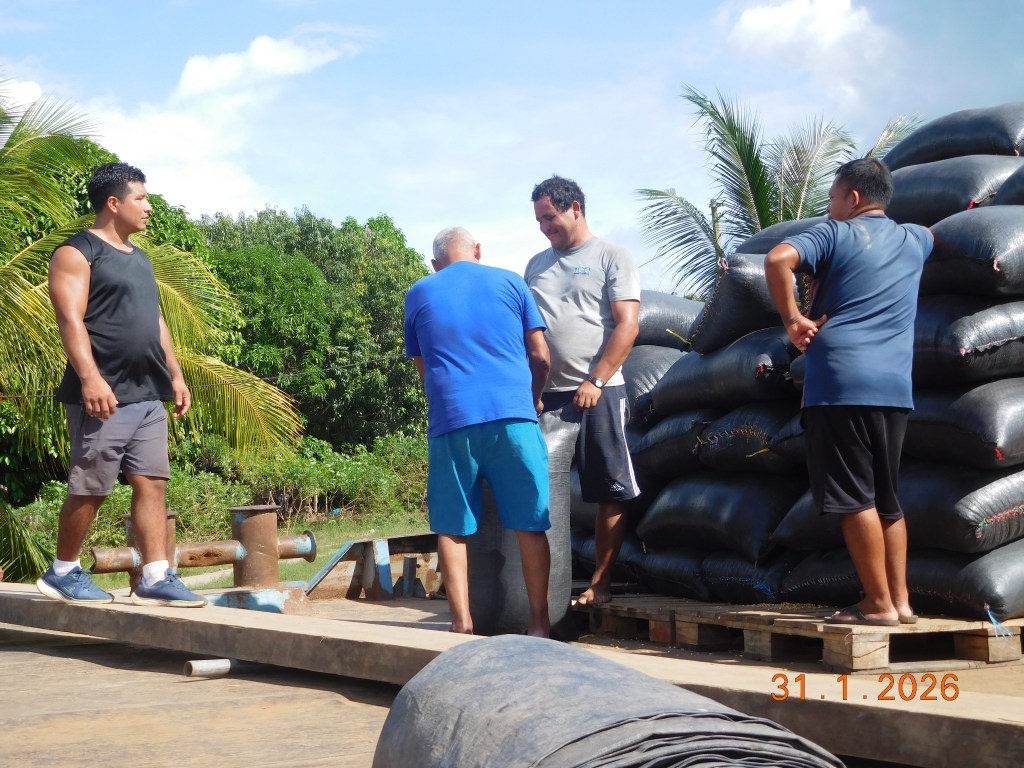
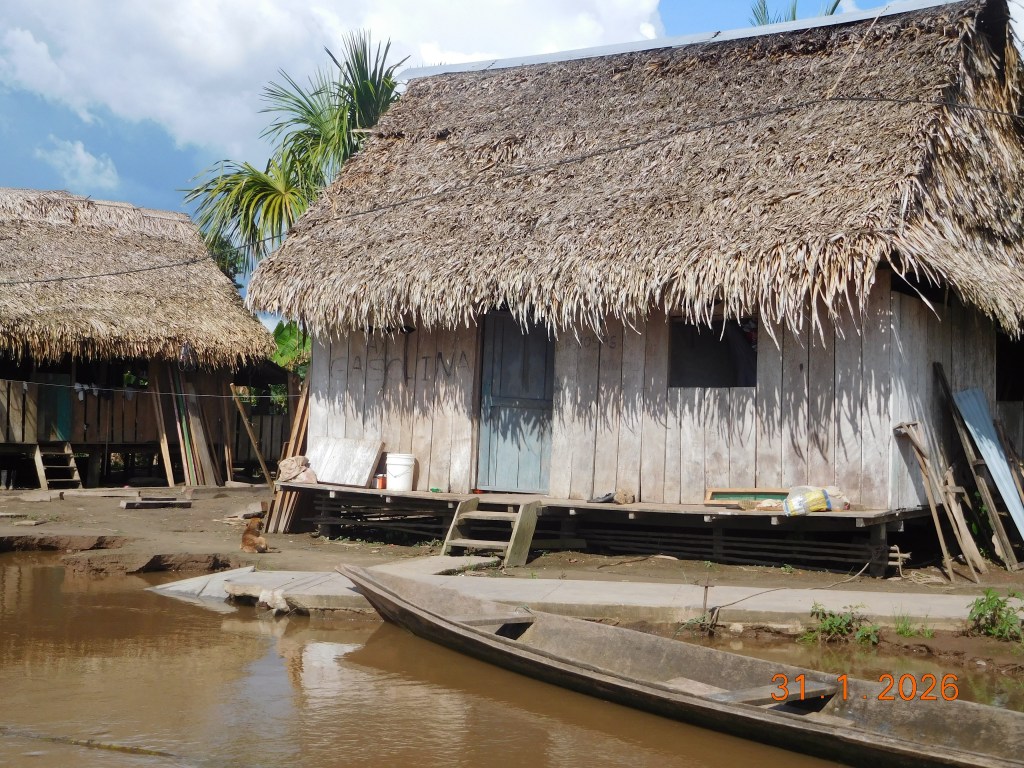
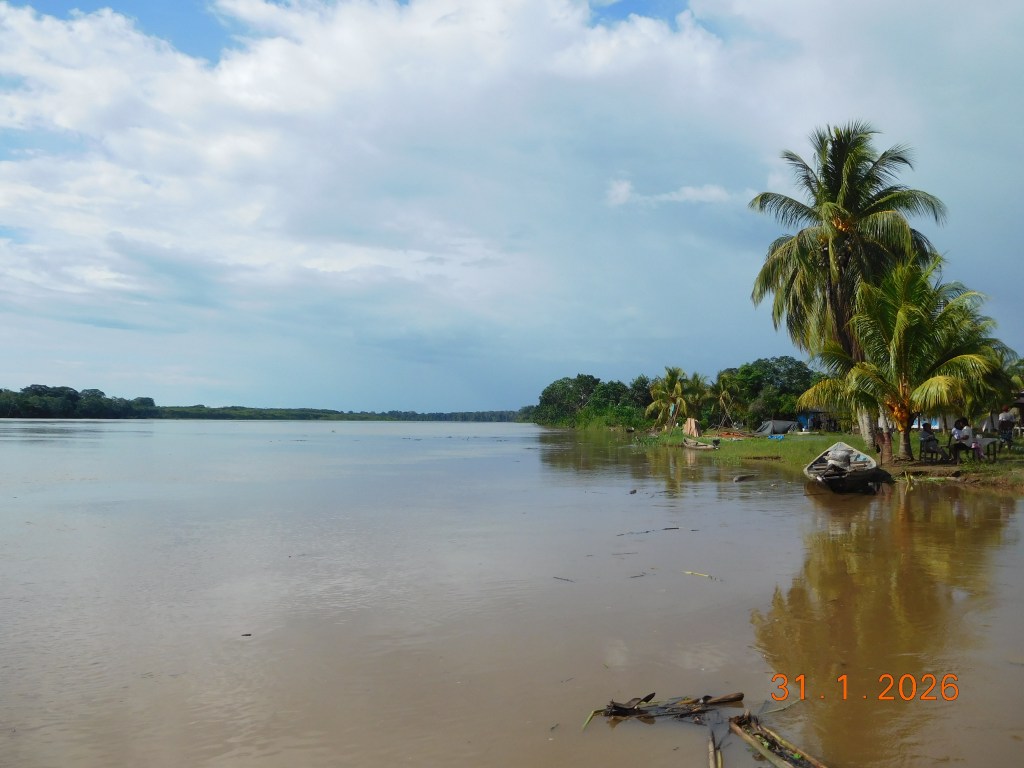
We dock in a tiny village, the boat crew is loading bags of corn. We were told it was 8 tons. As the break ends, Jeremias and I settle at the front of the boat to drink mate (he’s Argentinian, remember). We enjoy the view and chat. The river we had been navigating meets the Marañón River just after the village. The river doubles (if not triples) in width! Dinner is announced around 5 PM: pasta soup with plantain. It’s sunset time, near a village. There’s no disembarkation but several boats are mooring. One is unloading bananas while others belong to small vendors. We revel in the incredible colors that the sun offers us, accompanied by a few dolphins we see surfacing from the murky water. Overall, a very beautiful first day of navigation.
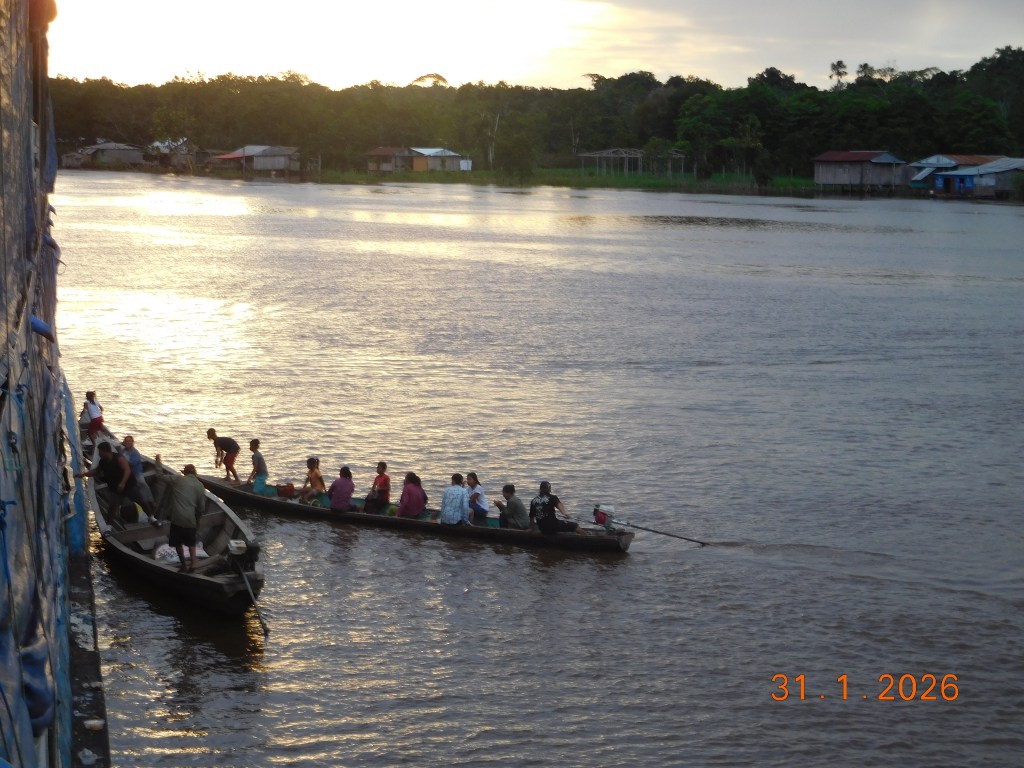
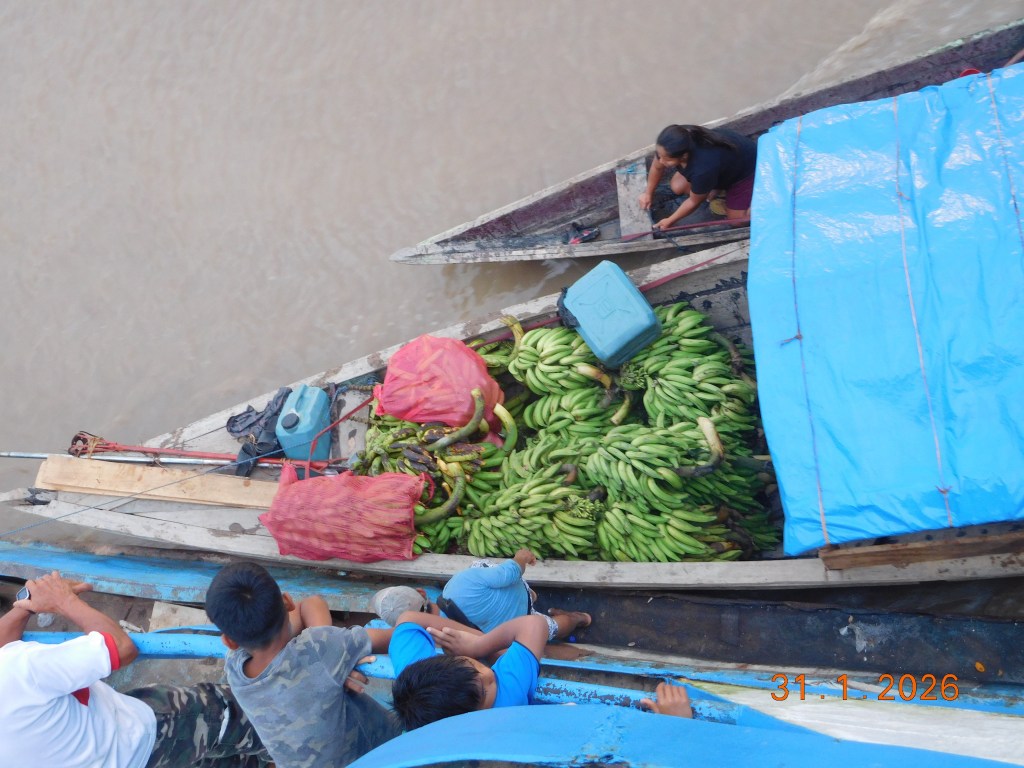
For those who wish to navigate the Amazon by boat, it should be noted that everyone brings their own water onboard. There is no drinking water provided, it’s every man for himself. A second recommendation is to bring a Tupperware for meals. Everyone has their own, and the cook serves inside them. Mosquitoes come out at dusk, so mosquito repellent is your best friend. A hammock is not essential; if you’re not too concerned about comfort, you can sleep on the ground. It’s worth noting that it gets a bit cooler at night. Earplugs can be useful for blocking out noisy neighbors while sleeping. As I mentioned, several boats stopped by during the day, and it’s possible to buy snacks/fruits/meals, so remember to bring cash. Additionally, before departing from Yurimaguas, the cook doesn’t prepare meals (everyone takes care of themselves), and there are no accommodation fees. For more information, see the dedicated post about crossing information.
Day 2, Sunday, February 1st.
The morning is calm; apart from the rooster at 6 AM, no one plays music, and everyone stays quiet after breakfast. We (the small group) are doing a bracelet workshop. I teach Jeremias and Rosita how to make a bracelet, and a guy from the boat also places an order with me. So we spend the morning hunched over, intertwining threads. There’s a short ukulele concert for a small group of children. I play a few songs in Spanish that I know. Breakfast was identical to the day before, but lunch changes: rice, red beans, and potatoes (with chicken but none for us). After that comes a nap, which lasts quite a while, and then in the late afternoon, we go to drink mate with Jeremias at the front of the boat. It’s our little daily meeting, philosophizing about life while drinking mate and eating cheese, all with our feet above the water. Dinner is served around 5 PM: soup, pasta, rice, plantain. We should arrive in a few hours in Nauta. The last stop before Iquitos. A large majority of people should get off here because there’s a road from Nauta that leads to Iquitos. We will go on a mission for beers! After that, there should be about 24 hours of sailing left until the final destination of the boat.
Day 3, Monday, February 2.
Last night we stayed up a bit late. After our successful beer mission, we had to drink them. Three guys sitting on a bench, enjoying a gentle breeze under the stars. When I say we stayed up until 11 PM, I mean we’re old men. Waking up to the cold, we were greeted by a magnificent sunrise. The jungle slowly awakens. Porridge, and then we start to pack our things gently. Arrival in Iquitos is expected around noon. With our bags packed, we have time to watch the boat dock at the port of Iquitos, the largest city in the world only accessible by air or waterways. We disembark, Jeremias leaves us to go volunteer, the Russians disappear into the streets of the city, and Rosita and I head to a hostel for the night. I will stay for a few days, but I think I’ll quickly head back by boat to the triple border: Letícia!
Barely arrived in Iquitos, we get invited by a guy for a drink. Small beers, we chat a little but we’re very eager to drop off our bags, take a shower, and eat, so we don’t linger too long. With Rosita, we find a nice hostel in the city center: the flying dog. The rest of the afternoon is quiet, reconnecting online, eating, cleaning up, and eating again. The next day, I head towards the port to inquire about the boats leaving for Leticia. I spot the right port (there are several) and ask around for info. I learn that there are 2 boats leaving today, or else it’s in 2 days. The prices are all the same: 80 soles for the slow boats and 150 soles for the fast ones (10-12 hours). 20 euros or 37 euros. Just like the other trip, the price includes food. I return to the hostel to meet Rosita, then we go out for a walk in the city, do some shopping, and decide to take a tour in the Amazon jungle! Rosita wants to stay 2 nights and 3 days, and I want 2 days and 1 night. Not a fan of tours, but we clicked with the managers, so let’s gooo.
Departure the next morning around 7:30 AM towards Nauta, the port city connected by road, 2 hours further south. We stop at the airport to pick up Chen, a Chinese guy who just arrived from Lima. We chat a bit about where he comes from and where he’s going, etc. The guy left China 2 or 3 weeks ago to go: to South Korea, the United States, Costa Rica, Panama, Argentina, Chile, and now Peru. Without even mentioning all the long-haul flights he must have taken, traveling like this is like seeing the poster of a movie and saying, « Oh yeah, I saw it, it was great. » It’s nauseating. Anyway, Chen won’t be my best buddy. This is followed by 2 hours on a boat (motorized canoe) to reach the lodge in the forest. We are lucky enough to see a pink dolphin on the way! A serious issue begins for Rosita. A bad night turns into illness, and she will spend the next 24 hours lying down feeling unwell. Either an infection, a virus, or God’s will; anyway, she’s not doing well at all. She will cut her stay short and return with me the next day.
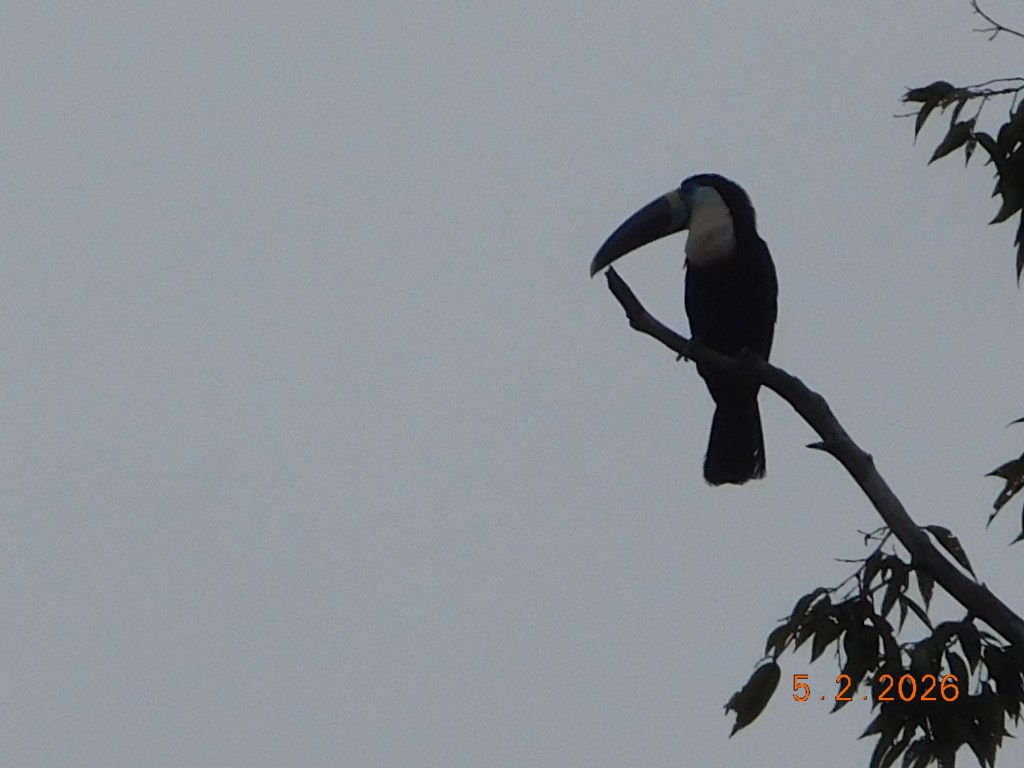
But in the meantime, I’m having a blast! After our arrival lunch, we head out for a little excursion into the jungle adjacent to the Lodge. Unfortunately, this time we didn’t see anything and got caught in a tropical downpour to boot. We wait for the rain to pass, then a bit later we set off in a dugout canoe on the river to observe the wildlife. Marmosets, iguanas, toucans, parrots, pink and grey dolphins, and finally we go into a mangrove to look for caimans. After an hour of unsuccessful searching, we decide to head back for dinner, but it’s at that moment that the guides spot red eyes in the water.
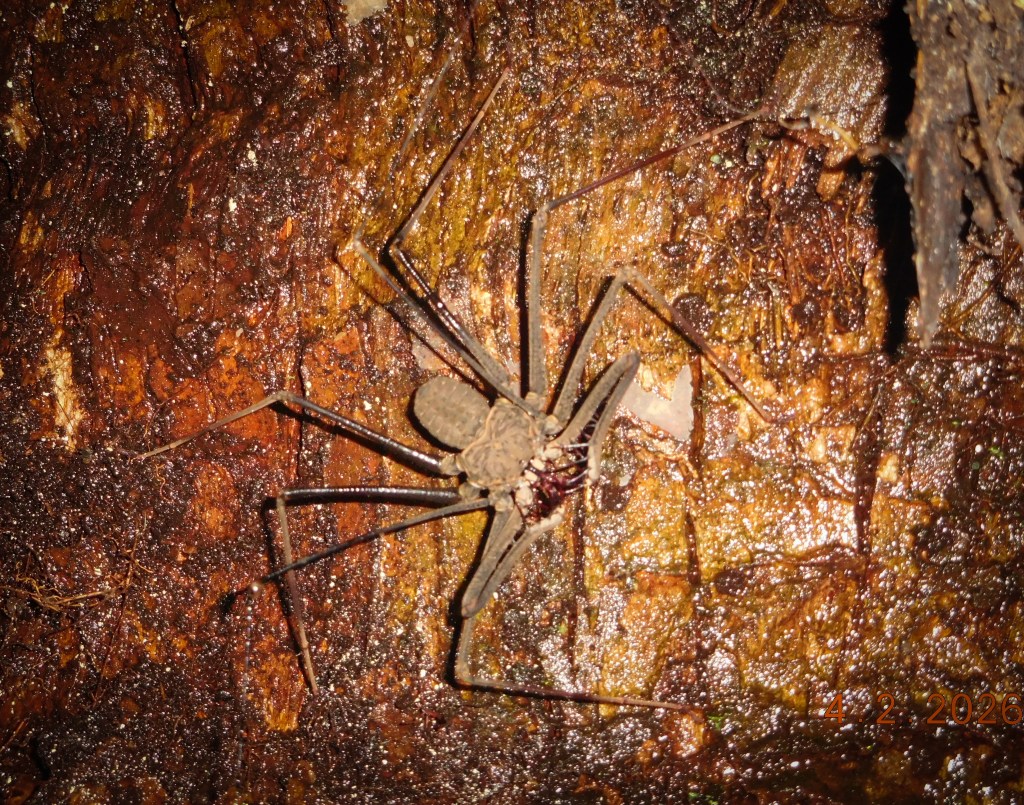
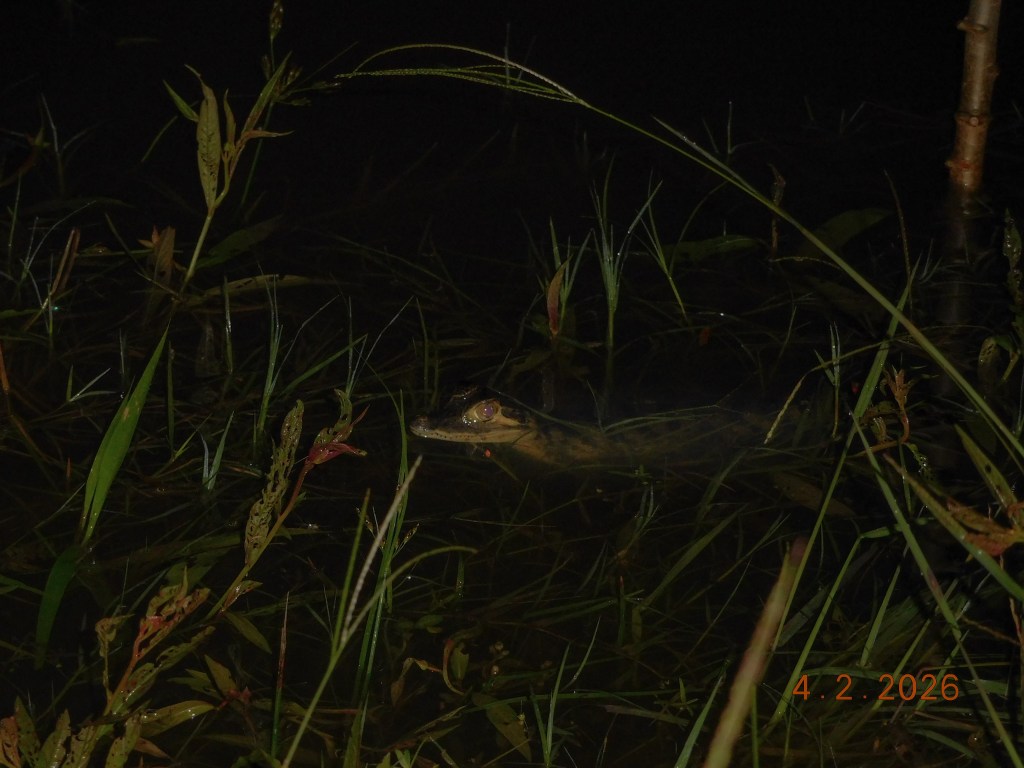
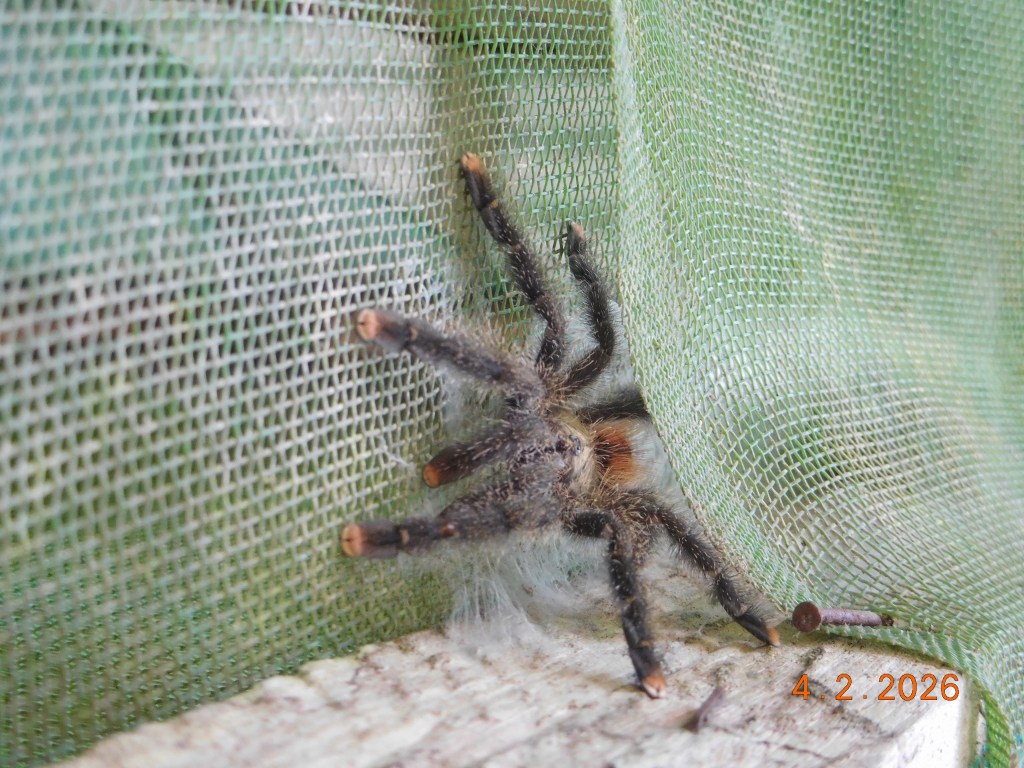
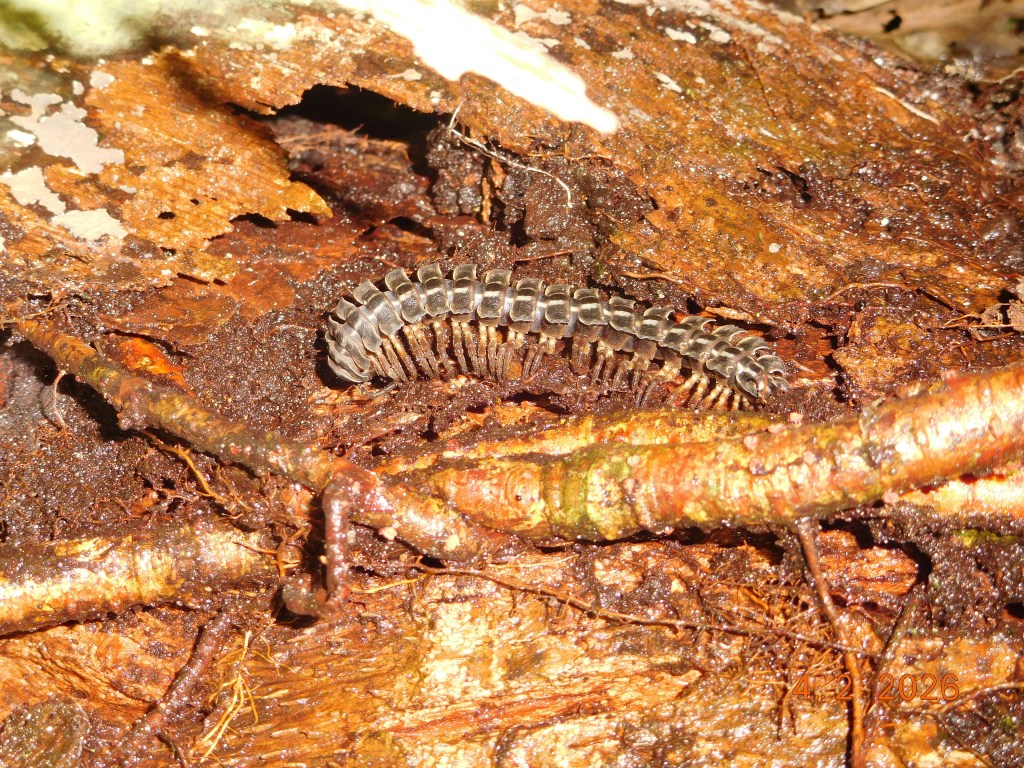
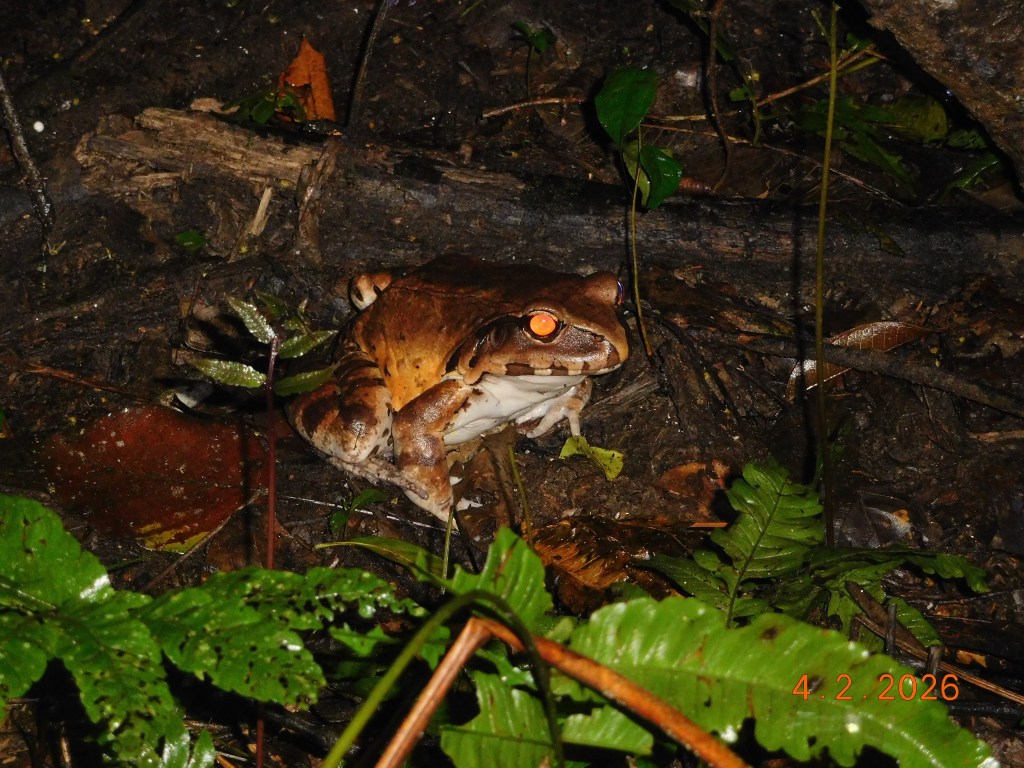
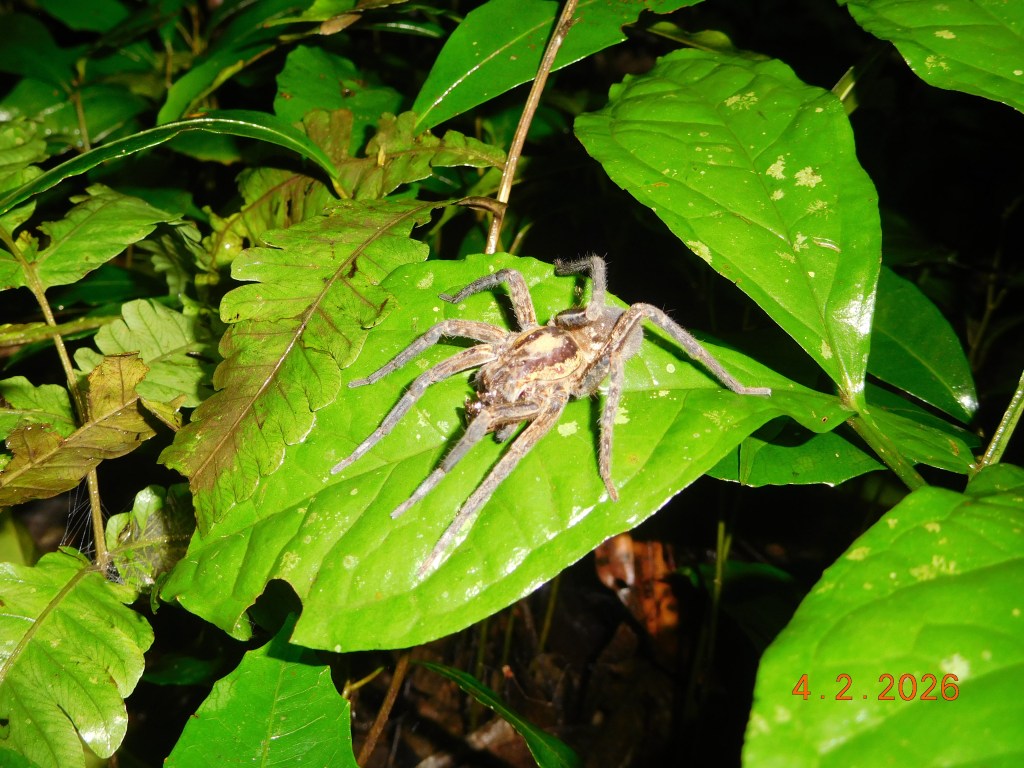
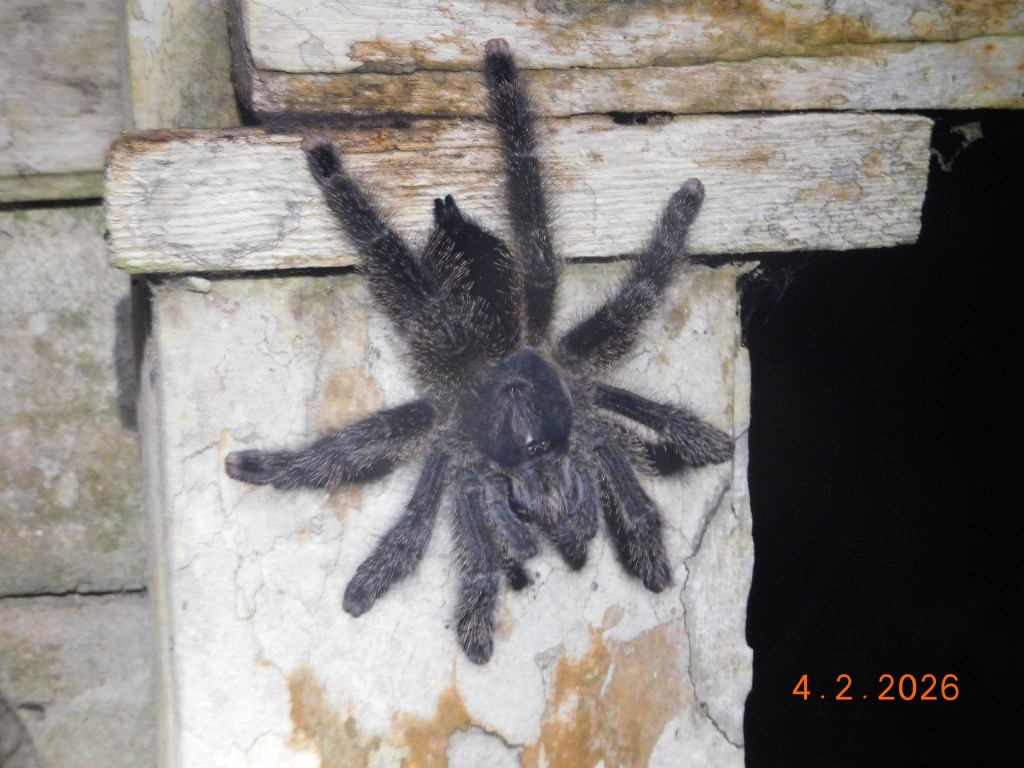
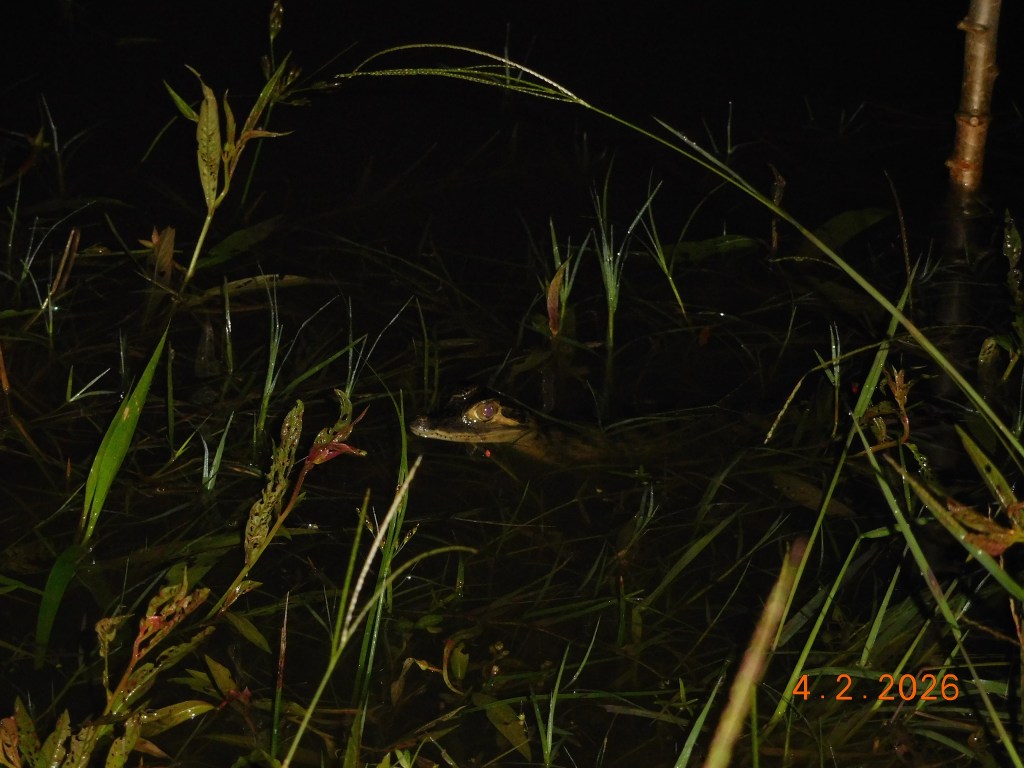
Without hesitation, one of the guides grabs it and holds it in his mouth (wtf?). I should point out that this is a baby caiman, measuring between 20 and 30 centimetres, I would say. Everyone takes photos and touches it. Everyone? Well, no, one young Frenchman still refuses to interfere with wild animals! Long live vegans! Oops. Anyway, a little later, the guide came over to explain that caimans are difficult to observe, so they allow themselves to capture them temporarily. I understand, but still… We dine peacefully, and then our guide and another guide invite me to join them on a tour in the jungle to search for animals. Just the two guides and I set out to look for critters and animals. It’s past 8 PM, and the jungle is dark. During our little adventure, we spotted: a tarantula, three other species of spiders, a bullfrog (it’s a frog on steroids), jungle rats, millipedes, and billions of mosquitoes, but no large snakes or big animals. We return to the lodge, pleased with our findings, and just when we’re about to part ways, Luis, my guide, calls me: there’s a baby caiman right in front of us! This time, without disturbing it, we can see it in the water. It’s still a baby but very pretty! I go to shower and sleep, all while enjoying the melody of the jungle.
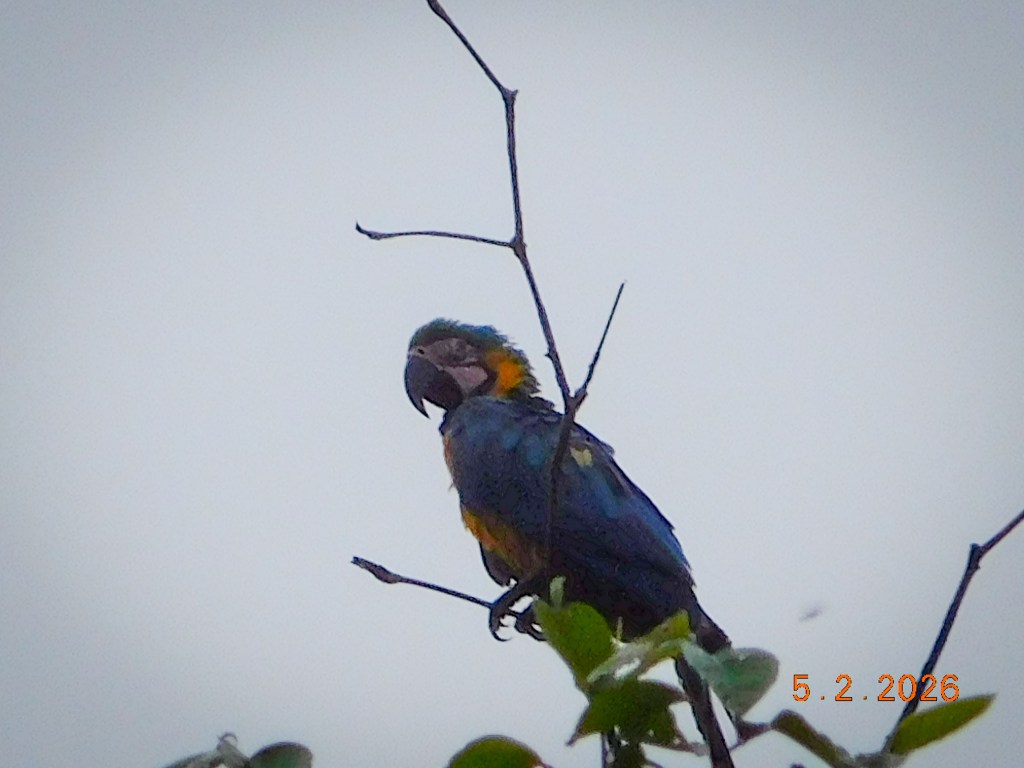
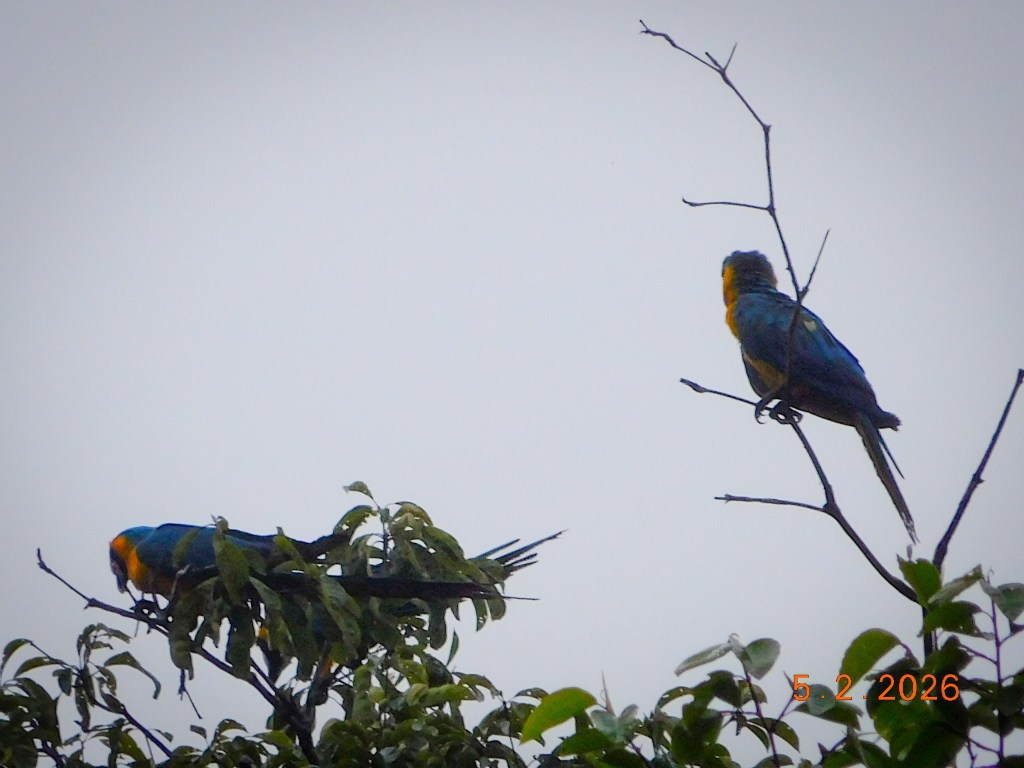
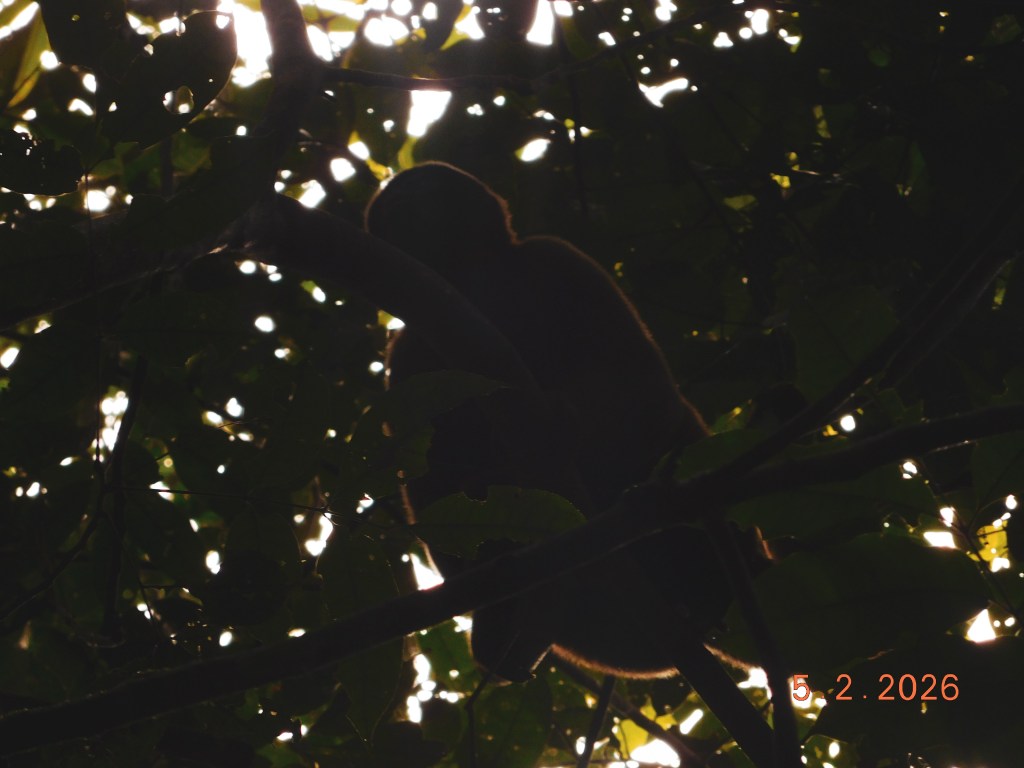
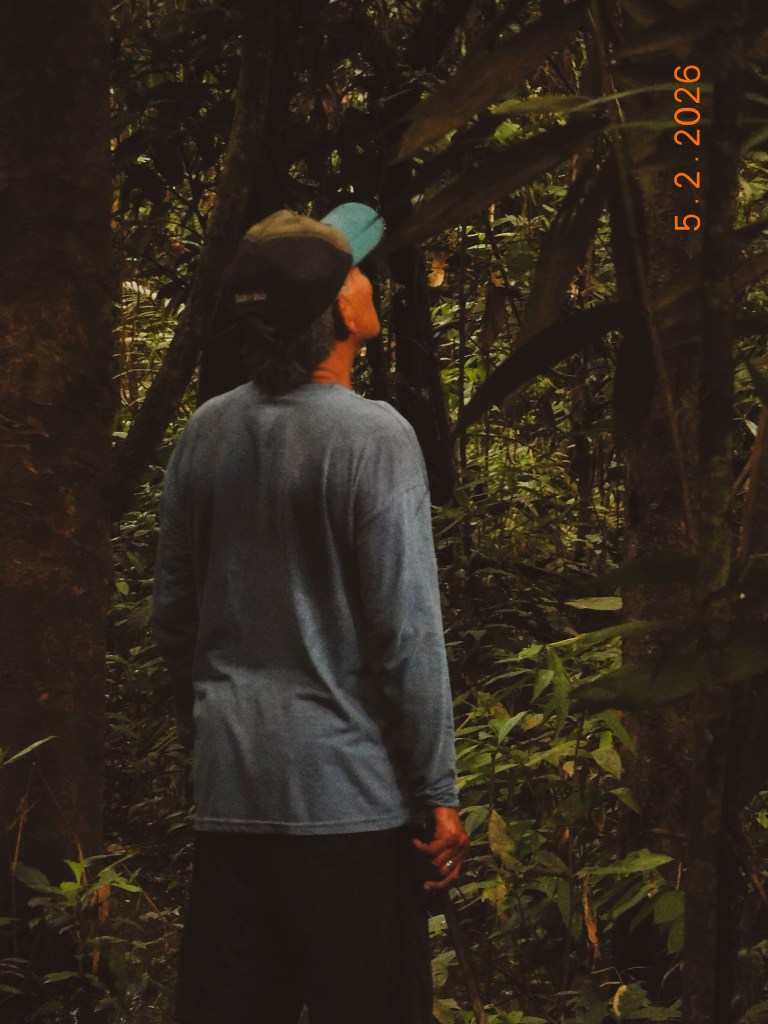
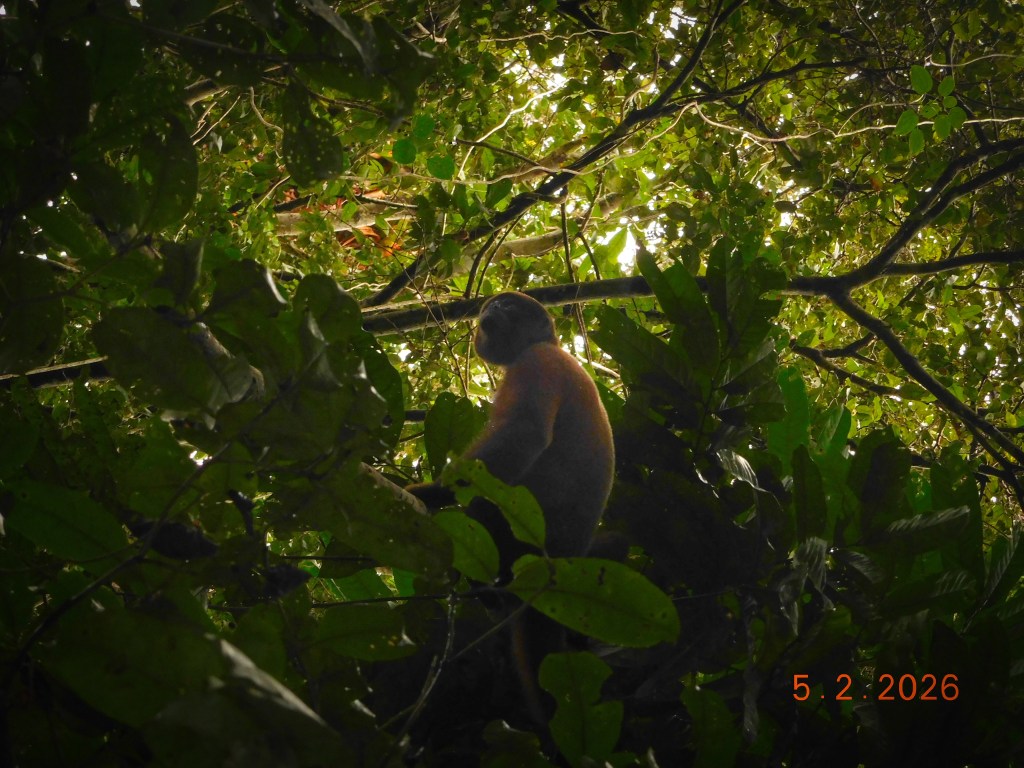
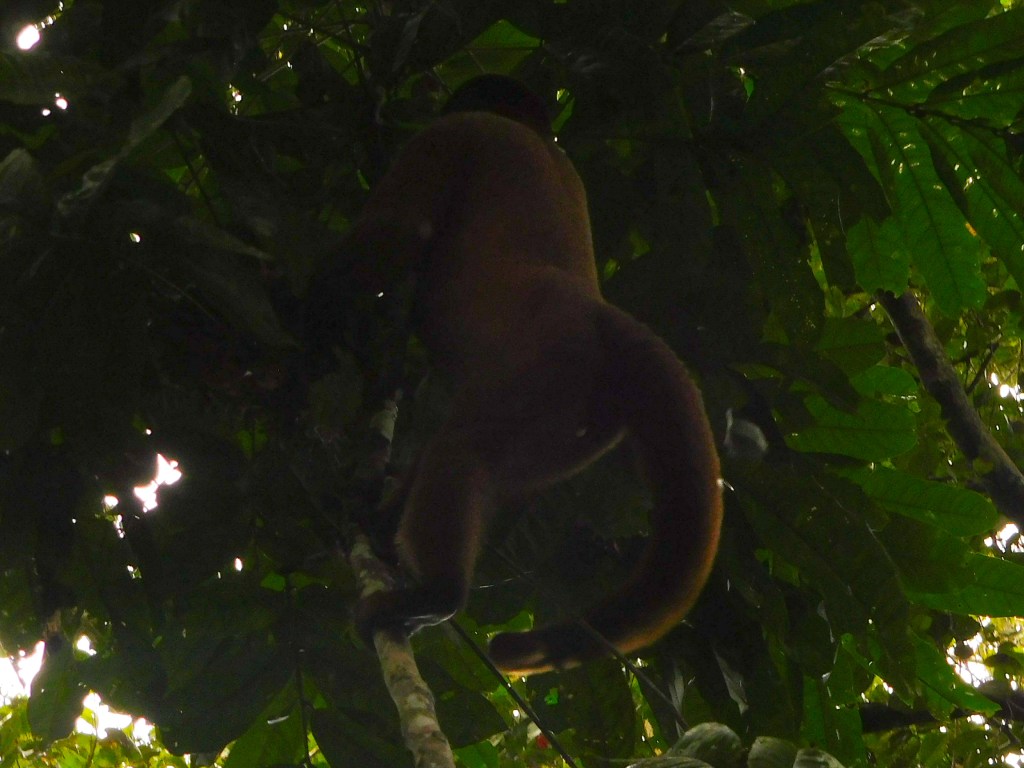
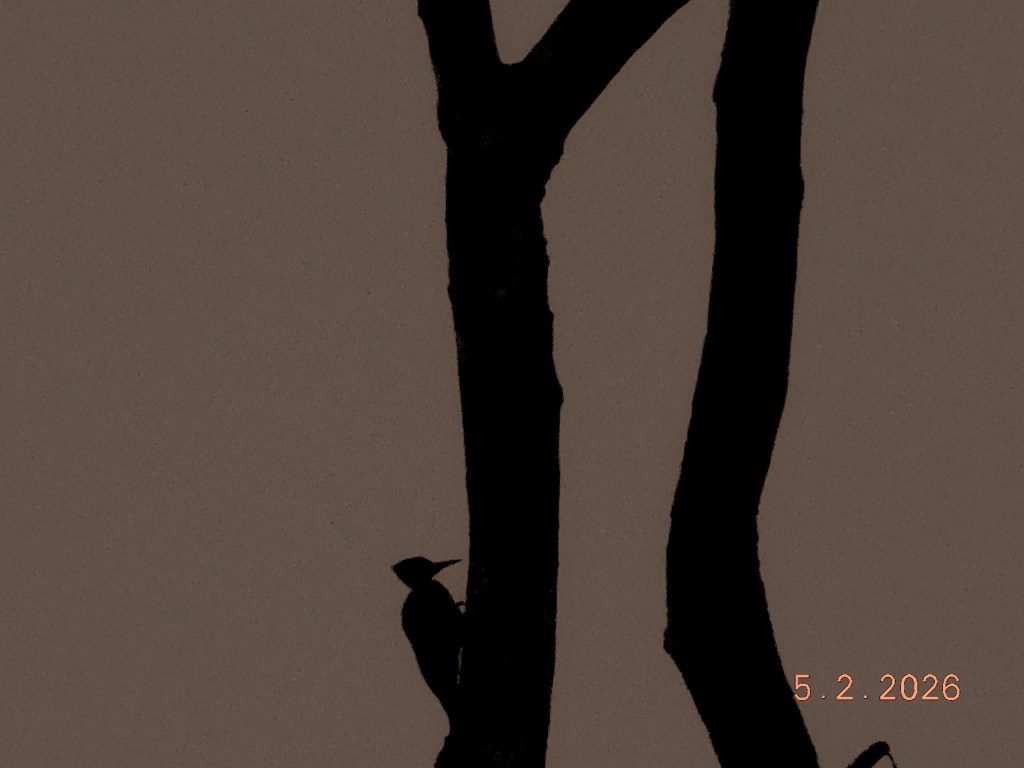
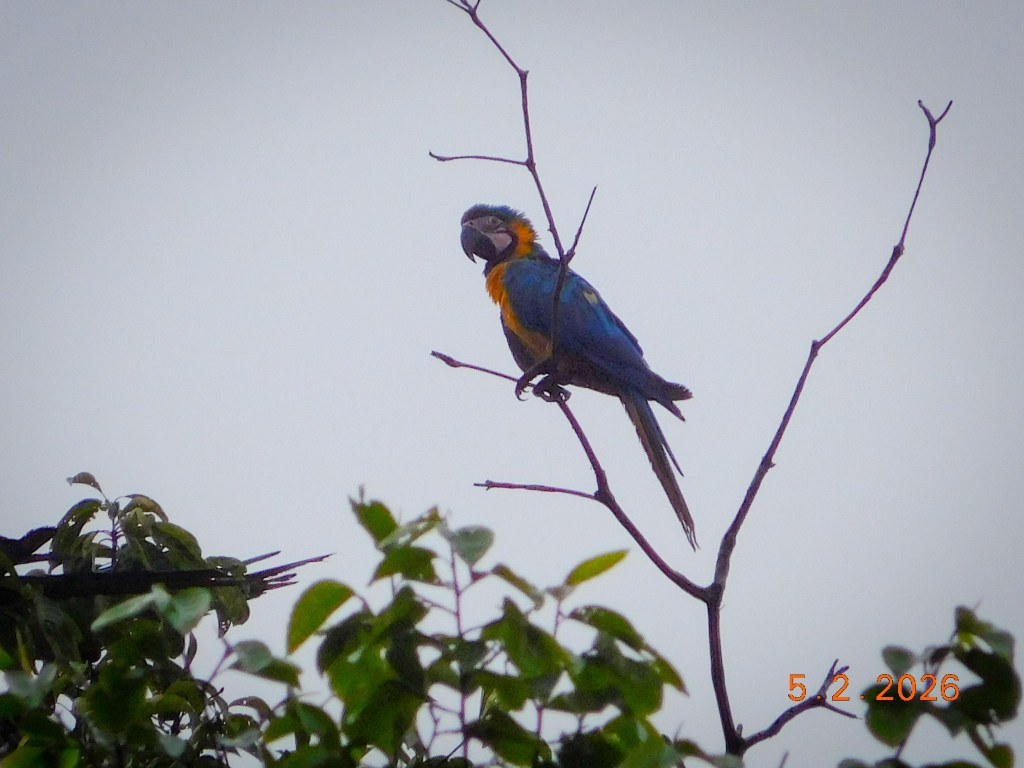
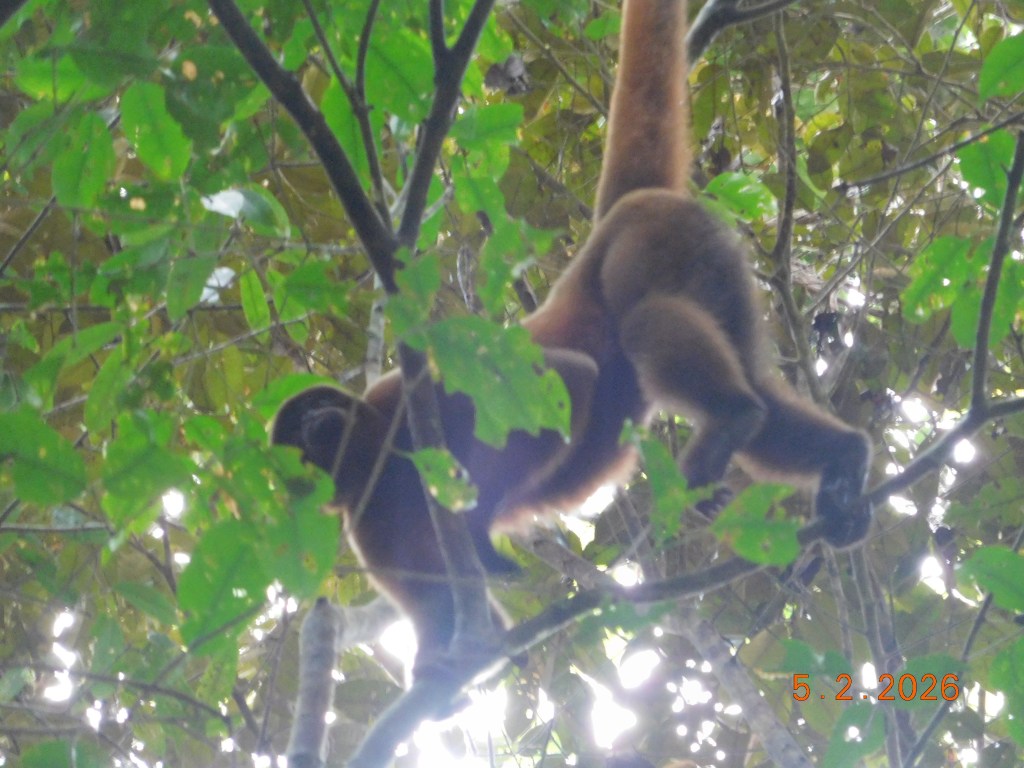
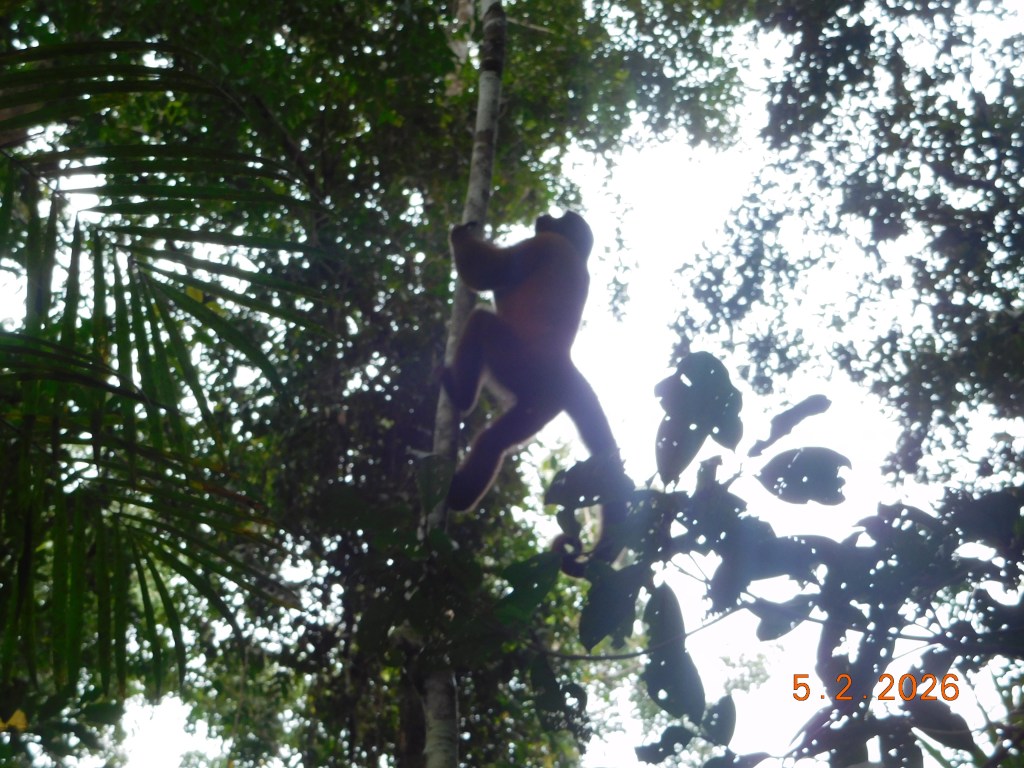
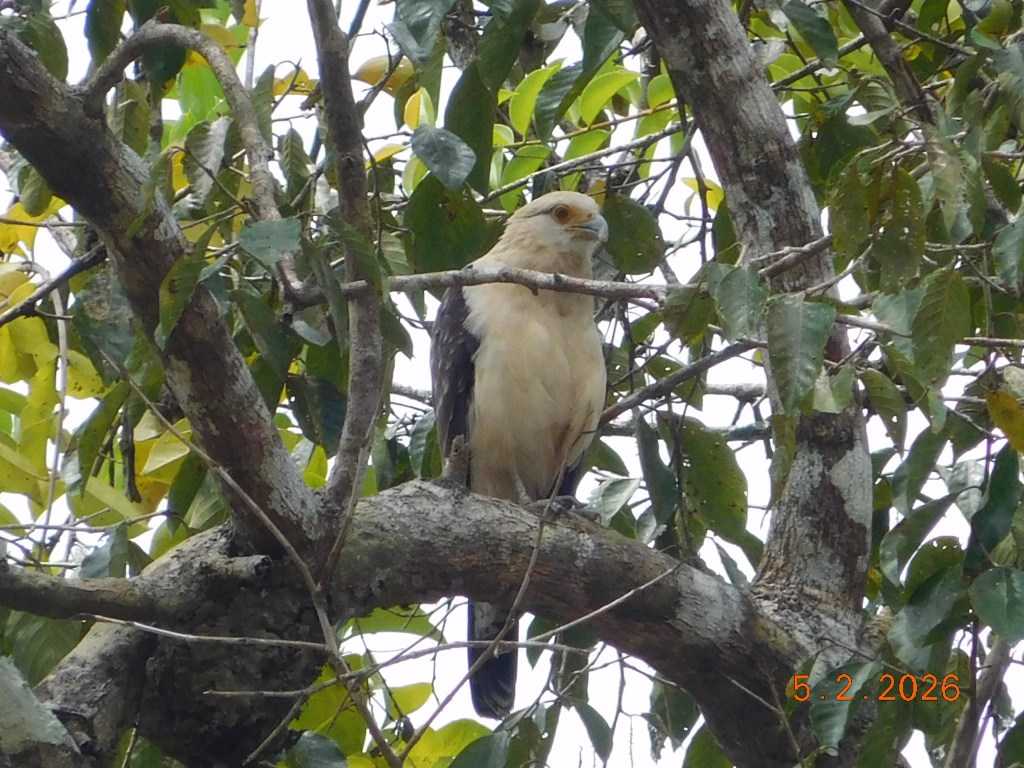
Wake-up at 6 am, we set off (Rosita joins us) to observe the animals! We take a canoe and go further up the river. We will see toucans, parrots, a sloth, two small monkeys quickly, and other beautiful birds whose names I’ve forgotten, and finally the highlight of the show: macaws! We were able to observe blue and yellow macaws for a long time and listen to their recognizable calls. A little later we were swooped over by a pair of Scarlet Macaws (the beautiful red ones). What a fantastic start to the day of observing! We return for breakfast and then head out in another direction. This time without Rosita (poor her, honestly I feel bad for her). Monkey mission! We drift away in the canoe before continuing on foot through the jungle. On the lookout for any unusual sounds, we move slowly. A sound in the branches, and we spot two monkeys: a howler monkey and another one the color of coffee (I’m not great with names). We carefully observe them for a while, then a bit later we will find others: a capuchin, one all black, and another. Some monkeys were a bit far to observe well, but the coffee-colored one put on a grand show! It came to eat in a small tree right in front of us and swung over to another tree. Along the way, we also saw huge trees that must have some wrinkles, I think. We return for lunch and prepare our belongings for the return. Yes, already, but it was an incredible 24 hours in the jungle. I was lucky to see tons of birds, plenty of animals, and to get bitten an infinite number of times by mosquitoes, but it was quite an experience. Undoubtedly to be repeated in Brazil or French Guiana, we’ll see.
Back to the city and then immediately off to the port! Heading to the triple border: Peru, Colombia, and Brazil!
Attention, animal photos including large spiders
En savoir plus sur Les aventures de Cécé
Abonnez-vous pour recevoir les derniers articles par e-mail.

 Les aventures de Cécé